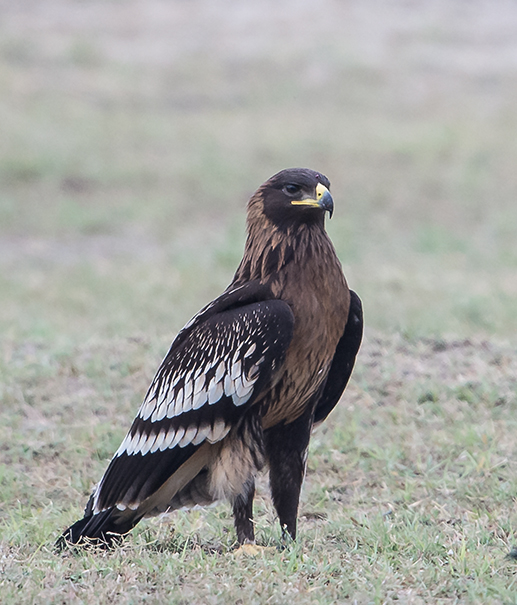
Lydekkeri Eagle
Aquila lydekkeri
Order: Accipitriformes / Family: Accipitridae
About the Lydekkeri Eagle
The Lydekkeri Eagle, scientifically known as Aquila lydekkeri, is a formidable raptor occupying a niche within the Accipitridae family. Renowned for its impressive size and strength, this eagle commands attention in its native habitats across select regions of Africa and Asia. Known for its keen eyesight and powerful talons, the Lydekkeri Eagle is a top predator, exerting a significant influence on the ecosystems it inhabits. Its presence signifies a well-functioning environment, as it relies on healthy populations of prey species. In terms of habitat, the Lydekkeri Eagle prefers open woodlands and savannas, often seen soaring over expansive landscapes in search of food. Its adaptability allows it to thrive in both lowland forests and montane regions, though it tends to avoid densely populated human areas. Seasonal behaviors of this eagle include pronounced territoriality during the breeding season, which coincides with the warmer months in its range. During this period, it becomes highly vocal and visible, defending its territory from competitors and potential threats. The ecological role of the Lydekkeri Eagle extends beyond mere predation. By keeping prey populations in check, it helps maintain a balance within its ecosystem. Furthermore, as a scavenger, it contributes to the ecosystem by cleaning up carrion, which can prevent the spread of disease. The Lydekkeri Eagle's significance as a keystone species cannot be overstated, as it influences both the structure and dynamics of its environment. Conservation efforts aimed at preserving its habitat are crucial, as the loss of this majestic bird would have cascading effects on the ecosystems it supports.
The Lydekkeri Eagle belongs to the family Accipitridae, within the order Accipitriformes. These birds typically live average lifespan is 12-18 years in the wild, with some individuals living up to 20 years..
How to Identify a Lydekkeri Eagle
The adult Lydekkeri Eagle displays a striking plumage primarily characterized by rich, dark brown feathers covering most of its body. Its underparts are slightly paler, providing a subtle contrast that aids in identification. The head features a formidable beak, sharply hooked and powerful, suited for tearing into prey. Eyes are a piercing yellow, often noticed from a distance. Juvenile Lydekkeri Eagles are distinguishable by their lighter, mottled brown plumage, which darkens as they mature. Males and females appear similar, though females are typically larger, a common trait among birds of prey. When it comes to flight, the Lydekkeri Eagle presents a distinctive silhouette. Its broad wings, with rounded tips, allow for effortless soaring. The tail is relatively short and slightly rounded, providing agility in flight. Perched, the eagle's posture is upright and regal, often seen atop tall trees or rocky outcrops, surveying its surroundings. The Lydekkeri Eagle might be confused with the African Fish Eagle due to overlapping ranges, but the latter exhibits a more contrasting white head and chest. Observers should note these differences to accurately identify the Lydekkeri Eagle in the field.
Having trouble telling birds apart? Upload a photo to our bird identification tool for an instant species match.
Lydekkeri Eagle Habitat and Range
Preferred Habitat
The Lydekkeri Eagle predominantly inhabits open woodlands and savannas across Africa and parts of Asia. It thrives in regions where trees are interspersed with open spaces, providing ample opportunities for hunting and nesting. These habitats often include elevations ranging from sea level to montane areas up to 3,000 meters. While primarily a bird of the wild, the Lydekkeri Eagle can occasionally be found near rural areas, where human activity is minimal. It avoids urban settings, preferring the tranquility of less disturbed environments. Seasonal habitat shifts occur, with the eagle moving to lower elevations during colder months, following prey migrations. Despite its adaptability, the Lydekkeri Eagle remains sensitive to habitat degradation, which poses a significant threat to its survival.
Geographic Range
The breeding range of the Lydekkeri Eagle spans across sub-Saharan Africa, with notable populations in Kenya, Tanzania, and the Democratic Republic of the Congo. In Asia, it is found in limited areas of northern India and Nepal. The eagle's wintering range often overlaps with its breeding territories, although some populations may undertake short migrations to adjacent regions. Migration corridors are not well-defined, as the species tends to be more sedentary than other raptors. However, population density hotspots can be observed in the Serengeti and the Maasai Mara, where prey availability is high. These regions serve as critical strongholds for the Lydekkeri Eagle, supporting robust breeding populations.
Want to know which birds visit your area? Browse our backyard birds by location guides for region-specific species lists.
What Does the Lydekkeri Eagle Eat?
The Lydekkeri Eagle's diet is diverse, primarily consisting of medium-sized mammals such as hares and small ungulates. Birds, including waterfowl and ground-nesting species, also form a significant part of its diet. During the wet season, the eagle adapts to include more insects and reptiles, taking advantage of seasonal abundance. The eagle employs a hunting technique characterized by soaring at great heights, using its keen eyesight to spot potential prey. Once a target is identified, it dives with remarkable speed and precision. Prey size ranges from small mammals weighing around 2 kg to larger ungulates up to 10 kg. Its feeding schedule is largely diurnal, with peak activity observed during the early morning and late afternoon.
Lydekkeri Eagle Behavior and Social Structure
The Lydekkeri Eagle is primarily solitary, although it may be seen in pairs during the breeding season. Its territorial behavior is pronounced, with individuals fiercely defending their hunting grounds against intruders. Courtship displays involve aerial acrobatics, including synchronized flights and talon locking, which strengthen pair bonds. Unlike some raptors, the Lydekkeri Eagle does not form large flocks, maintaining a solitary or paired existence. In response to predators, such as larger birds of prey, the Lydekkeri Eagle relies on its agility and speed to evade capture. Daily activity patterns include lengthy periods of soaring interspersed with rest, often observed perching in high vantage points. This behavior allows the eagle to conserve energy while remaining vigilant for potential prey.
Lydekkeri Eagle Nesting and Reproduction
Nest construction for the Lydekkeri Eagle involves large structures built with sticks and lined with softer materials like leaves and grass. These nests are typically located high in trees or on cliff ledges, providing protection from ground-based predators. Clutch size ranges from one to three eggs, with two being most common. The incubation period lasts approximately 45 days, during which both parents share duties. After hatching, the eaglets remain in the nest for up to 12 weeks before fledging. Parental roles are well-defined, with one adult often staying close to the nest while the other hunts. Typically, the Lydekkeri Eagle produces one brood per year, with breeding success closely tied to food availability.
Lydekkeri Eagle Sounds and Vocalizations
The primary vocalization of the Lydekkeri Eagle is a series of sharp, high-pitched whistles, often heard during the breeding season. These calls serve as both territorial warnings and communication between mates. Alarm calls are more abrupt and harsh, used to signal the presence of potential threats. At dawn, a chorus of these eagles can be heard, their calls echoing across the savanna. The Lydekkeri Eagle's vocalizations bear some resemblance to those of the African Fish Eagle, but are generally higher in pitch and more rapid in delivery.
Interesting Facts About the Lydekkeri Eagle
- 1The Lydekkeri Eagle can spot prey from over 3 kilometers away, thanks to its exceptional eyesight.
- 2This eagle can reach speeds of up to 160 km/h when diving for prey, making it a formidable hunter.
- 3The Lydekkeri Eagle's wingspan can exceed 2 meters, allowing for efficient soaring over large territories.
- 4Despite its size, the Lydekkeri Eagle is highly agile, capable of rapid maneuvers during flight.
- 5Each pair of Lydekkeri Eagles maintains a territory of up to 100 square kilometers, which they defend fiercely.
- 6The species' name honors famed British naturalist Richard Lydekker, reflecting its historical significance.
Lydekkeri Eagle Conservation Status
The Lydekkeri Eagle is currently classified as Near Threatened by the IUCN, with a declining population trend. Habitat loss due to deforestation and human encroachment poses the greatest threat to its survival. Conservation efforts focus on habitat preservation and legal protection against hunting. Historical population changes indicate a significant decline over the past few decades, primarily driven by land use changes. Continued efforts are necessary to ensure the long-term survival of this iconic raptor.
Other Accipitridae Species


Birds Similar to the Lydekkeri Eagle
These species are often confused with the Lydekkeri Eagle due to similar appearance or overlapping range.