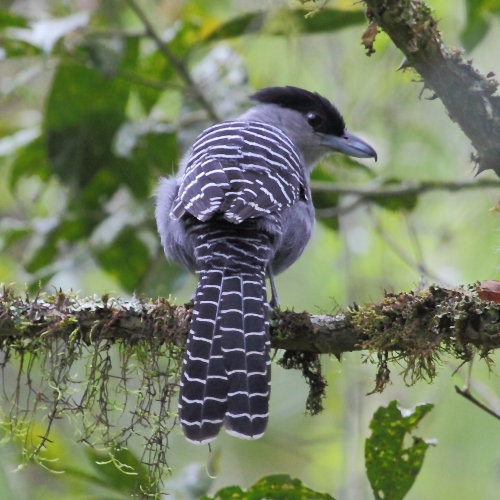
Aripuana Antwren
Herpsilochmus stotzi
Order: Passeriformes / Family: Thamnophilidae

Wikimedia Commons
About the Aripuana Antwren
The Aripuana Antwren (Herpsilochmus stotzi), a member of the Thamnophilidae family, inhabits the lush tropical forests of South America, specifically within the Amazon Basin. Its presence is predominantly noted in the Brazilian states of Amazonas and Mato Grosso, where it occupies areas near the Aripuana River, which contributes to both its name and its ecological niche. This bird plays a significant role in the complex food web of the Amazon, primarily as an insectivore. As a forest understory specialist, the Aripuana Antwren contributes to the control of insect populations, thus maintaining ecological balance. The dense, humid forests it calls home provide ideal conditions for its foraging activities, which involve gleaning insects from leaves and branches. The species is particularly significant as it highlights the incredible biodiversity and endemism found in the Amazon region. Seasonal behaviors of the Aripuana Antwren are not well-documented, but like many tropical birds, they are believed to remain relatively stationary throughout the year, with activity patterns tied closely to the forest's microclimates. The Aripuana Antwren is an indicator species for the health of its habitat, as its presence signifies a well-preserved forest ecosystem. Conservationists pay close attention to this species as it represents the broader health of the Amazon. Efforts to conserve its habitat have gained momentum, emphasizing the need to protect not only the bird itself but the entire ecosystem it supports. This bird's restricted range makes it particularly vulnerable to habitat destruction, a pressing concern given the ongoing deforestation in the Amazon. Understanding and preserving the natural habitats of the Aripuana Antwren is crucial for maintaining the biodiversity of one of the world's most vital ecosystems.
The Aripuana Antwren belongs to the family Thamnophilidae, within the order Passeriformes. These birds typically live estimated average 3-5 years, with limited data on maximum lifespan..
How to Identify a Aripuana Antwren
The Aripuana Antwren can be identified by its small size, measuring approximately 12 cm in length. Adult males exhibit a striking plumage with gray upperparts and a contrasting white throat and underparts, accentuated by black streaks on the sides. Females differ from males with their more muted colors, showing brownish upperparts and less distinct streaking. Juvenile Aripuana Antwrens resemble females but with even duller plumage, making identification challenging without close observation. The species can be confused with similar antwrens such as the Spot-winged Antwren; however, the Aripuana Antwren lacks the distinctive wing spots and has more pronounced black streaks. In flight, the Aripuana Antwren displays a rapid, fluttery movement typical of many small passerines. When perching, it often adopts an upright posture, flitting through the lower canopy and understory in search of food. This species is more often heard than seen, as its calls and songs are distinctive among the cacophony of sounds in its forest habitat.
Having trouble telling birds apart? Upload a photo to our bird identification tool for an instant species match.
Aripuana Antwren Habitat and Range
Preferred Habitat
The Aripuana Antwren resides predominantly in terra firme forests, a type of non-flooded Amazonian rainforest. These forests, characterized by their dense canopy and rich biodiversity, provide an ideal environment for feeding and nesting. The bird typically occupies elevations from 100 to 400 meters, where it finds ample insect prey. Unlike some other avian species, the Aripuana Antwren shows little to no seasonal habitat shift, as the relatively stable climate of the Amazon affords a consistent environment year-round. While primarily found in remote forested areas, the Aripuana Antwren does not typically venture into urban or heavily altered landscapes, underscoring the importance of intact forest ecosystems for its survival.
Geographic Range
The Aripuana Antwren's range is restricted to a small area within the central Amazon Basin, specifically in Brazil. It is found primarily in the states of Amazonas and Mato Grosso, closely associated with the Aripuana River. This limited distribution makes the species particularly susceptible to habitat loss and environmental changes. Unlike many bird species, the Aripuana Antwren does not undertake long-distance migrations, instead residing in its tropical habitat year-round. Population density tends to be highest in areas of undisturbed forest, where the complex structure of the habitat supports a robust insect population essential for the bird's diet.
Want to know which birds visit your area? Browse our backyard birds by location guides for region-specific species lists.
What Does the Aripuana Antwren Eat?
The diet of the Aripuana Antwren consists mainly of insects and other small arthropods. It is a proficient forager, using a variety of techniques to capture prey, including gleaning insects from leaves and branches within the dense understory of its forest habitat. Its foraging behavior primarily occurs during the cooler parts of the day, in the morning and late afternoon, when insect activity is high. The bird's diet does not appear to change significantly with the seasons, as the abundance of insects in the Amazon provides a steady food supply year-round. Prey items include caterpillars, beetles, and spiders, typically small in size and easy to capture with the bird's agile movements.
Aripuana Antwren Behavior and Social Structure
Aripuana Antwrens are typically solitary or found in pairs, displaying a strong territorial behavior. Males are particularly vocal, using their songs to assert territory and attract mates. The species does not form large flocks but may occasionally join mixed-species foraging groups, a common strategy in the Amazon rainforest to increase foraging success and predator vigilance. Courtship behaviors include mutual preening and duet singing, strengthening pair bonds. The Aripuana Antwren is diurnal, with peak activity in the morning and late afternoon. When faced with potential predators, the bird employs a combination of vocal alarms and evasive maneuvers, seeking cover in dense foliage. Its daily routine involves extensive foraging interspersed with rest periods during the hottest parts of the day.
Aripuana Antwren Nesting and Reproduction
The Aripuana Antwren nests in the understory of its forest habitat, preferring locations well-concealed within dense vegetation. Nests are typically cup-shaped, constructed from fine twigs, leaves, and plant fibers. The clutch size usually consists of two eggs, which are incubated primarily by the female. The incubation period lasts about 14 days, after which both parents participate in feeding and caring for the hatchlings. Fledging occurs approximately 12 days post-hatching, with young birds remaining under parental care for several weeks. The species may produce two broods per year, depending on environmental conditions and food availability.
Aripuana Antwren Sounds and Vocalizations
The primary song of the Aripuana Antwren is a series of rapid, high-pitched notes that rise and fall in a melodious pattern. This song serves to establish territory and attract mates. Call notes include sharp, staccato chips used in communication between mates or to signal alarm. The bird's alarm calls are harsher and more urgent, alerting nearby individuals to potential threats. During the dawn chorus, the Aripuana Antwren contributes its voice to the symphony of sounds, its distinctive song cutting through the early morning air.
Interesting Facts About the Aripuana Antwren
- 1The Aripuana Antwren was only described as a distinct species in 2000, highlighting the ongoing discoveries in Amazonian biodiversity.
- 2Despite its small size, the Aripuana Antwren plays a crucial role in controlling insect populations within its habitat.
- 3The species is named after the Aripuana River, which flows through its limited range in the central Amazon.
- 4Aripuana Antwrens are known for their distinctive vocalizations, which help them maintain territories and communicate with mates.
- 5Birders often identify the Aripuana Antwren by its calls before they spot the elusive bird in the dense forest understory.
- 6The Aripuana Antwren's habitat is highly threatened by deforestation, making conservation efforts critical for its survival.
- 7This bird is part of a family known for its ant-following behavior, although the Aripuana Antwren typically forages independently.
Aripuana Antwren Conservation Status
The Aripuana Antwren is currently listed as Near Threatened on the IUCN Red List. Its population trend is considered stable, but the species faces significant threats from habitat destruction, primarily due to deforestation and land conversion in the Amazon. Conservation efforts focus on preserving large tracts of forest, critical for the survival of this and many other endemic species. Historical data suggest that the population has remained relatively stable, but ongoing habitat loss poses a persistent risk. Protective measures and sustainable land management practices are essential to ensure the long-term survival of the Aripuana Antwren.