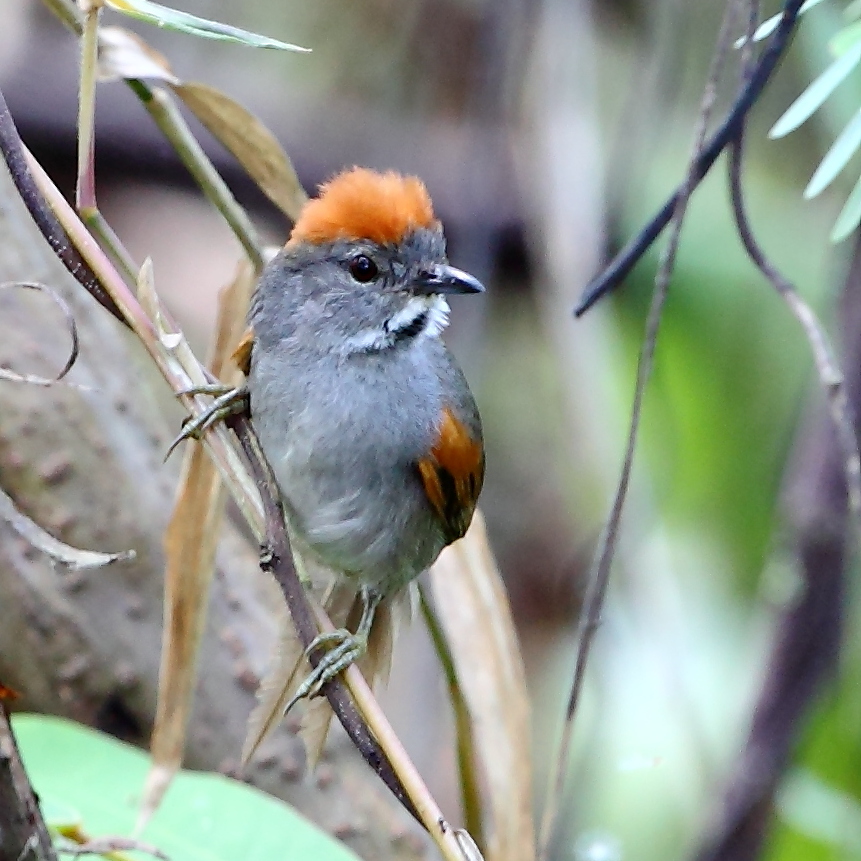
Azara's Spinetail
Synallaxis azarae
Order: Passeriformes / Family: Furnariidae

Wikimedia Commons
About the Azara's Spinetail
Azara's Spinetail (Synallaxis azarae), a member of the family Furnariidae, is a small passerine bird found primarily in the cloud forests of the Andean region. Known for its distinctive rufous crown and tail, this bird plays a significant role in the ecological dynamics of its habitat. The species is particularly prevalent in countries such as Colombia, Ecuador, Peru, and Bolivia, where it inhabits the dense undergrowth of montane forests. These environments, characterized by high humidity and frequent cloud cover, provide the perfect conditions for the spinetail to thrive. Azara's Spinetail is an insectivorous bird, contributing to the control of insect populations within its ecosystem. Its presence is an indicator of healthy forest environments, as it relies on the complex forest structure for nesting and foraging. During the breeding season, which typically occurs from October to December, Azara's Spinetail becomes more vocal and active. The bird's role in seed dispersal is less pronounced compared to other avian species, but it occasionally feeds on small fruits, aiding in the propagation of certain plant species. The survival of Azara's Spinetail is closely linked to the preservation of its forest habitat. Deforestation and habitat fragmentation pose significant threats, although the species currently maintains a stable population trend. Conservation efforts focusing on habitat protection are vital for ensuring that this bird continues to play its ecological role. By studying Azara's Spinetail, ornithologists gain insights into the health of Andean cloud forests and the broader implications for biodiversity in these regions.
The Azara's Spinetail belongs to the family Furnariidae, within the order Passeriformes. These birds typically live average 4-6 years with a max recorded of 8 years..
How to Identify a Azara's Spinetail
Azara's Spinetail is a small bird, measuring about 16-18 cm in length. Its most striking feature is the rufous crown and tail, which contrast with the olive-brown back and wings. The underparts are pale with a slightly buffy hue, and the bird has a distinct blackish line through the eye that enhances its facial expression. Juveniles resemble adults but have a duller coloration and less defined facial markings. There is little sexual dimorphism, so males and females appear similar. In flight, the bird exhibits a fluttering motion with rapid wingbeats, while its perching posture is upright, often flicking its tail. Confusion may occur with other spinetails, such as the Pale-breasted Spinetail, but Azara's is distinguished by its darker crown and more consistent habitat preferences. Birdwatchers can reliably identify this species by its vocalizations, which differ from those of similar species.
Having trouble telling birds apart? Upload a photo to our bird identification tool for an instant species match.
Azara's Spinetail Habitat and Range
Preferred Habitat
Azara's Spinetail inhabits montane cloud forests, typically at elevations ranging from 1,500 to 3,500 meters. These forests, dense with bamboo and broadleaf understory, provide the cover and resources the spinetail needs. It prefers areas with thick undergrowth and is less frequently found in open or fragmented habitats. The bird's presence in rural areas is more common than in urban settings, where suitable habitat is scarce. Seasonal shifts are minimal, as the spinetail remains resident in its preferred environment throughout the year, although it may utilize slightly varied altitudes depending on food availability.
Geographic Range
The range of Azara's Spinetail spans the Andes from Colombia in the north to Bolivia in the south. It is a non-migratory species and is generally resident within its range, occupying specific altitudinal zones. This bird is most densely populated in regions like Ecuador and Peru, where suitable habitat is abundant. While it does not undertake long migrations, local movements may occur in response to food availability or environmental changes.
Want to know which birds visit your area? Browse our backyard birds by location guides for region-specific species lists.
What Does the Azara's Spinetail Eat?
Azara's Spinetail primarily feeds on insects, making it an important insectivore in its ecosystem. Its diet includes ants, beetles, and caterpillars, which it gleans from foliage and tree bark. During certain seasons, the bird may also consume small fruits and seeds, supplementing its diet with available plant matter. This opportunistic feeding strategy allows it to adapt to varying food resources throughout the year. Foraging occurs throughout the day, with peaks during early morning and late afternoon when insect activity is higher.
Azara's Spinetail Behavior and Social Structure
Azara's Spinetail is generally solitary or seen in pairs, especially during the breeding season. It is territorial, with pairs defending their nesting sites vigorously against intruders. Courtship involves vocalizations and mutual preening, aiding in pair bond reinforcement. The bird's response to predators includes alarm calls and concealment within dense vegetation. Daily activities predominantly occur during daylight hours, with periods of heightened activity in the morning and late afternoon.
Azara's Spinetail Nesting and Reproduction
The nesting of Azara's Spinetail involves constructing a domed nest made from twigs and lined with softer materials like moss and feathers. Nest sites are typically located in dense undergrowth or low shrubs, offering protection from predators. A typical clutch consists of two to three eggs, with both parents participating in incubation, which lasts approximately 16-18 days. After hatching, the chicks fledge in about 20-23 days. The species usually raises one brood per year, although favorable conditions may allow for a second.
Azara's Spinetail Sounds and Vocalizations
The primary song of Azara's Spinetail is a series of sharp, rapid notes that rise and fall in pitch, resembling the trilling of a small mechanical device. Calls include sharp 'chip' notes used in communication between mates. Alarm calls are more abrupt and harsh, serving to alert nearby birds to potential danger. During the dawn chorus, its song contributes to the vibrant soundscape of the Andean forests, often heard before the bird is seen.
Interesting Facts About the Azara's Spinetail
- 1Azara's Spinetail is named after Spanish naturalist Félix de Azara, who made significant contributions to South American ornithology.
- 2Although primarily insectivorous, Azara's Spinetail has been observed eating small fruits, demonstrating dietary adaptability.
- 3The bird's distinctive tail flicking is thought to be a form of communication among individuals.
- 4Azara's Spinetail exhibits high site fidelity, often returning to the same nesting area year after year.
- 5Despite its small size, Azara's Spinetail plays a crucial role in controlling insect populations in its habitat.
- 6The species' vocalizations are key to maintaining territory boundaries within densely vegetated environments.
- 7Studying Azara's Spinetail helps researchers understand the impacts of climate change on montane avian species.
Azara's Spinetail Conservation Status
Azara's Spinetail holds a status of Least Concern according to the IUCN due to its wide distribution and stable population trend. However, deforestation poses a significant threat to its habitat, particularly in areas of agricultural expansion and urban development. Conservation efforts focus on protecting cloud forest habitats through the establishment of reserves and sustainable land management practices. Historical data suggests that the species has maintained a consistent population, thanks to these efforts.
Other Furnariidae Species


Birds Similar to the Azara's Spinetail
These species are often confused with the Azara's Spinetail due to similar appearance or overlapping range.