
Dark-breasted Spinetail
Synallaxis albigularis
Order: Passeriformes / Family: Furnariidae
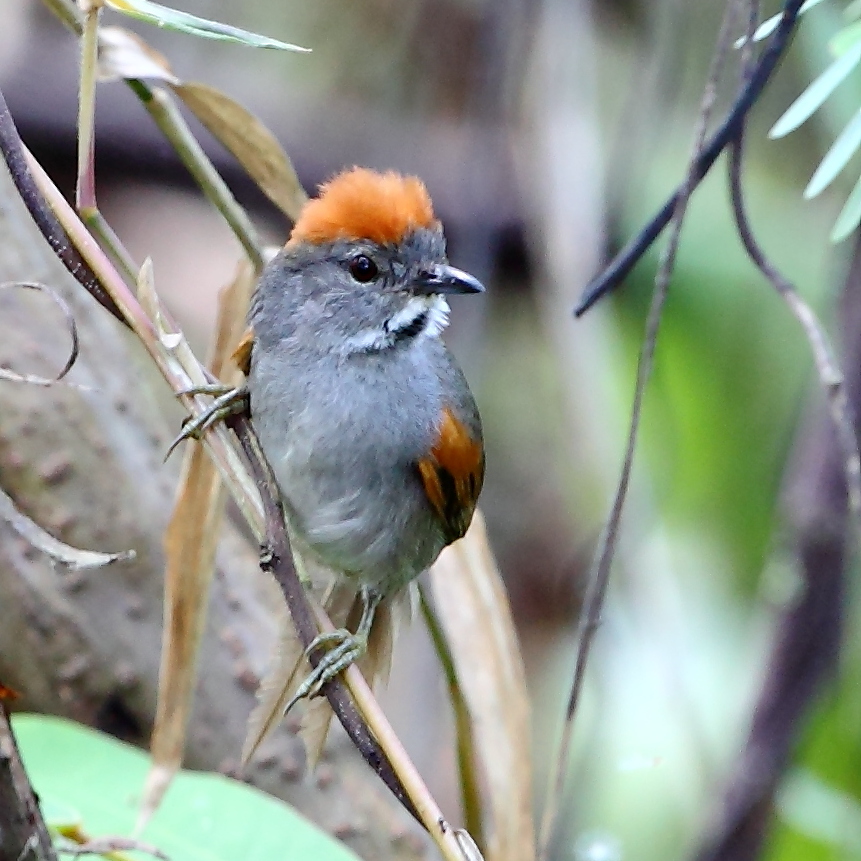
Wikimedia Commons
About the Dark-breasted Spinetail
The Dark-breasted Spinetail, known scientifically as Synallaxis albigularis, is a small passerine bird belonging to the family Furnariidae. This species is native to South America, where it plays a crucial role in the ecosystems of subtropical and tropical forests. Typically found in montane regions, this bird inhabits dense undergrowth and secondary forests, often seen flitting through the vegetation in search of food. The Dark-breasted Spinetail is a key indicator of forest health due to its specialized habitat requirements. It thrives in the mid-elevation regions of the Andes, from Colombia and Venezuela, extending southward into Peru and Bolivia. The bird's presence often signals a well-preserved forest ecosystem. As a member of the diverse Furnariidae family, the spinetail contributes to the ecological complexity of its habitat, engaging in insect control and seed dispersal. This species is non-migratory, maintaining a stable presence in its preferred habitats year-round. During the breeding season, which typically occurs from September to December, the Dark-breasted Spinetail becomes notably more vocal and territorial. It constructs intricate nests using twigs and plant fibers, placing them strategically to avoid predation. The bird's role in the ecosystem extends to its interactions with other species, including predatory birds that rely on the spinetail as a food source. Despite its seemingly modest size and appearance, the Dark-breasted Spinetail is a vibrant part of its natural community, adding to the biodiversity and ecological balance of South America's montane forests.
The Dark-breasted Spinetail belongs to the family Furnariidae, within the order Passeriformes. These birds typically live average 3-5 years with a max recorded of 6 years..
How to Identify a Dark-breasted Spinetail
The Dark-breasted Spinetail is a small bird, measuring around 15 cm in length. Its plumage is a distinct combination of rich dark brown on the upperparts and a contrasting white throat and chest, which gives it the 'dark-breasted' moniker. The adult birds exhibit a relatively uniform coloration, with the back and wings showing subtle rufous tinges. Juveniles, however, tend to have a slightly duller appearance, with less pronounced contrasts between the dark and white areas. Males and females are similar in plumage, making visual sex differentiation challenging. A key identification feature is the bird's long, slightly rounded tail, which is often held upright, a characteristic posture when perched. The flight silhouette of the Dark-breasted Spinetail is rather nondescript, with rapid wingbeats and a level flight pattern. It can be mistaken for similar species like the Rusty-winged Spinetail, but the latter has more pronounced rufous coloration on its wings and lacks the stark white throat. Observers can distinguish the Dark-breasted Spinetail by its characteristic habit of flicking its tail while moving through the underbrush, a behavior not as commonly seen in other Synallaxis species.
Having trouble telling birds apart? Upload a photo to our bird identification tool for an instant species match.
Dark-breasted Spinetail Habitat and Range
Preferred Habitat
The Dark-breasted Spinetail thrives in subtropical and tropical montane forests, particularly favoring areas with dense undergrowth and secondary growth. It is typically found at elevations ranging from 1,000 to 2,500 meters, where the forest provides ample cover and feeding opportunities. The bird shows a marked preference for humid environments, often inhabiting cloud forests and forest edges. Although it predominantly resides in rural and forested areas, it can occasionally be found in degraded habitats, provided there is sufficient underbrush. Unlike some other species, the Dark-breasted Spinetail does not generally adapt well to urban environments, remaining largely absent from cities and heavily populated areas. During the dry season, the bird may shift slightly in elevation to locate areas with higher humidity and food availability, but it generally maintains a consistent presence within its preferred habitat.
Geographic Range
The range of the Dark-breasted Spinetail extends through the Andean regions of South America, primarily found in countries such as Colombia, Venezuela, Ecuador, Peru, and Bolivia. It inhabits the eastern and western slopes of the Andes, with some populations occurring in the isolated mountain ranges of northern Venezuela. This bird does not migrate, maintaining its presence within its montane forest range throughout the year. Within these regions, it is more densely populated in areas with rich undergrowth, where the dense foliage provides both food and protection. The Dark-breasted Spinetail's distribution is relatively localized, with populations confined to specific mountain ranges that offer suitable habitat conditions. Although it is not considered migratory, local movements in response to seasonal changes in food availability and habitat conditions are common.
Want to know which birds visit your area? Browse our backyard birds by location guides for region-specific species lists.
What Does the Dark-breasted Spinetail Eat?
The diet of the Dark-breasted Spinetail primarily consists of insects and other small arthropods, which it gleans from foliage and bark in its forest habitat. This bird employs a methodical foraging technique, carefully examining leaves and twigs to uncover hidden prey. In addition to insects, the spinetail occasionally consumes small fruits and seeds, particularly during the breeding season when energy demands are higher. The bird's diet may vary slightly with the seasons, reflecting changes in prey availability. During the wet season, when insect populations peak, the spinetail's diet consists predominantly of soft-bodied insects, while in drier periods, it may rely more on seeds and tougher arthropods. The Dark-breasted Spinetail forages throughout the day, with peaks in activity during the early morning and late afternoon, times when insects are most active.
Dark-breasted Spinetail Behavior and Social Structure
The Dark-breasted Spinetail exhibits a complex social structure, often found in pairs or small family groups. It is a territorial species, defending its breeding area vigorously against intruders. The bird's territorial calls are a common sound in its forest habitat, particularly during the breeding season. Courtship displays involve both vocalizations and physical displays, with the male showcasing his plumage while performing a series of hops and wing flicks. Unlike some related species, the Dark-breasted Spinetail does not typically form large flocks, maintaining a more solitary or paired existence. When faced with predators, such as raptors or snakes, the spinetail employs a series of alarm calls and rapid, erratic flight to evade capture. Daily activity patterns of the Dark-breasted Spinetail revolve around foraging and territorial maintenance, with periods of rest during the hottest parts of the day. The bird is most active during the cooler morning and late afternoon hours.
Dark-breasted Spinetail Nesting and Reproduction
Dark-breasted Spinetails build distinctive dome-shaped nests made from twigs, grasses, and other plant materials. These nests are typically placed in dense shrubs or low trees, providing concealment from predators. The location of the nest is crucial, often situated several meters above the ground to deter ground-based threats. The typical clutch size for this species ranges from two to three eggs, which are incubated by both parents. The incubation period lasts approximately 15 to 18 days, after which the chicks hatch. Both parents are involved in feeding and caring for the young, ensuring a steady supply of food. The fledging period for the Dark-breasted Spinetail is relatively short, with chicks leaving the nest about 15 days after hatching. This species typically raises one to two broods per year, depending on environmental conditions and food availability.
Dark-breasted Spinetail Sounds and Vocalizations
The primary song of the Dark-breasted Spinetail is a series of sharp, high-pitched notes delivered in rapid succession. These notes are clear and penetrating, often carrying through the dense forest habitat. The bird also produces various call notes, including a softer, more subdued series of chirps used for communication between mates. Alarm calls are distinct, consisting of a rapid, repeated series of harsh notes that serve to alert others to potential danger. During the dawn chorus, the Dark-breasted Spinetail's song is a prominent feature, often one of the first sounds heard as the forest awakens. The vocalizations of this species are similar to those of other spinetails but can be distinguished by their sharper quality and faster tempo.
Interesting Facts About the Dark-breasted Spinetail
- 1The Dark-breasted Spinetail is part of the diverse Furnariidae family, which includes over 300 species of ovenbirds and woodcreepers.
- 2This species constructs intricate dome-shaped nests, utilizing a variety of materials such as twigs and grasses, showcasing remarkable architectural skills.
- 3Dark-breasted Spinetails are non-migratory, maintaining a stable presence in their montane forest habitats throughout the year.
- 4The bird's long tail, often held upright, is a key feature used in its identification, along with its distinctive dark and white plumage.
- 5Despite primarily eating insects, the spinetail occasionally supplements its diet with small fruits and seeds, especially during the breeding season.
- 6The Dark-breasted Spinetail's vocalizations are a hallmark of its presence, with its sharp, rapid song often heard during the dawn chorus.
- 7This species inhabits elevations ranging from 1,000 to 2,500 meters, preferring humid montane forests with dense undergrowth.
Dark-breasted Spinetail Conservation Status
The Dark-breasted Spinetail is currently classified as a species of Least Concern by the IUCN. Despite this status, its populations face pressure from habitat loss due to deforestation and agricultural expansion. The population trend appears stable at present, but continued habitat degradation could pose significant threats in the future. Conservation efforts focus on protecting the montane forests that serve as crucial habitats for this and many other species. Organizations are working to establish protected areas and promote sustainable land-use practices to ensure the survival of these forests. Historically, the Dark-breasted Spinetail has maintained healthy populations within its range, but ongoing monitoring is essential to detect any potential declines.
Other Furnariidae Species


Birds Similar to the Dark-breasted Spinetail
These species are often confused with the Dark-breasted Spinetail due to similar appearance or overlapping range.

