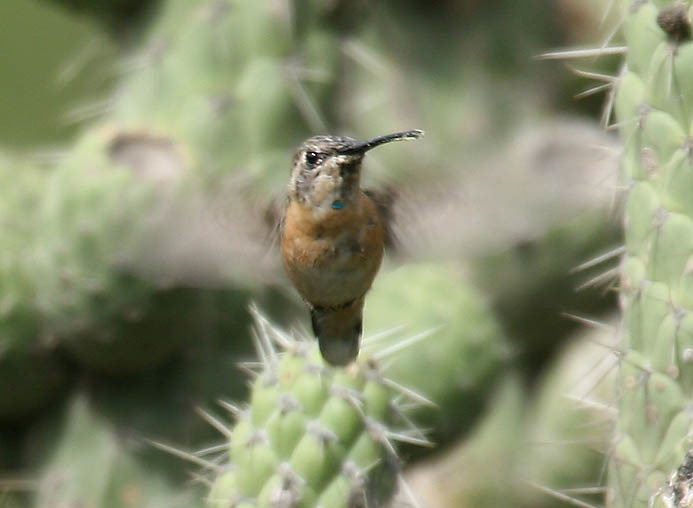
Bahama Woodstar
Nesophlox evelynae
Order: Apodiformes / Family: Trochilidae

Wikimedia Commons
About the Bahama Woodstar
The Bahama Woodstar, scientifically known as Nesophlox evelynae, is an enchanting member of the family Trochilidae, known for its striking iridescent plumage and agile flight. This small hummingbird is native to the Bahamas, where it plays a significant pollination role in local ecosystems. The bird thrives in varied habitats, from coastal regions to pine forests, adapting to seasonal changes with remarkable resilience. As an island inhabitant, the Bahama Woodstar is integral to the environmental health of its native range, facilitating the pollination of numerous native plant species. During the breeding season, which typically extends from March to July, the Bahama Woodstar exhibits territorial behavior, with males aggressively defending their feeding territories. Outside the breeding season, this hummingbird continues to be a vital pollinator, with its feeding habits ensuring the survival of many flowering plants. The Bahama Woodstar's ecological role extends beyond pollination, as it also helps control insect populations by preying on small arthropods. This hummingbird's adaptability allows it to thrive in both natural and urbanized environments, although it faces challenges from habitat loss and climate change. Conservation efforts focus on preserving its habitats and mitigating the effects of environmental threats. The Bahama Woodstar's presence in the Bahamas is not only a testament to the island's biodiversity but also highlights the delicate balance of its ecosystems. The vibrant appearances and energetic behaviors of the Bahama Woodstar make it a fascinating subject for birdwatchers and researchers alike, contributing to a deeper understanding of island ecology and the importance of preserving natural habitats.
The Bahama Woodstar belongs to the family Trochilidae, within the order Apodiformes. These birds typically live average 4 years with a maximum recorded of 6 years.
How to Identify a Bahama Woodstar
The Bahama Woodstar is a small hummingbird, measuring about 8 to 9 cm in length, with a wingspan of approximately 11 cm. Adult males display a dazzling iridescent purple gorget that can appear black from certain angles, contrasting with their green upperparts and white underparts. Females, on the other hand, lack the vibrant gorget, featuring a more subdued plumage with green upperparts and pale gray underparts. Juveniles resemble females but may show traces of the male's iridescent throat as they mature. The Bahama Woodstar has a slightly curved bill, adapted for feeding on nectar from a variety of flowers. In flight, it exhibits rapid wing beats, creating a humming sound characteristic of hummingbirds. When perched, its posture is upright, often on a twig or similar vantage point. This bird's size and coloration can lead to confusion with the Cuban Emerald, another hummingbird found in the region, but the Bahama Woodstar's smaller size and specific iridescent coloration help distinguish it. Observers can identify this species by its distinctive flight pattern, marked by quick, darting movements and hovering capabilities.
Having trouble telling birds apart? Upload a photo to our bird identification tool for an instant species match.
Bahama Woodstar Habitat and Range
Preferred Habitat
The Bahama Woodstar inhabits a range of environments throughout the Bahamian archipelago. It is commonly found in coastal areas, pine forests, and tropical scrublands, favoring habitats with abundant flowering plants that provide nectar. This hummingbird is adaptable to elevations from sea level to low mountainous regions, typically below 150 meters. Seasonal shifts in habitat may occur, as the bird moves in response to the availability of food resources. In urban areas, the Bahama Woodstar can often be seen in gardens and parks where flowering shrubs and trees are planted. Despite its adaptability, the bird prefers environments that offer a variety of native flora, ensuring a consistent supply of nectar sources. Conservation of such habitats is crucial for the Bahama Woodstar's survival, particularly as urbanization and habitat destruction pose ongoing threats.
Geographic Range
The Bahama Woodstar is endemic to the Bahamas, with its range encompassing the entire archipelago. It is a non-migratory species, remaining in the Bahamian islands year-round. Key population regions include the islands of Abaco, Andros, Eleuthera, and New Providence, where the bird is commonly observed. While it does not undertake long-distance migrations, the Bahama Woodstar may exhibit local movements within the islands to exploit seasonal blooms of flowering plants. Population densities are generally higher in areas with rich floral diversity, which provides ample feeding opportunities. Despite its limited geographic range, the Bahama Woodstar is considered a common resident throughout its distribution, though habitat fragmentation and environmental changes continue to impact its populations.
Want to know which birds visit your area? Browse our backyard birds by location guides for region-specific species lists.
What Does the Bahama Woodstar Eat?
The Bahama Woodstar primarily feeds on nectar, favoring the flowers of native plants such as firebush and wild sage. It employs a specialized feeding technique, hovering in front of blossoms and using its long, slender bill to extract nectar while its wings beat rapidly to maintain stability. Additionally, the bird supplements its diet with small insects and spiders, providing essential proteins and nutrients. Seasonal variations in diet occur as the availability of specific flowers changes, prompting the Bahama Woodstar to adjust its foraging patterns accordingly. During morning and late afternoon hours, feeding activity peaks, with the bird visiting numerous plants in quick succession. Its agile aerial maneuvers allow it to exploit a wide range of nectar sources, contributing to its role as a key pollinator in its ecosystem.
Want to attract Bahama Woodstars to your yard? See our recommended feeders and seed types for the best results.
Bahama Woodstar Behavior and Social Structure
The Bahama Woodstar exhibits a fascinating range of behaviors, particularly in its social and territorial interactions. Males are known for their territorial aggression during the breeding season, often engaging in aerial displays and chases to defend their feeding territories from rivals. Their courtship displays include rapid flights and vocalizations designed to attract females. Outside the breeding season, the Bahama Woodstar tends to be less territorial, though it still competes for feeding resources. The bird's daily activity patterns involve intense foraging bouts interspersed with periods of rest and preening. In response to predators such as hawks and larger birds, the Bahama Woodstar relies on its agility, swiftly taking evasive maneuvers to avoid capture. Flocking behavior is uncommon, as these hummingbirds typically lead solitary lives except during breeding or when food sources are abundant. The Bahama Woodstar's adaptability and resourcefulness are evident in its ability to thrive in both natural and altered landscapes, highlighting its resilience in the face of environmental changes.
Bahama Woodstar Nesting and Reproduction
Nesting for the Bahama Woodstar involves the construction of a small cup-shaped nest, intricately woven from plant fibers, spider silk, and other natural materials. These nests are typically situated on low shrubs or tree branches, providing concealment and protection from predators. The female exclusively undertakes nest building and incubation duties. A typical clutch consists of two white eggs, which she incubates for approximately 15 to 17 days. After hatching, the chicks remain in the nest for about 20 to 22 days, during which time the female diligently feeds them a diet of regurgitated nectar and insects. The male plays no role in caring for the young. The Bahama Woodstar may raise two broods per year, depending on environmental conditions and food availability. This reproductive strategy allows for flexibility in response to seasonal variations and contributes to the species' resilience.
Bahama Woodstar Sounds and Vocalizations
The Bahama Woodstar's vocalizations include a variety of high-pitched, rapid trills and chips, often heard during courtship and territorial displays. The primary song consists of a series of short, high-frequency notes delivered in quick succession, creating a melodic yet piercing sound. These songs serve to establish territory and attract mates. Call notes are typically sharp and repetitive, used for communication between individuals. Alarm calls, emitted in response to threats, are more abrupt and harsh, alerting nearby birds to potential danger. Dawn chorus activity is noticeable, with increased vocalizations marking the start of daily activities. The Bahama Woodstar's vocal repertoire, while not as complex as some songbirds, plays a crucial role in its social interactions and territorial defense.
Interesting Facts About the Bahama Woodstar
- 1The Bahama Woodstar can beat its wings up to 70 times per second, allowing for precise hovering and maneuverability.
- 2Despite its small size, the Bahama Woodstar's heart can beat over 1,200 times per minute during flight.
- 3The iridescent colors of the Bahama Woodstar are due to microscopic platelets in its feathers that refract light.
- 4A single Bahama Woodstar can visit hundreds of flowers in a single day, making it an essential pollinator.
- 5The Bahama Woodstar's courtship displays include rapid aerial dives and distinctive vocalizations to attract mates.
- 6Nesophlox evelynae was first described scientifically in 1883, highlighting its long-standing recognition by ornithologists.
- 7The Bahama Woodstar occasionally feeds on small insects, providing a critical protein source in its diet.
Bahama Woodstar Conservation Status
The Bahama Woodstar is currently classified as Least Concern by the IUCN, with stable population trends overall. However, habitat loss due to urbanization and climate change poses significant threats to its future. Conservation efforts prioritize habitat preservation, focusing on protecting critical feeding and nesting sites across the Bahamas. Initiatives aimed at planting native flora in urban areas also support the species by providing essential nectar sources. Historically, the Bahama Woodstar's populations have fluctuated in response to environmental changes, underscoring the need for continued monitoring and habitat management. Collaborative efforts between conservation organizations and local communities remain vital for ensuring the long-term survival of this captivating hummingbird.
Attracting Bahama Woodstars to Your Feeder
The Bahama Woodstar is a regular visitor to backyard bird feeders across its range. At the Eye On The Fly feeding station, we observe Bahama Woodstars regularly and capture footage with our feeder cameras.
Other Trochilidae Species


Birds Similar to the Bahama Woodstar
These species are often confused with the Bahama Woodstar due to similar appearance or overlapping range.