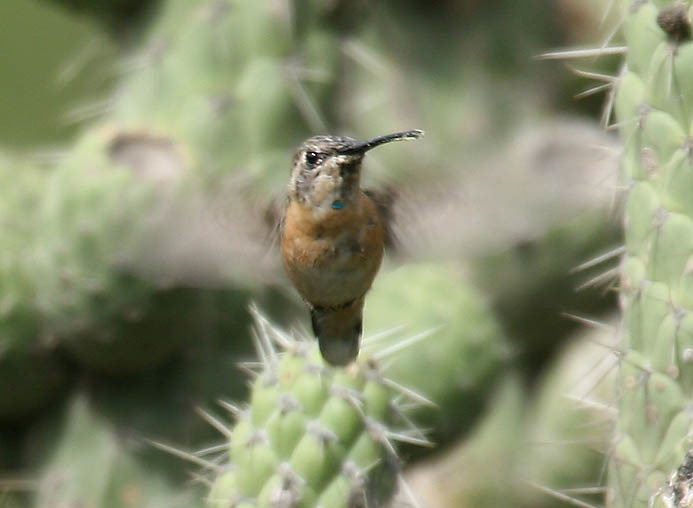
Inagua Woodstar
Nesophlox lyrura
Order: Apodiformes / Family: Trochilidae

Wikimedia Commons
About the Inagua Woodstar
The Inagua Woodstar (Nesophlox lyrura) is a fascinating and diminutive hummingbird species endemic to the Bahamas, specifically the islands of Great Inagua and Little Inagua. This bird is a member of the Trochilidae family and the order Apodiformes. It plays a crucial role in its ecosystem as a pollinator, contributing to the reproduction of various flowering plants within its habitat. The Inagua Woodstar's presence is a vital component of the local biodiversity, maintaining the health and balance of the ecosystems in which it resides.
Great Inagua, with its saline lakes and mangrove swamps, provides an ideal environment for the Inagua Woodstar. The hummingbird thrives in these tropical and subtropical habitats, where it can access abundant nectar sources. The importance of this bird extends beyond its ecological role, as it also holds cultural significance for the residents of the Bahamas. Birdwatchers and ornithologists alike travel to these islands to catch a glimpse of this unique hummingbird, contributing to ecotourism in the region.
Ecologically, the Inagua Woodstar is a keystone species, meaning its activities have a significant impact on the structure and function of its ecosystem. By feeding on nectar, the hummingbird inadvertently transfers pollen between flowers, facilitating cross-pollination. This process helps ensure genetic diversity within plant populations, which is crucial for their resilience to environmental changes. The Inagua Woodstar's ecological role highlights the interconnectedness of species within its habitat and underscores the importance of conserving this remarkable bird.
Seasonal behaviors of the Inagua Woodstar include slight shifts within its local range in response to flowering patterns. During the breeding season, which typically occurs between March and July, the hummingbird becomes more territorial, defending its chosen feeding and nesting sites from intruders. Outside of the breeding season, the Inagua Woodstar may exhibit more relaxed territorial behaviors, allowing for greater overlap in feeding territories among individuals. These seasonal variations in behavior demonstrate the adaptability of this species to its environment.
The Inagua Woodstar belongs to the family Trochilidae, within the order Apodiformes. These birds typically live average 4 years with a maximum recorded of 6 years.
How to Identify a Inagua Woodstar
The Inagua Woodstar is a small hummingbird, measuring approximately 8 to 9 centimeters in length with a wingspan of about 11 centimeters. The adult male is particularly striking, boasting a vibrant iridescent green crown, back, and upper tail, contrasted by a distinctive forked tail with a purple hue. The throat of the male features a dazzling gorget that can appear reddish-purple when caught in the right light, a key identifying trait that distinguishes it from similar species.
Females and juveniles, on the other hand, have a more subdued appearance. They lack the bright gorget and have paler underparts with a more rounded tail tipped with white. The back and crown of the female remain a muted green, but overall, their plumage is less vibrant than that of the male. These differences in plumage between the sexes and age groups are essential for identifying individuals in the field, especially during the breeding season when males display their colors prominently.
In flight, the Inagua Woodstar appears agile and swift, with rapid wing beats typical of hummingbirds, creating a blurred wing silhouette. When perched, it maintains an upright posture, often seen resting on thin branches or twigs. Despite its size, the bird's iridescent plumage and unique tail shape make it relatively easy to identify, even at a distance. The Inagua Woodstar's flight and perching behavior, along with its vivid coloration, help distinguish it from other hummingbirds that may share portions of its range.
Having trouble telling birds apart? Upload a photo to our bird identification tool for an instant species match.
Inagua Woodstar Habitat and Range
Preferred Habitat
The Inagua Woodstar primarily inhabits tropical and subtropical environments, with a preference for coastal areas, mangroves, and salt marshes, particularly within Great Inagua and Little Inagua. These islands provide an abundance of flowering plants, which serve as the primary nectar source for this hummingbird.
The elevation range for the Inagua Woodstar is generally low, as it thrives in habitats near sea level where its preferred plant species are abundant. It is most commonly found in areas with dense shrubbery and flowering trees, where it can easily access its food sources.
Although primarily associated with rural and natural settings, the Inagua Woodstar occasionally ventures into garden settings where suitable flowering plants are present. However, it tends to avoid heavily urbanized areas, likely due to the lack of appropriate food sources and nesting sites. Seasonal habitat shifts are minimal, as the bird is largely sedentary, remaining on its home islands year-round.
Geographic Range
The Inagua Woodstar is endemic to the Bahamas, with its range limited to the islands of Great Inagua and Little Inagua in the southern part of the archipelago. These islands provide the specific environmental conditions and resources that the species requires for survival, including ample nectar-producing flora.
The bird does not engage in long-distance migration, remaining within its restricted range throughout the year. This lack of migratory behavior means that its presence is a constant feature of the local avifauna, contributing to the distinctiveness of the region's birdlife.
Population density tends to be highest in areas where flowering plants are most abundant, particularly during the breeding season when food requirements increase. Although its limited range makes the Inagua Woodstar vulnerable to habitat changes, the stable conditions on its home islands have so far supported a relatively stable population. Nonetheless, conservation efforts remain crucial to ensure the species' continued presence in its native habitat.
Want to know which birds visit your area? Browse our backyard birds by location guides for region-specific species lists.
What Does the Inagua Woodstar Eat?
The diet of the Inagua Woodstar primarily consists of nectar from a variety of flowering plants, making it a vital pollinator within its ecosystem. It exhibits a preference for flowers with tubular shapes that match its bill, allowing for efficient nectar extraction. Among its favored nectar sources are species of hibiscus, morning glory, and other native flowering shrubs.
In addition to nectar, the Inagua Woodstar supplements its diet with small insects and spiders, which provide essential proteins and nutrients. This secondary food source is particularly important during the breeding season when nutritional demands increase. The hummingbird employs a hovering technique to capture insects in mid-air or gleans them from foliage.
Feeding occurs throughout the day, with peak activity during the early morning and late afternoon when flowers are most abundant and insects are active. The Inagua Woodstar's agile flight and acute vision enable it to efficiently locate and exploit food sources within its habitat. Seasonal changes in diet are minimal due to the consistent availability of nectar-producing plants on its home islands.
Want to attract Inagua Woodstars to your yard? See our recommended feeders and seed types for the best results.
Inagua Woodstar Behavior and Social Structure
The Inagua Woodstar exhibits a solitary and territorial nature, especially during the breeding season. Males actively defend their feeding territories, engaging in aerial displays and vocalizations to ward off rivals. Territorial disputes often involve rapid chases and aggressive posturing, showcasing the bird's agility and determination.
Courtship displays are an integral part of the breeding season. Males perform elaborate aerial maneuvers, including rapid dives and U-shaped flight patterns, to attract females. These displays are accompanied by distinctive vocalizations, adding an auditory element to the courtship ritual.
Outside the breeding season, the Inagua Woodstar may exhibit more relaxed territorial behavior, with overlapping feeding territories. However, it maintains a solitary lifestyle, rarely forming flocks or groups. The bird is diurnal, with activity peaks during early morning and late afternoon when feeding conditions are optimal.
In response to predators, the Inagua Woodstar relies on its swift flight and small size to evade capture. It remains vigilant, often retreating into dense foliage for cover. This cautious behavior helps ensure its survival in an environment where predators such as larger birds and reptiles may pose a threat.
Inagua Woodstar Nesting and Reproduction
The Inagua Woodstar constructs its nest using plant fibers, spider silk, and other fine materials, creating a small cup-shaped structure. The nest is typically located on a horizontal branch or in a forked twig, often concealed within dense foliage to protect it from predators.
The female is primarily responsible for nest building and selects a site near abundant food sources, ensuring easy access to nectar during the incubation period. Once the nest is complete, the female lays a clutch of two small white eggs. The incubation period lasts approximately 14 to 16 days, during which the female alone incubates the eggs.
After hatching, the nestlings remain in the nest for about 20 to 22 days before fledging. The female continues to provide care and food for the young during this period, feeding them a diet rich in nectar and insects. The Inagua Woodstar typically raises one brood per year, although favorable conditions may occasionally allow for a second brood.
Parental care extends beyond fledging, as the female may continue to feed and protect the fledglings for several weeks until they become independent. This extended care ensures the survival and successful integration of the young into the local population.
Inagua Woodstar Sounds and Vocalizations
The primary song of the Inagua Woodstar is a series of high-pitched, rapid twittering notes that create a melodic and lively rhythm. This song serves as both a territorial declaration and an attraction signal for potential mates. The pitch is consistently high, and the quality is described as vibrant and energetic.
In addition to its song, the Inagua Woodstar produces call notes that are short and sharp, often used to communicate with mates or signal alarm. These calls can vary in intensity and frequency, depending on the situation. Alarm calls tend to be more urgent and rapid, serving as a warning to nearby birds.
During the dawn chorus, the Inagua Woodstar's song is most prominent, contributing to the acoustic landscape of its habitat. Its vocalizations, while distinctive, may be compared to the rapid chatter of other hummingbird species, though with a unique tonal quality and rhythm.
Interesting Facts About the Inagua Woodstar
- 1The Inagua Woodstar can beat its wings up to 80 times per second, allowing it to hover effortlessly while feeding on nectar.
- 2Despite its small size, the Inagua Woodstar's heart rate can reach up to 1,260 beats per minute, supporting its high-energy lifestyle.
- 3The Inagua Woodstar's iridescent plumage results from microscopic platelets in the feathers that reflect light, creating vibrant colors.
- 4This hummingbird is named after the Inagua islands, where it is exclusively found, highlighting its unique geographic distribution.
- 5The Inagua Woodstar, like other hummingbirds, has a remarkable memory, enabling it to remember the locations of reliable food sources.
- 6Inagua Woodstars play a crucial role in pollinating native plant species, helping maintain the ecological balance of their island habitats.
- 7The species' name, 'lyrura,' refers to the lyre-shaped tail feathers of the male, a distinctive feature that aids in identification.
Inagua Woodstar Conservation Status
The Inagua Woodstar is currently classified as Least Concern by the International Union for Conservation of Nature (IUCN), indicating a stable population trend. However, its restricted range makes it vulnerable to habitat changes, particularly those caused by human activity or climate change. Primary threats include habitat loss due to development and potential impacts from invasive species that may alter the ecological balance of its home islands. Conservation efforts focus on preserving the natural habitats of Great Inagua and Little Inagua, ensuring the availability of food sources and nesting sites. Historically, the population of the Inagua Woodstar has remained relatively stable, benefiting from the protected status of significant portions of its habitat. Continued monitoring and conservation initiatives are essential to maintain this stability and address any emerging threats. Efforts to raise awareness of the species' ecological importance also contribute to its conservation.
Attracting Inagua Woodstars to Your Feeder
The Inagua Woodstar is a regular visitor to backyard bird feeders across its range. At the Eye On The Fly feeding station, we observe Inagua Woodstars regularly and capture footage with our feeder cameras.
Other Trochilidae Species


Birds Similar to the Inagua Woodstar
These species are often confused with the Inagua Woodstar due to similar appearance or overlapping range.