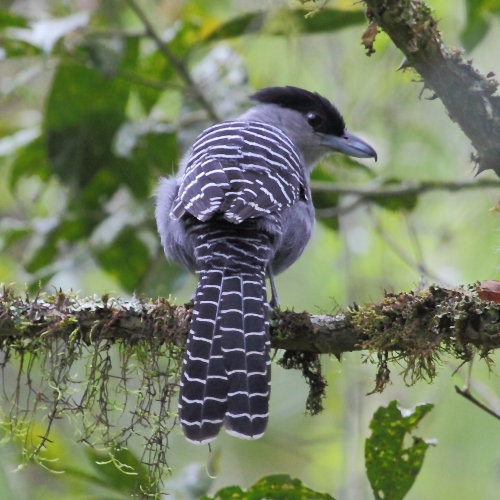
Bananal Antbird
Cercomacra ferdinandi
Order: Passeriformes / Family: Thamnophilidae

Wikimedia Commons
About the Bananal Antbird
The Bananal Antbird, scientifically known as Cercomacra ferdinandi, inhabits the regions of Central Brazil, most notably within the vast floodplain of the Araguaia River. This bird is an emblematic species of the dense gallery forests that are characteristic of this region. Known for its pronounced sexual dimorphism, the Bananal Antbird plays a pivotal role in maintaining the ecological balance within its habitat by controlling insect populations. As a member of the Thamnophilidae family, the Bananal Antbird is adept at navigating the complex undergrowth of its forest environment, a skill that is crucial for its survival and foraging activities.
The Bananal Antbird is a vital component of the ecosystem due to its diet, which primarily consists of ants and other arthropods. This dietary preference aids in the regulation of insect populations, which can impact vegetation health and growth. Additionally, the presence of the Bananal Antbird serves as an indicator of forest health, as it requires intact habitats with dense foliage for nesting and feeding. Conservationists often use the status of such species to assess the impacts of habitat degradation and deforestation in the Brazilian Amazon.
During the breeding season, typically from October to March, the Bananal Antbird exhibits territorial behavior, with males vigorously defending their chosen areas. The bird's courtship displays are elaborate and involve a series of vocalizations and physical postures intended to attract a mate. Outside of the breeding season, Bananal Antbirds may form loose associations with other insectivorous birds, participating in mixed-species flocks that enhance foraging success. Despite its specialized habitat requirements, the Bananal Antbird is currently not classified as endangered, though its population is sensitive to habitat loss due to agriculture and development.
The Bananal Antbird belongs to the family Thamnophilidae, within the order Passeriformes. These birds typically live average 4 years with a maximum recorded of 7 years.
How to Identify a Bananal Antbird
The Bananal Antbird is a small songbird, measuring approximately 13 cm in length. Adult males are predominantly black, with striking white wing bars and a white belly, making them easily distinguishable. In contrast, females have a more muted appearance, with brownish upperparts and a lighter, buffy underbelly, which can lead to confusion with other sympatric antbirds. Juveniles resemble females but are slightly paler and lack the defined wing bars seen in adult males.
When observing the Bananal Antbird in the field, note its perching posture, which is typically upright, with frequent tail flicks and wing quivers. The bird's flight pattern is short and direct, often moving quickly between dense vegetation. Its silhouette in flight is compact, with rounded wings that aid in maneuverability through forest interiors.
Similar species that might cause confusion include the Spot-backed Antbird and the Black-capped Antbird, but the Bananal Antbird's contrasting plumage, particularly in males, is a key distinguishing feature. Additionally, its distinctive vocalizations, characterized by a series of rapid notes and whistles, are a reliable field mark that separates it from other species.
Having trouble telling birds apart? Upload a photo to our bird identification tool for an instant species match.
Bananal Antbird Habitat and Range
Preferred Habitat
The Bananal Antbird is primarily found in gallery forests along the floodplains of the Araguaia River in Central Brazil, making it a near-endemic species to this region. These forests are characterized by dense canopy cover and a rich understory, providing the ideal environment for the antbird's foraging and nesting habits. The species is typically found at low elevations, rarely exceeding 300 meters above sea level.
While the Bananal Antbird prefers the secluded and undisturbed areas of forests, it can occasionally be found in secondary growth areas, provided they offer sufficient cover and food resources. Unlike some other antbirds, it does not adapt well to urban environments and is absent from heavily developed areas.
The species does not exhibit significant seasonal habitat shifts, remaining resident within its preferred habitats throughout the year. This consistent habitat use underscores the importance of conserving the specific environments that support its populations.
Geographic Range
The Bananal Antbird's range is largely confined to Central Brazil, predominantly within the state of Tocantins. Its distribution closely follows the course of the Araguaia River, particularly within the bounds of Bananal Island, after which the species is named. This region is part of the larger Amazon basin, known for its rich biodiversity and complex ecosystems.
The bird is non-migratory, maintaining a resident status throughout the year. As such, its populations are concentrated in specific geographic locales, with little to no seasonal movement beyond their established territories. The Bananal Antbird's reliance on a restricted range highlights the importance of preserving the unique gallery forest habitats of the Araguaia River floodplain.
Population density is highest in undisturbed forested areas, with occasional sightings in secondary growth regions that retain sufficient structural complexity. The species is absent from the more arid regions to the north and southeast, marking the limits of its ecological tolerance and geographic distribution.
Want to know which birds visit your area? Browse our backyard birds by location guides for region-specific species lists.
What Does the Bananal Antbird Eat?
The Bananal Antbird has a diet that primarily consists of ants and other small arthropods, which it forages for on the forest floor and in the lower strata of the understory. Its foraging technique is characterized by a methodical search through leaf litter and underbrush, often using its bill to flick aside debris in search of prey. This behavior is typical of many antbirds and underscores their role as key insectivores within their ecosystems.
Seasonal variations in diet are not well documented, but it is likely that the Bananal Antbird adjusts its feeding habits based on prey availability, which can fluctuate with the wet and dry seasons. During periods of high insect activity, the bird may expand its diet to include a greater variety of invertebrates, while in leaner times, it focuses more intensively on available ant colonies.
The Bananal Antbird typically forages in pairs or small family groups, and it may join mixed-species flocks that increase foraging efficiency by flushing insects and reducing predation risk. Its feeding schedule is primarily diurnal, with peak activity occurring in the early morning and late afternoon when temperatures are cooler and insect activity is higher.
Bananal Antbird Behavior and Social Structure
The Bananal Antbird exhibits territorial behavior, particularly during the breeding season, when males become highly vocal and aggressive in defending their territory from intruders. These territories are often centered around prime foraging areas and suitable nesting sites, with boundaries marked by vocal displays and physical posturing.
Socially, the Bananal Antbird is typically monogamous, forming long-term pair bonds that persist across breeding seasons. During courtship, males engage in elaborate displays that include song, wing-flicking, and hopping to attract the attention of females. Once paired, both members of a pair participate in territory defense and nest construction.
In response to predators, the Bananal Antbird employs a variety of defensive behaviors, including alarm calls and mobbing. These actions serve to alert other birds in the vicinity and can deter smaller predators. The species is most active during the early morning and late afternoon, with a lull in activity during the heat of midday. At times, the Bananal Antbird joins mixed-species flocks, which provide mutual benefits in terms of foraging success and predator avoidance.
Bananal Antbird Nesting and Reproduction
The nesting habits of the Bananal Antbird involve constructing a cup-shaped nest made primarily of plant fibers, leaves, and twigs. These nests are typically situated in low shrubs or small trees, well-concealed among dense foliage to protect against predators. The choice of nest site is critical, as it must offer protection from both terrestrial and avian predators.
Clutch sizes for the Bananal Antbird generally range from two to three eggs, which are incubated by both parents. The incubation period lasts approximately 14 to 16 days, during which time the adult birds take turns sitting on the nest and foraging for food.
After hatching, the young are altricial, requiring constant care and feeding by the parents. The fledging period is relatively short, lasting about 10 to 12 days, after which the juveniles leave the nest but remain under parental supervision until they are fully independent. The Bananal Antbird typically raises one to two broods per year, depending on environmental conditions and food availability.
Bananal Antbird Sounds and Vocalizations
The Bananal Antbird's primary song is a series of rapid, melodious notes that rise and fall in pitch, often described as a series of whistles followed by a trilled flourish. This song is used to establish territory and attract mates, particularly during the breeding season.
In addition to its song, the Bananal Antbird produces a variety of call notes, including sharp, metallic chips that serve as contact calls between mates or group members. Alarm calls are harsh and repetitive, used to alert others to the presence of predators.
During the dawn chorus, the Bananal Antbird's song is most prominent, filling the forest with its distinctive melody. This vocal activity peaks at first light and tapers off as the day progresses. The bird's vocalizations are a key element in its identification and are often compared to the songs of other antbird species in the area.
Interesting Facts About the Bananal Antbird
- 1The Bananal Antbird was named after Bananal Island, one of the largest river islands in the world, located in Brazil.
- 2Despite its name, the Bananal Antbird does not feed on bananas; its diet consists primarily of ants and other insects.
- 3The species exhibits marked sexual dimorphism, with males sporting a striking black-and-white plumage, while females are more subdued in color.
- 4The Bananal Antbird's song is a key tool for territory defense and can be heard echoing through its forest habitat during the breeding season.
- 5This species plays a crucial role in controlling insect populations, particularly ants, in its native gallery forest habitat.
- 6Bananal Antbirds are non-migratory, maintaining year-round territories within the dense gallery forests of the Araguaia River.
- 7The Bananal Antbird's presence in an area is often an indicator of healthy, intact forest ecosystems, making it a focus for conservation efforts.
Bananal Antbird Conservation Status
The Bananal Antbird is currently listed as Near Threatened on the IUCN Red List, with populations considered stable but potentially vulnerable to habitat loss. The primary threat to this species is deforestation, driven by agriculture and infrastructure development in the Amazon basin. Conservation efforts for the Bananal Antbird focus on preserving its native habitats, particularly the gallery forests along the Araguaia River. Initiatives include the establishment of protected areas and the implementation of sustainable land-use practices that minimize forest degradation. Historically, the Bananal Antbird's population has remained relatively stable, but continued monitoring is essential to detect any changes in its status. Efforts to educate local communities about the ecological importance of this species and its habitat are also underway, aiming to promote coexistence and conservation.