Bengal Florican
Houbaropsis bengalensis
Order: Otidiformes / Family: Otididae
Wikimedia Commons
About the Bengal Florican
The Bengal Florican (Houbaropsis bengalensis) is a critically endangered bird species that belongs to the Otididae family. It is known for its unique mating displays and affinity for grassland habitats in parts of South Asia. Males, particularly during the breeding season, become prominent as they engage in spectacular aerial displays to attract females, characterized by rapid wing flapping and a characteristic booming call. This species has significant ecological importance as it is an indicator of healthy grassland ecosystems, which are increasingly under threat from human activities. Historically, the Bengal Florican thrived in the floodplain grasslands of the Indo-Gangetic plains, but habitat fragmentation has severely impacted its numbers. The species is now largely confined to protected reserves in countries like India, Nepal, and Cambodia. These birds play a vital role in their ecosystem by controlling insect populations and helping in seed dispersal. Seasonally, the Bengal Florican exhibits interesting behaviors as it adapts to the changing environmental conditions of its habitats, moving to different areas in response to monsoonal flooding and dry seasons. During the non-breeding season, they tend to be more solitary and less conspicuous, merging into the tall grasses that form their home, making them difficult to spot. Conservation efforts are of utmost importance to ensure the survival of the Bengal Florican, as its presence signifies the health of the grasslands, which support a wide range of biodiversity.
The Bengal Florican belongs to the family Otididae, within the order Otidiformes. These birds typically live average 8-10 years, with a maximum of 12 years recorded..
How to Identify a Bengal Florican
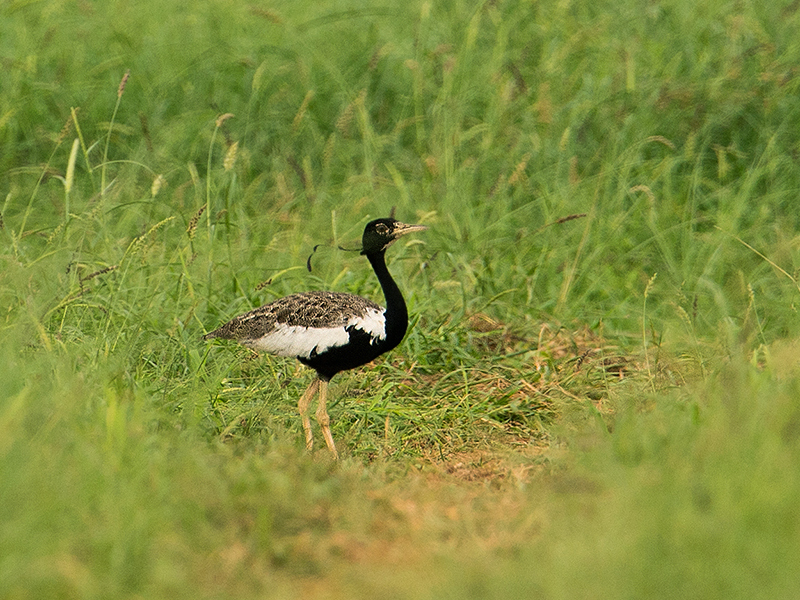
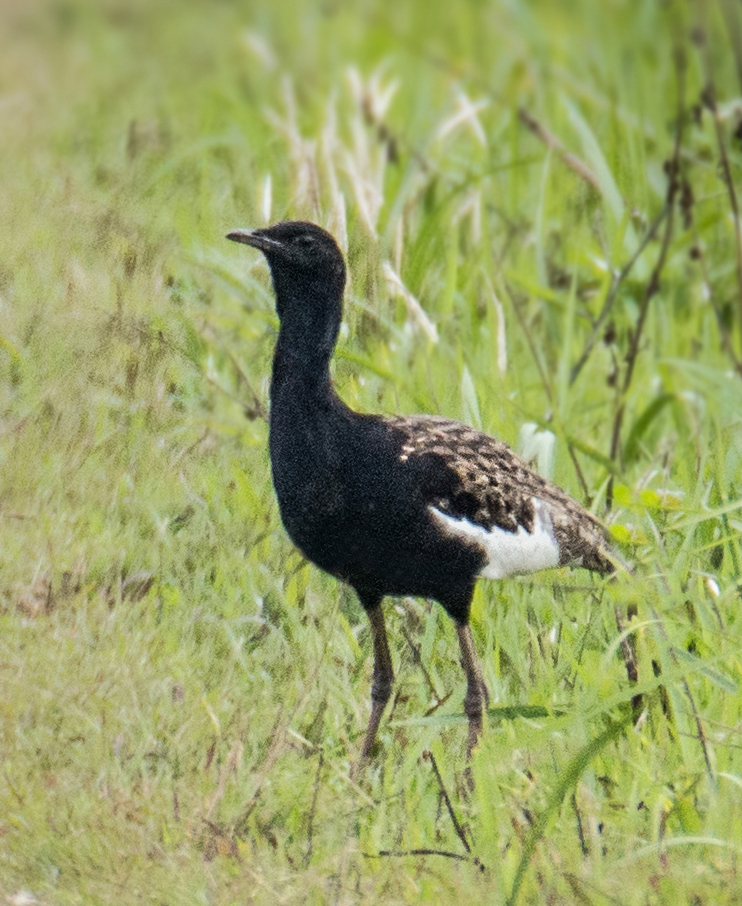
The Bengal Florican is a medium-sized bustard with a striking sexual dimorphism. Males are more easily identified with their glossy black heads, necks, and bodies, contrasting sharply with white wings that become visible during flight. Females, on the other hand, display a cryptic brown plumage with intricate patterns that provide excellent camouflage against the grassland background. Juveniles resemble females but with more pronounced streaking. During the breeding season, males perform spectacular aerial displays, which, combined with their distinctive coloration, leave little room for confusion with other species. In terms of flight, the Bengal Florican has a distinct silhouette with broad wings and a relatively short tail-a characteristic of bustards. When perched, the males maintain an upright posture, often in open grasslands, making them conspicuous during display periods. While in flight, it might be confused with other bustard species, but the stark black and white contrast of the male and the size difference in females help in accurate identification.
Having trouble telling birds apart? Upload a photo to our bird identification tool for an instant species match.
Bengal Florican Habitat and Range
Preferred Habitat
The Bengal Florican predominantly inhabits grasslands, particularly those with tall, dense grasses and sparse trees. It prefers alluvial plains and areas with seasonal flooding, which help maintain the grassland structure. In India, it is found in the Terai and Dooars regions, while in Nepal, it thrives in the grasslands within the Chitwan and Bardia National Parks. Seasonal shifts in habitat use are common, as the bird may move to slightly elevated areas during the monsoons to avoid flooding. The Bengal Florican shows a strong preference for undisturbed grasslands, avoiding urban areas and heavily modified agricultural lands. This specific habitat requirement makes it highly vulnerable to habitat destruction and fragmentation.
Geographic Range
The Bengal Florican's range is largely confined to the Indian subcontinent and parts of Southeast Asia. Its breeding range includes northern India and southern Nepal, predominantly within the Terai belt and the Indo-Gangetic plains. In Cambodia, a separate population exists in the lowland dry grasslands. Migration patterns are not well-documented, but these birds are known to make local movements in response to habitat conditions, particularly during the monsoon season. Hotspots of population density include the Kaziranga National Park in India and the Tonle Sap floodplains in Cambodia. The fragmented distribution poses challenges for conservation, as isolated populations are more susceptible to extinction.
Want to know which birds visit your area? Browse our backyard birds by location guides for region-specific species lists.
What Does the Bengal Florican Eat?
The diet of the Bengal Florican consists primarily of invertebrates, with a strong preference for insects such as grasshoppers and beetles. During the wet season, when insect availability is high, these birds actively forage in the grasslands, using a combination of visual and auditory cues to locate prey. Seeds and small vertebrates, like lizards, also form a part of their diet, particularly when insect populations decline. Foraging typically occurs in the early morning and late afternoon when temperatures are cooler, and prey activity is higher. The Bengal Florican employs a deliberate stalking approach, moving slowly through the grass, then quickly striking at its prey.
Bengal Florican Behavior and Social Structure
Bengal Floricans are generally solitary outside the breeding season, displaying a strong territorial behavior during the mating period. Males establish and defend territories through elaborate aerial displays and vocalizations to attract females. These displays involve ascending rapidly into the air, fluttering wings while descending, and producing a resonant booming sound. Females are more cryptic and spend significant time in the tall grasses, focused on foraging and nesting. The Bengal Florican is diurnal, with activity peaks during the cooler parts of the day. When threatened, it relies on its camouflage and tendency to freeze, blending seamlessly with the grassland. However, if flight is necessary, it takes off with powerful wingbeats. Social interactions are minimal outside of breeding, although loose associations may form in areas of high food availability.
Bengal Florican Nesting and Reproduction
The Bengal Florican's nesting habits are quite unique. They create simple ground nests, often just a shallow scrape on the ground, usually well-hidden among tall grasses. The choice of nesting site is critical, as it needs to provide both cover and proximity to food sources. Typically, clutch size ranges from one to two eggs, which are incubated solely by the female. The incubation period lasts about 21 to 28 days, during which the female remains highly secretive to avoid detection by predators. After hatching, the chicks are precocial, leaving the nest soon after birth, but they remain dependent on the female for protection and feeding guidance for several weeks. The Bengal Florican typically raises only one brood per year, given the constraints of its limited habitat and predation risks.
Bengal Florican Sounds and Vocalizations
The primary vocalization of the Bengal Florican is a deep, booming sound produced by males during their display flights. This sound is rhythmic and carries over long distances, serving as both a territorial and mating call. The call can be described as a series of low-frequency booms, with each note lasting about a second. Besides this, the Bengal Florican also emits softer clucking calls, particularly in alarm situations, which resemble the sound of a distant drumbeat. During the dawn chorus, males are particularly vocal, using their calls to establish dominance over their territories and attract mates.
Interesting Facts About the Bengal Florican
- 1The Bengal Florican is one of the few bustard species that perform aerial courtship displays, a trait that makes it unique among its relatives.
- 2Despite its name, the Bengal Florican is not limited to Bengal; it is found across several regions in South Asia, including Nepal and Cambodia.
- 3The species' population has declined by over 80% in the past few decades, highlighting the urgency of conservation efforts.
- 4Males can be seen displaying at dawn and dusk, with their striking black and white plumage making them visible from afar during these times.
- 5The Bengal Florican relies heavily on undisturbed grasslands, a habitat type that is rapidly disappearing due to human encroachment.
- 6The booming sound made by the male during courtship can carry up to 500 meters, ensuring that it reaches potential mates across the grasslands.
- 7Bengal Floricans are indicators of healthy grassland ecosystems, and their decline often signals ecological imbalance in their habitats.
Bengal Florican Conservation Status
The Bengal Florican is classified as Critically Endangered by the IUCN, with population trends showing a rapid decline due to habitat loss and fragmentation. Primary threats include conversion of grasslands to agriculture, infrastructure development, and hunting. Conservation efforts focus on habitat protection and restoration, with several reserves established specifically for this species. Historical data indicate a much wider range in the past, but current populations are restricted to fragmented habitats. Collaborative efforts between governments and conservation organizations aim to secure existing populations and facilitate habitat corridors.
Other Otididae Species


Birds Similar to the Bengal Florican
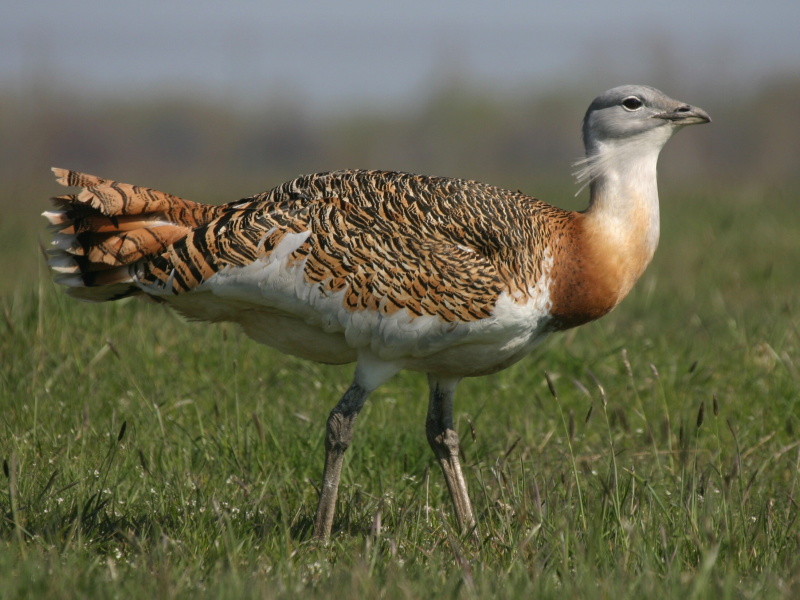
These species are often confused with the Bengal Florican due to similar appearance or overlapping range.