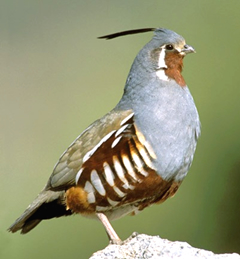
Black-breasted Wood-Quail
Odontophorus leucolaemus
Order: Galliformes / Family: Odontophoridae

Wikimedia Commons
About the Black-breasted Wood-Quail
The Black-breasted Wood-Quail, Odontophorus leucolaemus, is a captivating bird species native to the dense montane forests of Central America. This bird plays a crucial ecological role as both predator and prey within its habitat. Found primarily in the humid forests of Costa Rica and western Panama, the Black-breasted Wood-Quail thrives in elevations ranging from 1,000 to 3,000 meters. These areas provide the dense understory and abundant leaf litter that the wood-quail requires for foraging and nesting.
The significance of the Black-breasted Wood-Quail extends beyond its ecological role. It acts as an indicator species for forest health, reflecting the impacts of climate change and deforestation in its habitat. As a ground-dwelling bird, it is particularly vulnerable to habitat alterations, and its presence can signal an intact ecosystem.
In terms of seasonal behavior, the Black-breasted Wood-Quail exhibits limited migration, primarily remaining within its established territories throughout the year. However, during the breeding season, which typically spans from April to June, these birds become more vocal and active, with males engaging in elaborate calls to establish territories and attract mates. Outside of the breeding season, the Black-breasted Wood-Quail forms small family groups, foraging together and maintaining a degree of social structure even in harsh environmental conditions.
Understanding the ecological role and behavior of the Black-breasted Wood-Quail aids in conservation efforts. By preserving this species and its habitat, we contribute to the biodiversity and stability of Central American montane ecosystems. The Black-breasted Wood-Quail, through its presence and activities, underscores the interconnectedness of forest species and the importance of preserving these habitats.
The Black-breasted Wood-Quail belongs to the family Odontophoridae, within the order Galliformes. These birds typically live typically 5-8 years, with some living up to 12 years..
How to Identify a Black-breasted Wood-Quail
The Black-breasted Wood-Quail is a medium-sized bird, measuring about 25 to 28 centimeters in length and weighing approximately 230 to 280 grams. This bird is characterized by its rich, dark plumage, with a notably black breast that gives it its common name. The rest of its body is predominantly brown, with subtle grayish tones on the wings and back.
Adult plumage is consistent between sexes, although males may exhibit slightly more pronounced black on the breast. Juveniles, in contrast, display duller colors and lack the distinctive black breast until they mature. The bird's bill is short and robust, suited for foraging in the underbrush.
In the field, the Black-breasted Wood-Quail can be confused with other wood-quail species, such as the Spotted Wood-Quail. However, the latter lacks the uniform black breast and presents a more varied pattern of spots. In flight, though the Black-breasted Wood-Quail prefers to run, its short, rounded wings and rapid wingbeats distinguish it from other ground birds. Its perching posture is often low to the ground, blending into the forest floor, which serves as a natural camouflage against predators.
Having trouble telling birds apart? Upload a photo to our bird identification tool for an instant species match.
Black-breasted Wood-Quail Habitat and Range
Preferred Habitat
The Black-breasted Wood-Quail inhabits the dense, humid montane forests of Central America, primarily found in Costa Rica and western Panama. These forests are characterized by a rich understory and abundant leaf litter, ideal for this ground-dwelling bird. The species thrives in elevations ranging from 1,000 to 3,000 meters, where the cooler, moist conditions prevail.
Seasonally, the wood-quail remains within these montane regions, showing little to no habitat shift. Unlike some other bird species, the Black-breasted Wood-Quail does not venture into urban areas, preferring the seclusion and resources of undisturbed forest environments.
The bird's presence in these habitats underscores the importance of conservation efforts aimed at preserving primary forest areas. As deforestation and habitat fragmentation continue to threaten these ecosystems, the habitat of the Black-breasted Wood-Quail serves as a vital refuge for this and numerous other forest-dependent species.
Geographic Range
The range of the Black-breasted Wood-Quail is largely restricted to the montane forests of Central America. It is chiefly found in Costa Rica and extends into western Panama. In Costa Rica, populations are concentrated in the Talamanca Range and the Cordillera Central, areas known for their rich biodiversity and protected reserves.
The Black-breasted Wood-Quail does not undertake long migrations. Instead, it remains within its established range throughout the year, adapting to the seasonal variations in its montane habitat. However, localized movements may occur as the birds seek optimal foraging areas and nesting sites within these forests.
Population density hotspots for the Black-breasted Wood-Quail include the Monteverde Cloud Forest Reserve and La Amistad International Park. These areas provide the necessary habitat conditions and protection from human encroachment, allowing the species to thrive. Despite its limited range, the Black-breasted Wood-Quail remains a common sight within these protected regions, where conservation efforts continue to support its population stability.
Want to know which birds visit your area? Browse our backyard birds by location guides for region-specific species lists.
What Does the Black-breasted Wood-Quail Eat?
The diet of the Black-breasted Wood-Quail consists primarily of seeds, fruits, and small invertebrates, making it an omnivorous forager. Its feeding habits play a crucial role in forest ecology, aiding in seed dispersal and pest control.
During the wet season, when resources are abundant, the Black-breasted Wood-Quail consumes a higher proportion of fruits and seeds, taking advantage of the seasonal fruiting of many forest plants. In contrast, the dry season sees an increased consumption of invertebrates such as insects and small arthropods, which provide essential protein.
Foraging behavior involves scratching through the leaf litter with their strong feet, uncovering hidden food resources. This technique not only helps in locating food but also aerates the soil, promoting forest health. The bird's feeding schedule is primarily diurnal, with peak activity in the early morning and late afternoon when temperatures are cooler and predators less active.
Black-breasted Wood-Quail Behavior and Social Structure
The Black-breasted Wood-Quail exhibits a complex social structure, often seen in family groups rather than solitary individuals. These groups, typically comprising a breeding pair and their offspring, demonstrate a cooperative approach to foraging and territory defense.
Territorial behavior is prominent during the breeding season, where males vocalize to assert dominance and establish boundaries. The courtship display involves males performing a series of intricate calls and visual displays to attract females.
Flocking patterns vary with the seasons, with larger groups forming outside the breeding season for increased protection against predators. The Black-breasted Wood-Quail responds to predators with a series of sharp alarm calls, alerting group members to potential threats.
Daily activity patterns are diurnal, with foraging occurring primarily during the cooler hours of dawn and dusk. Midday sees a decrease in activity as the birds seek shelter from the heat, resting in the shade of dense foliage.
Black-breasted Wood-Quail Nesting and Reproduction
The Black-breasted Wood-Quail nests on the ground, utilizing the dense forest understory for cover. The nest, a simple scrape in the soil lined with leaves and grasses, provides minimal protection but relies on camouflage for safety.
Preferred nesting sites are well-concealed areas within their territory, often surrounded by thick vegetation. Clutch size varies from three to six eggs, with incubation lasting approximately 18 to 20 days. Both parents participate in incubation and chick-rearing, showcasing a high degree of parental investment.
Fledging occurs roughly two weeks after hatching, with chicks remaining under parental care for an extended period. This prolonged dependency ensures that the young develop the necessary skills for survival in the complex forest environment. The Black-breasted Wood-Quail typically produces one brood per year, taking advantage of the peak resource availability during the breeding season.
Black-breasted Wood-Quail Sounds and Vocalizations
The primary song of the Black-breasted Wood-Quail is a series of rhythmic, melodious whistles, often heard at dawn and dusk. These calls, characterized by a distinct pattern of rising and falling notes, serve both to establish territory and attract mates.
Call notes are varied, including a sharp, piercing alarm call used to alert the group to danger. These alarm calls are quick, repetitive, and high-pitched, distinctly different from the more melodic song.
During the dawn chorus, the Black-breasted Wood-Quail's song resonates through the forest, adding to the rich acoustic landscape of the montane habitat. The vocalizations of this bird, while not as complex as some songbirds, play a vital role in its social and reproductive behaviors.
Interesting Facts About the Black-breasted Wood-Quail
- 1The Black-breasted Wood-Quail is known to engage in cooperative breeding, a rare behavior among ground-dwelling birds.
- 2Despite its secretive nature, the Black-breasted Wood-Quail's calls can be heard up to one kilometer away in dense forests.
- 3This species' role as a seed disperser helps maintain plant diversity in montane forests, supporting ecological balance.
- 4The Black-breasted Wood-Quail's diet shifts seasonally, with a preference for fruits during the rainy season.
- 5Its nesting sites, often hidden among dense foliage, highlight the importance of forest understory for bird conservation.
- 6The Black-breasted Wood-Quail can live up to ten years in the wild, provided it avoids predation and habitat destruction.
- 7The bird's strong legs and feet are adapted for scratching through leaf litter, a behavior that aids in finding food.
Black-breasted Wood-Quail Conservation Status
The International Union for Conservation of Nature (IUCN) currently lists the Black-breasted Wood-Quail as Near Threatened, primarily due to habitat loss from deforestation and agricultural expansion. Despite being relatively common in protected areas, populations outside these reserves face significant pressure from human activities. Primary threats include the destruction of montane forests and the fragmentation of existing habitats, which disrupts the bird's natural range and breeding sites. Conservation efforts focus on habitat protection and the establishment of ecological corridors to connect isolated populations. Historical population changes reflect the impacts of forest conversion over the past decades. Continued efforts are crucial to prevent further declines and ensure the long-term survival of this species in its natural habitat.