
Black-crested Tit-Tyrant
Anairetes nigrocristatus
Order: Passeriformes / Family: Tyrannidae
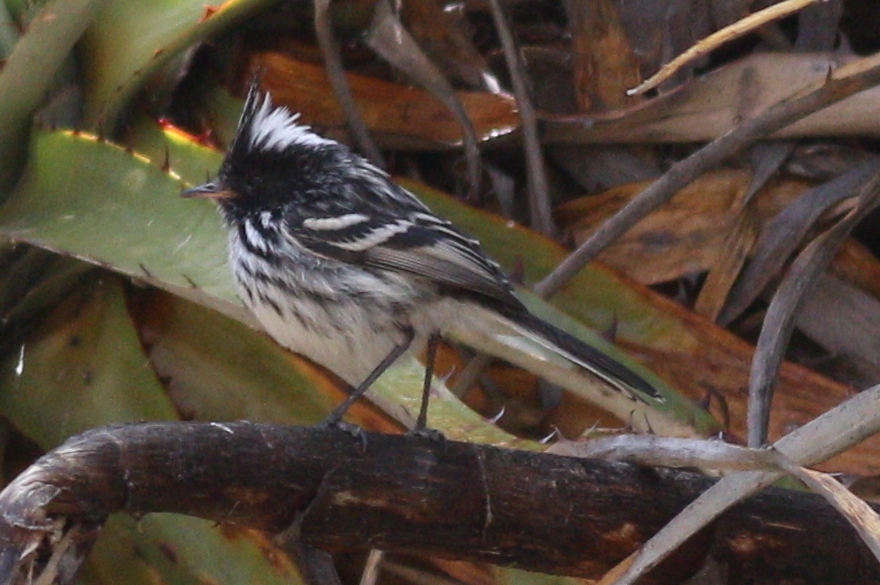
Wikimedia Commons
About the Black-crested Tit-Tyrant
The Black-crested Tit-Tyrant (Anairetes nigrocristatus) is a small, vibrant member of the family Tyrannidae, found predominantly in the Andean regions of South America. Known for its distinct black crest and energetic demeanor, this bird plays a significant role in the ecosystems it inhabits. It resides in high-altitude forests, particularly favoring Polylepis woodlands and adjacent shrublands. These habitats, primarily located in countries like Peru and Bolivia, provide the necessary resources for the species to thrive. The Black-crested Tit-Tyrant is active year-round in its range, exhibiting minimal seasonal movement. This sedentary nature reflects its adaptation to the unique high-altitude environments where it feeds, breeds, and raises its young. Ecologically, the Black-crested Tit-Tyrant contributes to insect population control, feeding on small arthropods, which helps maintain the balance within its ecosystem. Its presence can indicate the health of its habitat, as it requires specific vegetation and climate conditions found in Andean forests. The bird's vibrant appearance and distinctive calls also make it a favorite among birdwatchers, contributing to ecotourism in the regions it inhabits.
The Black-crested Tit-Tyrant belongs to the family Tyrannidae, within the order Passeriformes. These birds typically live around 5-7 years, with a maximum recorded of 10 years..
How to Identify a Black-crested Tit-Tyrant
The Black-crested Tit-Tyrant is easily identified by its striking black crest, which contrasts with its olive-green back and bright yellow underparts. Adult birds exhibit a white throat and distinct facial markings that include a black eye stripe. Juveniles are similar but may display a slightly duller plumage without the fully developed crest. Males and females are alike in appearance, making them difficult to distinguish in the field. Compared to similar species like the Tufted Tit-Tyrant, the Black-crested Tit-Tyrant is smaller and has a more pronounced crest. Its flight silhouette is sharp and angular, with rapid wing beats typical of small passerines. While perching, the bird often displays an upright posture, accentuating its crest and alert demeanor.
Having trouble telling birds apart? Upload a photo to our bird identification tool for an instant species match.
Black-crested Tit-Tyrant Habitat and Range
Preferred Habitat
The Black-crested Tit-Tyrant thrives in high-altitude Andean forests, particularly those dominated by Polylepis trees. These forests are found at elevations ranging from 3,000 to 4,500 meters. In addition to Polylepis woodlands, the species inhabits adjacent shrublands and open areas within the montane forest zone. During the breeding season, these birds may show a preference for denser forest patches, while in non-breeding periods, they can be found in more open areas. Despite their preference for natural forested environments, they are occasionally spotted in rural areas where suitable vegetation exists.
Geographic Range
The Black-crested Tit-Tyrant's range is confined to the central Andes, primarily within the countries of Peru and Bolivia. It is a resident species, with no significant migratory movements recorded. The bird occupies a range that stretches longitudinally along the Andean mountain chain, focusing on areas with suitable high-altitude habitats. Population densities are higher in regions where Polylepis forests are intact, as these areas provide both food and nesting resources. Despite this limited range, the species is locally common within its preferred habitats.
Want to know which birds visit your area? Browse our backyard birds by location guides for region-specific species lists.
What Does the Black-crested Tit-Tyrant Eat?
The diet of the Black-crested Tit-Tyrant consists mainly of small arthropods, including insects such as beetles, caterpillars, and spiders. During the breeding season, the demand for protein increases, leading the birds to intensify their foraging efforts. The species employs a variety of foraging techniques, including hover-gleaning and sallying to capture prey from foliage. The bird’s diet may also include some plant material, particularly seeds and small fruits, though insects remain the primary food source. The feeding schedule is largely diurnal, with peak activity occurring in the early morning and late afternoon.
Black-crested Tit-Tyrant Behavior and Social Structure
The Black-crested Tit-Tyrant exhibits a complex social structure, often seen in small family groups or pairs. These birds are territorial, especially during breeding season, defending their chosen nesting area with vigor. Courtship displays are subtle, involving mutual preening and food offerings between mates. Outside of the breeding season, they may form mixed-species flocks, enhancing their foraging efficiency and predator detection. The species is alert and active, constantly moving through the foliage in search of food. When threatened, it emits a sharp alarm call to alert conspecifics and may mob potential predators.
Black-crested Tit-Tyrant Nesting and Reproduction
The nesting behavior of the Black-crested Tit-Tyrant involves constructing a cup-shaped nest, using materials like moss, lichen, and spider silk, often concealed within dense vegetation. Nests are typically placed at mid-levels in trees or shrubs, providing protection from predators. Clutch size ranges from two to three eggs, with both parents sharing incubation duties over a period of approximately 14 days. Once hatched, chicks fledge in about 16 days, during which both parents continue to provide food and protection. The species may raise one or two broods per season, depending on environmental conditions.
Black-crested Tit-Tyrant Sounds and Vocalizations
The primary song of the Black-crested Tit-Tyrant is a rapid series of high-pitched notes, creating a continuous, melodic trill. This song is often interspersed with sharp, single-note calls, used for communication between mates and territorial defense. Alarm calls are more abrupt and harsh, serving to warn of potential threats. During the dawn chorus, the bird's song stands out due to its clarity and rhythm, often beginning at the first light and continuing intermittently throughout the day.
Interesting Facts About the Black-crested Tit-Tyrant
- 1The Black-crested Tit-Tyrant's distinctive crest can be raised or lowered, often used in social signaling.
- 2Despite its small size, this bird is highly territorial and will aggressively defend its nesting area.
- 3Polylepis forests, the bird's primary habitat, are among the most threatened ecosystems in the Andes.
- 4The species is a part of the diverse tyrant flycatcher family, which includes over 400 species.
- 5Black-crested Tit-Tyrants are known for their acrobatic foraging behavior, often hanging upside down.
Black-crested Tit-Tyrant Conservation Status
The Black-crested Tit-Tyrant is currently listed as Least Concern on the IUCN Red List, though habitat loss poses a potential threat. Deforestation, particularly of Polylepis forests, could impact population stability. Conservation efforts focus on protecting these critical habitats through reforestation and sustainable land management practices. Historical data indicate that while populations remain stable, ongoing habitat degradation could alter this trend. Continued monitoring and habitat preservation are essential for the long-term survival of the species.
Other Tyrannidae Species


Birds Similar to the Black-crested Tit-Tyrant
These species are often confused with the Black-crested Tit-Tyrant due to similar appearance or overlapping range.

