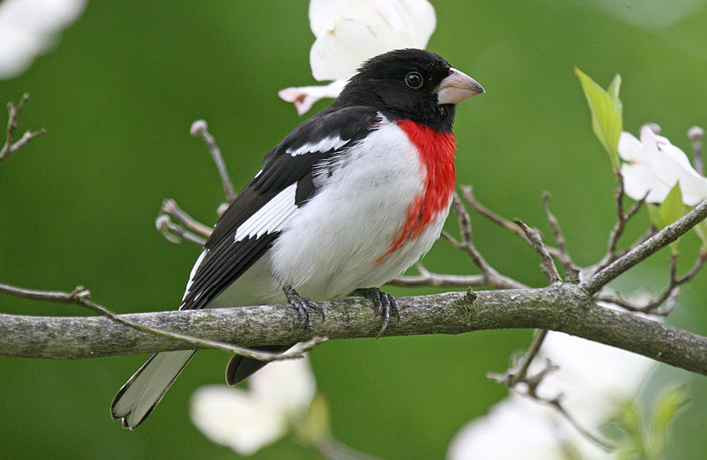
Black-headed Grosbeak
Pheucticus melanocephalus
Order: Passeriformes / Family: Cardinalidae

Wikimedia Commons
About the Black-headed Grosbeak
The Black-headed Grosbeak (Pheucticus melanocephalus) is a robust and captivating bird often found in the western parts of North America. It belongs to the Cardinalidae family, which includes other colorful songbirds. This bird is notable for its striking plumage and melodious song, which make it a favorite among bird enthusiasts. Its presence in various ecosystems highlights its adaptability and ecological significance.
The grosbeak thrives in habitats such as deciduous woodlands, mixed forests, and riparian zones. These areas provide ample food resources and nesting sites. The bird plays a pivotal role in seed dispersal and pest control, consuming a variety of seeds and insects. Its diet shifts seasonally, showcasing its ability to adapt to changing food availability. In spring and summer, it primarily consumes insects, helping control pest populations. As fall approaches, it transitions to seeds and berries, aiding in plant propagation.
This species is also a significant pollinator and seed disperser. By feeding on nectar, it inadvertently aids in pollination. When the grosbeak consumes fruits and berries, it transports seeds across its home range, contributing to plant diversity and ecosystem resilience. Its migratory behavior further extends its ecological impact, as it travels between breeding and wintering grounds, connecting distant ecosystems.
The Black-headed Grosbeak not only enriches its environment but also serves as an indicator of ecosystem health. Its presence signals a balanced habitat with sufficient resources. As such, monitoring its population trends provides valuable insights into environmental changes and conservation needs. Observing these birds in their natural habitats offers a glimpse into the intricate web of life in which they play a crucial role.
The Black-headed Grosbeak belongs to the family Cardinalidae, within the order Passeriformes. These birds typically live average lifespan is about 7 years, with a maximum recorded at 12 years..
How to Identify a Black-headed Grosbeak
The adult Black-headed Grosbeak exhibits distinctive field marks that make it relatively easy to identify. Males boast a striking black head, with a bright orange-cinnamon breast and underparts. Their backs are a rich brown with black streaks, and their wings feature prominent white patches, making them quite conspicuous. Females, on the other hand, have a more subdued coloration. They display a brown head with a buffy eyebrow stripe, and their underparts are streaked with a combination of brown and white.
Juveniles resemble females but can be differentiated by their fresher plumage and less pronounced streaking. Both sexes have a robust, conical bill adapted for cracking seeds, a characteristic feature of the Cardinalidae family. In flight, the Black-headed Grosbeak presents a distinctive silhouette with broad, rounded wings and a relatively short tail.
Similar species include the Rose-breasted Grosbeak, which overlaps in range during migration. However, the Rose-breasted Grosbeak male has a black head and back with a rose-red breast, making it distinguishable from the Black-headed Grosbeak. The perching posture of the Black-headed Grosbeak is typically upright, often accompanied by a melodious song that can be heard even before the bird is spotted.
Having trouble telling birds apart? Upload a photo to our bird identification tool for an instant species match.
Black-headed Grosbeak Habitat and Range
Preferred Habitat
The Black-headed Grosbeak inhabits a variety of environments, primarily favoring deciduous and mixed forests. It thrives in areas where tree cover is abundant, such as riparian woodlands and forest edges. These habitats provide the necessary resources for feeding and nesting. Elevation-wise, the species is adaptable, residing from sea level up to 10,000 feet in mountainous regions.
In addition to forests, the grosbeak can be found in suburban areas with ample tree cover, demonstrating its ability to coexist with human development. During the breeding season, it seeks out dense shrubs and thickets for nesting, while in the winter, it frequents open woodlands and gardens where food is more readily available.
Seasonally, the Black-headed Grosbeak may shift habitats slightly, moving to lower elevations or more sheltered areas during colder months. This bird's presence in both urban and rural settings highlights its ecological versatility, allowing it to adapt to a range of environments across its range.
Geographic Range
The Black-headed Grosbeak has a broad range across North America, predominantly in the western regions. During the breeding season, it occupies areas from southwestern Canada through the western United States, reaching into parts of northern Mexico. States such as California, Oregon, Washington, and Idaho are notable strongholds for breeding populations.
In winter, the grosbeak migrates to warmer climates, primarily in Mexico and Central America. Its wintering range extends from southern Mexico to Guatemala, where it inhabits open woodlands and tropical forests. Migration corridors typically follow the western mountain ranges, with birds moving southward in late summer to early fall and returning north in the spring.
Population densities vary across its range, with higher concentrations in the Pacific coastal regions and the Sierra Nevada. Key hotspots include the coastal chaparral and montane forests, where the abundance of food and suitable nesting sites support robust populations.
Want to know which birds visit your area? Browse our backyard birds by location guides for region-specific species lists.
What Does the Black-headed Grosbeak Eat?
The Black-headed Grosbeak has a diverse diet that changes with the seasons. During the breeding season, it primarily feeds on insects, including beetles, caterpillars, and grasshoppers. These insects provide the necessary protein for breeding adults and their young. Grosbeaks are adept foragers, often seen gleaning insects from foliage or catching them mid-air with impressive agility.
As the seasons change, so does its diet. In the fall and winter, the grosbeak shifts to a more plant-based diet, consuming seeds, berries, and fruits. It has a particular fondness for sunflower seeds, which are a staple at bird feeders during the colder months. The bird's conical bill is well-suited for cracking these seeds open.
The grosbeak's feeding schedule is primarily diurnal, with peak foraging activity occurring in the early morning and late afternoon. This schedule allows the bird to maximize its energy intake while avoiding the midday heat. The flexibility in its diet and foraging techniques underscores the grosbeak's adaptability to its environment.
Want to attract Black-headed Grosbeaks to your yard? See our recommended feeders and seed types for the best results.
Black-headed Grosbeak Behavior and Social Structure
The Black-headed Grosbeak exhibits a variety of intriguing behaviors, particularly during the breeding season. Males are known for their rich, melodious song, which they use to establish territory and attract females. These songs are complex, consisting of a series of whistled notes that are often compared to those of a robin, but with a more fluid quality.
Territorial behavior is pronounced, with males actively defending their breeding sites against intruders. This territoriality often leads to vocal duels and occasional physical confrontations. Despite this, Black-headed Grosbeaks can be social birds, particularly outside the breeding season when they may be seen foraging in small, loose flocks.
Courtship displays involve males singing persistently while performing a series of wing and tail flicks to capture the female's attention. Once paired, they remain monogamous during the breeding season. In response to predators, grosbeaks exhibit mobbing behavior, where they join other birds in harassing potential threats such as hawks or owls. Their daily activity pattern is diurnal, with most activities occurring during daylight hours.
Black-headed Grosbeak Nesting and Reproduction
The nesting habits of the Black-headed Grosbeak are intricately tied to its habitat preferences. Nest construction begins in late spring, with the female taking the lead in building. The nest is a loosely constructed cup of twigs, grasses, and rootlets, often lined with finer materials for added comfort.
Nests are typically situated in the fork of a tree or shrub, ranging from 4 to 15 feet above ground, depending on the local vegetation. The clutch size varies from 2 to 5 eggs, with an incubation period lasting approximately 12 to 14 days. Both parents participate in feeding the nestlings, ensuring a steady supply of insects and seeds.
Fledging occurs about 10 to 12 days after hatching, with the young remaining dependent on the parents for a few weeks post-fledging. The grosbeak typically raises one brood per year, although in favorable conditions, a second brood is possible. Parental roles are shared, with both sexes taking turns feeding and protecting the young.
Black-headed Grosbeak Sounds and Vocalizations
The Black-headed Grosbeak's primary song is a rich, melodious series of whistled notes that vary in pitch and tempo. Often likened to the American Robin's song, it is more fluid and complex, with a distinctive warbling quality. Males sing most actively during the breeding season, often from high perches.
In addition to their song, Black-headed Grosbeaks produce a variety of call notes, including a sharp 'chink' or 'chip' that serves as an alarm call. These calls alert other birds to the presence of predators or other disturbances. During the dawn chorus, grosbeaks join in with other songbirds, creating a symphony of sounds that heralds the start of a new day.
The grosbeak's vocal repertoire is not only a tool for communication but also a key element in territory establishment and mate attraction. Its ability to produce such a rich array of sounds underscores its role as one of the more vocal and musical members of the avian community.
Interesting Facts About the Black-headed Grosbeak
- 1The Black-headed Grosbeak's song has been described as a 'drunken robin' due to its rich, varied tones.
- 2Despite their name, female Black-headed Grosbeaks have brown heads and look quite different from the striking males.
- 3These birds are known to eat monarch butterflies, which many birds avoid due to their toxicity.
- 4Black-headed Grosbeaks can travel over 2,500 miles during their migration from North America to Central America.
- 5Their strong, conical bills are specially adapted to crack open the toughest seeds, like sunflower seeds.
- 6Male Black-headed Grosbeaks share parental duties, even incubating eggs to give females a break.
- 7They have a unique ability to digest the toxic compounds found in monarch butterflies without ill effects.
Black-headed Grosbeak Conservation Status
The Black-headed Grosbeak currently holds a status of Least Concern on the IUCN Red List. Populations appear stable, with some regions experiencing slight increases due to habitat conservation efforts. Despite this, ongoing threats include habitat loss from urban development and agricultural expansion, as well as the impacts of climate change. Conservation efforts focus on preserving and restoring key habitats, particularly riparian woodlands and mixed forests. Programs aimed at maintaining natural landscapes and reducing pesticide use have positive effects on grosbeak populations by ensuring food availability and safe breeding grounds. Historically, populations have fluctuated in response to environmental changes and human activity. However, the grosbeak's adaptability and wide-ranging habitat preference have allowed it to withstand many challenges. Continued monitoring is essential to ensure that this vibrant songbird remains a thriving component of the ecosystems it inhabits.
Attracting Black-headed Grosbeaks to Your Feeder
The Black-headed Grosbeak is a regular visitor to backyard bird feeders across its range. At the Eye On The Fly feeding station, we observe Black-headed Grosbeaks regularly and capture footage with our feeder cameras.
Other Cardinalidae Species


Birds Similar to the Black-headed Grosbeak
These species are often confused with the Black-headed Grosbeak due to similar appearance or overlapping range.