Australasian Bittern
Botaurus poiciloptilus
Order: Pelecaniformes / Family: Ardeidae
Wikimedia Commons
About the Australasian Bittern
The Australasian Bittern, Botaurus poiciloptilus, is a large, secretive heron native to the wetlands of Australia and New Zealand. This elusive bird is a member of the Ardeidae family and is renowned for its booming call, which resonates through its swampy habitats during the breeding season. Its presence is often an indicator of healthy wetland ecosystems, as it requires extensive, undisturbed reed beds for foraging and nesting.
Primarily inhabiting freshwater wetlands, the Australasian Bittern is a master of camouflage. Its plumage, a blend of browns and streaks, mimics the reeds and rushes, allowing it to blend seamlessly into its environment. This bird is particularly associated with the densely vegetated margins of lakes, marshes, and swamps, often in areas dominated by species such as Phragmites and Typha.
Throughout its range, the Australasian Bittern plays a crucial role as both predator and prey. It keeps the populations of small vertebrates and invertebrates in check while providing a food source for larger predators. During the breeding season, males establish territories within these wetlands and vocalize to attract females. Despite its reliance on specific habitats, this species is recognized for its ability to adapt to varying water levels, shifting within the wetlands as necessary to find suitable feeding and nesting sites.
The Australasian Bittern's ecological significance is underscored by its IUCN status as endangered. Habitat destruction, particularly the drainage and degradation of wetlands, poses a significant threat to its survival. Conservation efforts focus on habitat restoration and protection, aiming to maintain and increase the size of suitable wetland areas. As climate change impacts water availability, the future of the Australasian Bittern depends on effective management strategies to preserve these vital ecosystems.
The Australasian Bittern belongs to the family Ardeidae, within the order Pelecaniformes. These birds typically live average 10-12 years.
How to Identify a Australasian Bittern
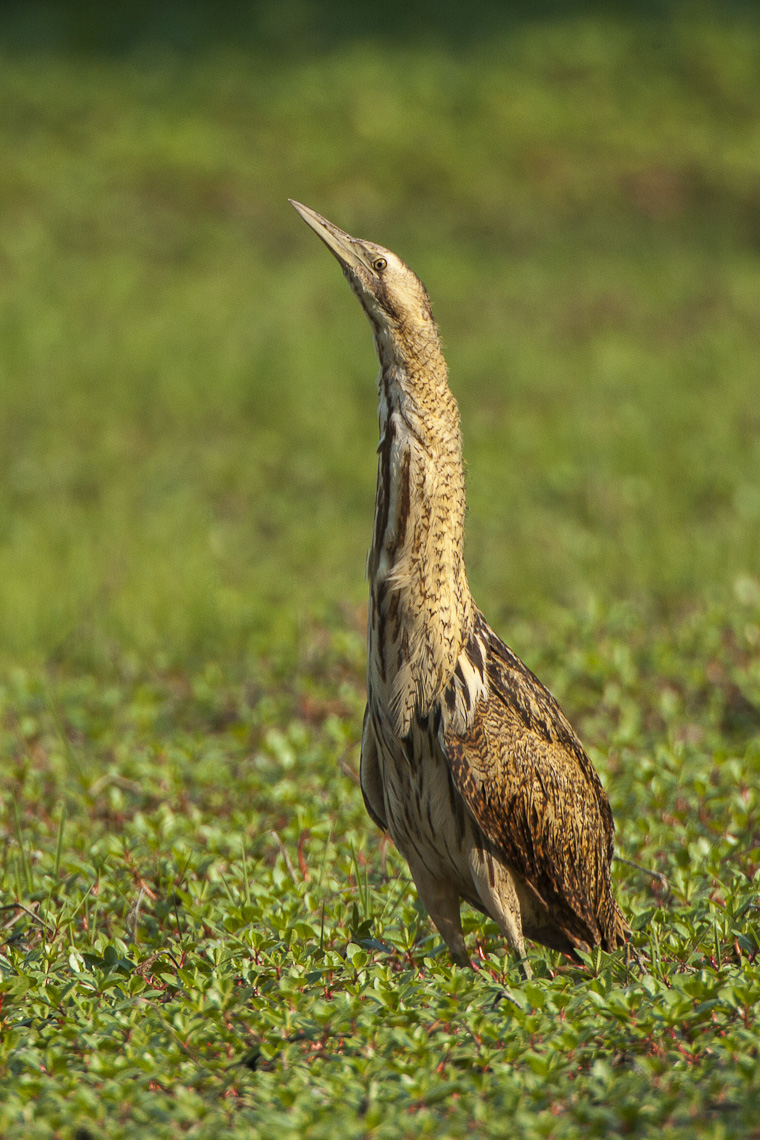
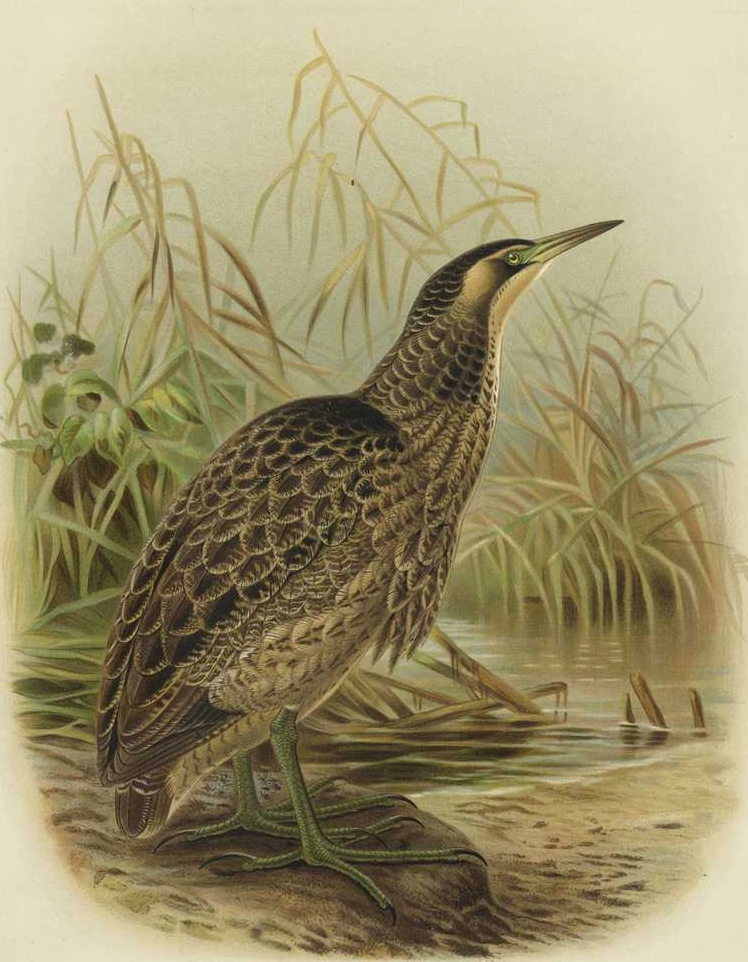
The Australasian Bittern is a large, robust bird with a body length of 65-75 cm and a wingspan reaching up to 105 cm. Its plumage is predominantly streaked brown, with a mottled appearance that offers excellent camouflage among reeds. The upperparts are dark brown with buff and black streaks, while the underparts feature paler streaks, creating a cryptic pattern that deceives predators and birdwatchers alike.
Juveniles resemble adults but tend to have duller plumage with more pronounced buff tones. Compared to adults, they may also exhibit less defined streaking on the chest and flanks. There is little sexual dimorphism, making it challenging to distinguish males from females in the field. However, males are generally slightly larger and more vocal during the breeding season.
In flight, the Australasian Bittern displays broad, rounded wings with dark flight feathers and a distinctive trailing edge. Its flight silhouette is characterized by slow, deliberate wingbeats, often low over the water. When perched or foraging, it adopts a distinctive 'bittern pose,' standing motionless with its neck extended and bill pointed upward, mimicking the surrounding reeds. This behavior enhances its camouflage, making it difficult to spot.
Having trouble telling birds apart? Upload a photo to our bird identification tool for an instant species match.
Australasian Bittern Habitat and Range
Preferred Habitat
The Australasian Bittern thrives in freshwater wetlands with extensive reed beds and rushes. It is commonly found in environments such as swamps, marshes, and the vegetated edges of lakes and rivers. In Australia, it is particularly associated with coastal and inland wetlands in New South Wales, Victoria, and South Australia. In New Zealand, it inhabits similar habitats on both the North and South Islands.
This species is generally found at low elevations but can occur in upland wetlands if suitable vegetation is present. Seasonal changes in water levels influence its habitat use, prompting shifts within wetlands as it seeks out areas with optimal feeding conditions. The Australasian Bittern is not typically found in urban environments, as it relies on large, undisturbed wetland areas for survival.
Geographic Range
The Australasian Bittern's range extends across southeastern Australia and New Zealand. In Australia, it is primarily found along the eastern and southern coasts, with significant populations in the Murray-Darling Basin, Gippsland Lakes, and the Hunter Valley. In New Zealand, it is more widespread, though less densely populated, inhabiting wetlands on both main islands.
While the Australasian Bittern is largely resident, some individuals may undertake local movements in response to changing water levels and food availability. These movements are usually short-distance, within the confines of a wetland or between nearby wetlands. The species does not exhibit long-distance migrations but may occasionally wander outside its typical range in search of suitable habitats during periods of drought or habitat disturbance.
Population densities are highest in wetlands with extensive reed beds and minimal human disturbance. Key areas of concentration include the Barmah-Millewa Forest in Australia and the Whangamarino Wetland in New Zealand, where conservation efforts are focused on maintaining habitat quality.
Want to know which birds visit your area? Browse our backyard birds by location guides for region-specific species lists.
What Does the Australasian Bittern Eat?
The diet of the Australasian Bittern primarily consists of small fish, amphibians, and invertebrates, reflecting its status as a skilled predator within wetland ecosystems. It uses its long, pointed bill to spear or grasp prey, often employing a patient, stalking approach.
During the breeding season, when the need for energy is heightened, the Australasian Bittern may also consume small mammals and birds, supplementing its diet with a broader range of protein sources. Seasonal variations in water levels and prey availability can influence dietary preferences, with the bird adapting its hunting strategy as necessary.
The Australasian Bittern typically forages during dawn and dusk, when its cryptic plumage offers maximum concealment. It stands motionless in shallow water or slowly wades through the reeds, striking with precision when prey comes within reach. This methodical and stealthy hunting style underscores its role as a top predator within the wetland food web.
Australasian Bittern Behavior and Social Structure
The Australasian Bittern is known for its solitary and secretive nature, often remaining hidden within dense reed beds. Territorial during the breeding season, males establish territories in suitable wetland habitats and vocalize to attract females. The male's booming call can carry over long distances, serving as a key component of its courtship display.
Despite their solitary tendencies, Australasian Bitterns may occasionally be observed in loose aggregations in areas with abundant food resources. However, these gatherings are typically temporary and linked to specific environmental conditions. The species does not form large flocks, and interactions between individuals are generally limited to the breeding season.
When faced with potential threats, the Australasian Bittern relies on its camouflage and 'freeze' behavior, remaining perfectly still with its bill pointed upwards to blend into the surrounding vegetation. This behavior is an effective defense mechanism, reducing the likelihood of detection by predators or human observers. Daily activity patterns are heavily influenced by light levels, with increased foraging activity occurring during twilight hours.
Australasian Bittern Nesting and Reproduction
Australasian Bitterns construct their nests within dense reed beds, often over shallow water. The nest is a simple platform made from reeds and other aquatic vegetation, providing a secure location for egg-laying and chick rearing. Nest sites are carefully chosen to minimize the risk of predation and disturbance.
The clutch size typically ranges from three to five eggs, which are pale olive or buff in color. Both parents share incubation duties, which last approximately 25-26 days. After hatching, the chicks are fed by both parents and remain in the nest for several weeks before fledging.
Fledglings are dependent on parental care for a considerable period, learning essential survival skills within the safety of the reed beds. The Australasian Bittern generally raises one brood per year, although in optimal conditions, a second brood may occasionally be attempted.
Australasian Bittern Sounds and Vocalizations
The Australasian Bittern's most distinctive vocalization is its booming call, often described as a series of low, resonant grunts or 'booms' that can be heard over long distances. This sound, produced by males during the breeding season, is crucial for territory establishment and mate attraction.
In addition to the booming call, Australasian Bitterns produce a variety of softer calls and grunts, particularly during interactions between mates or with their offspring. Alarm calls are less frequently heard, as the bird relies on stealth and camouflage rather than vocal warnings.
The Australasian Bittern does not participate in a dawn chorus in the same manner as songbirds, but its calls punctuate the quiet of the wetland environment, especially at dusk and dawn.
Interesting Facts About the Australasian Bittern
- 1The Australasian Bittern's call can carry up to two kilometers across the wetlands, making it one of the loudest bird calls in its habitat.
- 2Male Australasian Bitterns can increase their body size by over 20% during courtship displays by fluffing up their feathers.
- 3The Australasian Bittern's camouflage is so effective that it can sometimes be detected by sound alone, as it remains almost invisible among reeds.
- 4Despite being a wading bird, the Australasian Bittern is capable of powerful, sustained flight, often traveling between wetlands at night.
- 5Australasian Bitterns use their long toes to walk over floating vegetation, reducing the risk of sinking into the water.
- 6The species has adapted to survive in both freshwater and brackish wetlands, showcasing its ecological flexibility.
- 7Australasian Bitterns can remain motionless for over an hour, a testament to their patience and stealth as hunters.
Australasian Bittern Conservation Status
The Australasian Bittern is currently listed as endangered on the IUCN Red List, with population numbers declining due to habitat loss and degradation. Wetland drainage and modification, often for agriculture and urban development, pose the greatest threats to its survival. Conservation efforts are focused on protecting and restoring wetland habitats, with initiatives aimed at maintaining hydrological regimes that support bittern populations. In Australia and New Zealand, several key wetland areas have been designated as protected sites, with management plans in place to ensure their ecological integrity. Historical population changes reflect a significant decline over the past century, with current estimates suggesting fewer than 2500 mature individuals remain in the wild. Ongoing conservation actions are critical to halt further declines and to promote the recovery of this iconic wetland species.
Other Ardeidae Species


Birds Similar to the Australasian Bittern
These species are often confused with the Australasian Bittern due to similar appearance or overlapping range.