
Striped Bradyornis
Bradyornis vittatus
Order: Passeriformes / Family: Muscicapidae
About the Striped Bradyornis
The Striped Bradyornis, scientifically known as Bradyornis vittatus, is a captivating species of the Muscicapidae family, noted for its striking plumage and melodious song. This bird inhabits various regions across Southeast Asia, predominantly in the dense tropical forests of Indonesia and Malaysia. Its presence in these biodiverse ecosystems highlights its ecological significance as both a predator of insects and a prey species for larger predators. The Striped Bradyornis plays a crucial role in pest control, as it feeds on a wide array of insects, thus helping maintain the balance within its habitat. During the breeding season, which typically extends from March to June, the Striped Bradyornis becomes more visible and vocal, often seen flitting among the trees while performing its charming courtship displays. These behaviors are integral to its mating rituals, involving both visual and auditory signals to attract mates. In the non-breeding season, this bird tends to be more elusive, preferring the dense cover of the forest canopy. The Striped Bradyornis exhibits some seasonal movement within its range, although it is primarily a resident species. Its ability to adapt to various forest types, from lowland rainforests to montane regions, demonstrates its ecological versatility. This adaptability is essential for its survival, as it faces habitat loss due to deforestation and other human activities. Conservation efforts aimed at preserving its forest habitats are crucial for the continued survival of the Striped Bradyornis, ensuring that this vibrant songbird remains a vital component of the ecosystems it inhabits.
The Striped Bradyornis belongs to the family Muscicapidae, within the order Passeriformes. These birds typically live average 5 years with a max recorded of 9 years..
How to Identify a Striped Bradyornis
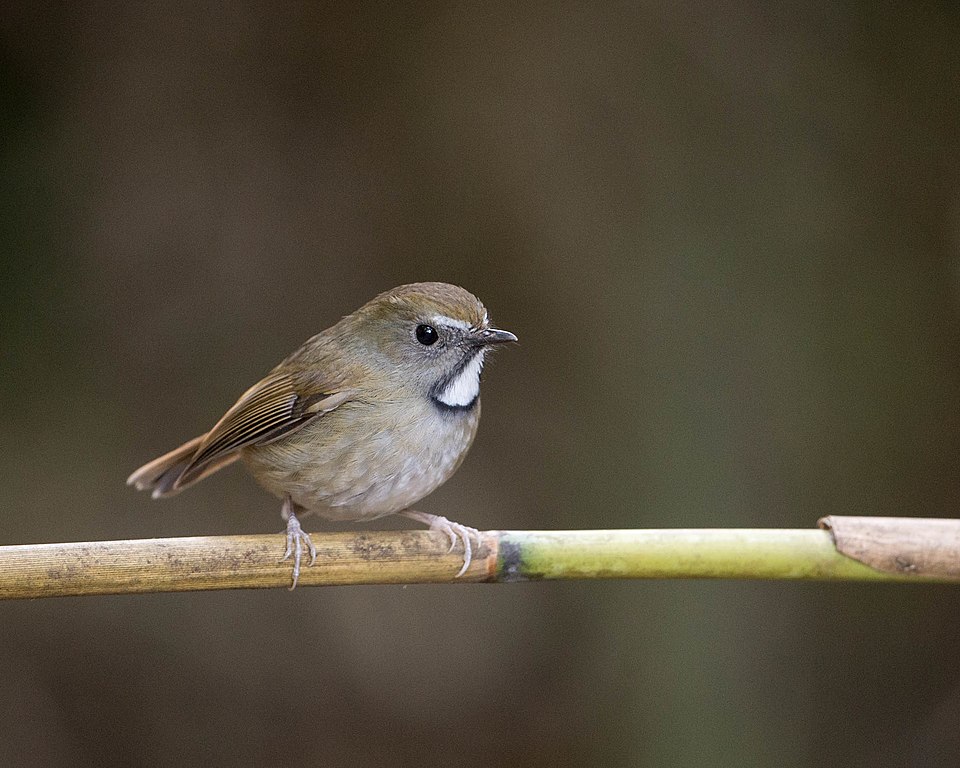
Identifying the Striped Bradyornis involves noting its distinctive black and white plumage. Adults display a striking pattern with bold black stripes running longitudinally down their white underparts, providing a stark contrast that is especially noticeable during flight. The back and wings are predominantly black, with a subtle iridescence that catches the light, while the tail feathers are tipped with white. Juveniles, on the other hand, exhibit more muted tones, with their stripes less pronounced and a slightly browner hue overall, helping them blend into their surroundings. Males and females are similar in appearance, though males may display slightly more vibrant plumage during the breeding season. Confusion with similar species, such as the Pied Flycatcher, can occur, but the Striped Bradyornis is distinguished by its uniquely patterned underparts and more pronounced striping. In flight, the Striped Bradyornis presents a compact silhouette with rapid wing beats and a slightly undulating flight pattern. When perched, it sits upright, often flicking its tail and wings, a behavior that further aids in its identification.
Having trouble telling birds apart? Upload a photo to our bird identification tool for an instant species match.
Striped Bradyornis Habitat and Range
Preferred Habitat
The Striped Bradyornis thrives in diverse forest habitats, ranging from the humid lowland rainforests to the cooler montane forests found at elevations up to 2000 meters. It favors areas with dense undergrowth and a rich canopy, which provide ample foraging opportunities and protection from predators. During the breeding season, this bird is often found in more secluded forest areas, where it can nest with minimal disturbance. In contrast, non-breeding individuals may venture into secondary forests and forest edges, exhibiting some tolerance for habitat disturbance. Despite this adaptability, the Striped Bradyornis is rarely found in urban areas, preferring the tranquility and resources of natural forest environments.
Geographic Range
The Striped Bradyornis is primarily found in Southeast Asia, with its range extending across the islands of Indonesia, Malaysia, and parts of Thailand. It is a resident species within these areas, exhibiting only local movements rather than long-distance migrations. Its breeding range encompasses the extensive forests of Sumatra and Borneo, regions known for their rich biodiversity. Population surveys indicate that the highest densities occur in the untouched rainforests of Borneo, where habitat conditions remain optimal. While not migratory, the Striped Bradyornis may move vertically in response to seasonal changes in food availability, particularly during periods of intense rainfall.
Want to know which birds visit your area? Browse our backyard birds by location guides for region-specific species lists.
What Does the Striped Bradyornis Eat?
The Striped Bradyornis primarily feeds on insects, making it a vital component of its ecosystem for controlling pest populations. Its diet includes beetles, caterpillars, and other arthropods, which it skillfully captures using a combination of aerial sallying and foliage gleaning techniques. During the breeding season, it may also consume small fruits and berries, supplementing its diet with available plant material. The bird typically forages during the cooler parts of the day, such as early morning and late afternoon, when insect activity is highest. Its keen eyesight and agile flight allow it to catch prey mid-air or pluck it from leaves with precision.
Striped Bradyornis Behavior and Social Structure
The Striped Bradyornis exhibits a range of social and territorial behaviors. It is generally a solitary or paired species, with individuals maintaining territories during the breeding season. Males are known for their elaborate courtship displays, which include singing from prominent perches and performing aerial acrobatics to attract females. These displays serve not only to attract mates but also to establish dominance over other males. Outside the breeding season, the bird may form small foraging flocks, especially when food resources are abundant. In response to predators, the Striped Bradyornis issues a sharp alarm call, alerting other birds of danger. Its daily activity follows a diurnal pattern, with periods of intense foraging interspersed with rest and preening.
Striped Bradyornis Nesting and Reproduction
The nesting habits of the Striped Bradyornis involve constructing cup-shaped nests using twigs, leaves, and moss, often lined with softer materials such as feathers and animal hair. These nests are typically situated in the fork of a tree branch, several meters above the ground, providing safety from ground-dwelling predators. A typical clutch consists of 2 to 4 eggs, which are pale blue with speckled markings. The female primarily incubates the eggs over a period of about 14 to 16 days, while the male provides food and protection. Once hatched, the chicks are fed by both parents and fledge approximately two weeks after hatching. The Striped Bradyornis may raise two broods per year, depending on environmental conditions and food availability.
Striped Bradyornis Sounds and Vocalizations
The Striped Bradyornis is renowned for its melodic song, a series of clear, flute-like notes delivered in a rhythmic sequence. Its primary song, often heard during the dawn chorus, serves both to establish territory and attract mates. The song consists of a mixture of trills and whistles, varying in pitch and quality. Additionally, the bird emits softer call notes while foraging and sharp alarm calls when threatened by predators. These vocalizations play a vital role in communication within its species, particularly during the breeding season when establishing pair bonds.
Interesting Facts About the Striped Bradyornis
- 1The Striped Bradyornis is known to mimic the songs of other bird species, showcasing its vocal versatility.
- 2During courtship, the male Striped Bradyornis often presents a small insect to the female as a gift.
- 3The species' intricate nest construction involves weaving materials tightly to withstand strong winds.
- 4Striped Bradyornis can adjust its diet based on seasonal availability, demonstrating dietary flexibility.
- 5The bird's distinctive stripe pattern provides camouflage among the dappled light of the forest canopy.
- 6Juveniles learn their complex songs by listening to adult males, a process that takes several months.
- 7The Striped Bradyornis has a relatively long lifespan for a small bird, often living up to 10 years in the wild.
Striped Bradyornis Conservation Status
Currently, the Striped Bradyornis holds a stable IUCN status, though it faces threats from habitat destruction due to deforestation and agricultural expansion. Conservation efforts focus on protecting its forest habitat and promoting sustainable land-use practices. Despite these challenges, its population appears stable, benefiting from large tracts of undisturbed forest in protected areas. Monitoring programs continue to track population trends and assess the impact of environmental changes on its habitat.
Other Muscicapidae Species


Birds Similar to the Striped Bradyornis
These species are often confused with the Striped Bradyornis due to similar appearance or overlapping range.