
Brown-backed Scrub Robin
Erythropygia hartlaubi
Order: Passeriformes / Family: Muscicapidae

Wikimedia Commons
About the Brown-backed Scrub Robin
The Brown-backed Scrub Robin (Erythropygia hartlaubi) is a small passerine bird belonging to the family Muscicapidae. Found predominantly in sub-Saharan Africa, this species is a staple of wooded savannas, thornbush, and scrub habitats. It is particularly prevalent in countries like Kenya, Tanzania, and Uganda, where it plays a crucial ecological role in pest control and seed dispersion. The Brown-backed Scrub Robin is recognized for its rich and varied vocalizations which mark its presence in the landscape. Birdwatchers often identify it by its distinctive song, a series of melodious whistles and trills that vary in pitch and tempo. During the breeding season, its vocalizations become even more pronounced as males establish territories and attract mates. The species' adaptability to different habitats, including degraded woodland and semi-arid regions, has helped it maintain stable populations despite some regional habitat loss. The Brown-backed Scrub Robin acts as an important indicator of ecosystem health. Changes in its population can signal shifts in habitat quality, making it a focal species for conservationists. Its role in controlling insect populations benefits agriculture and natural vegetation, reducing the need for chemical pest control. Seasonal behaviors of the Brown-backed Scrub Robin include migration to lower elevations or moister areas during dry spells, although it generally does not undertake long-distance migrations. Its breeding season varies regionally, often coinciding with the rains that bring an abundance of food, supporting the energy demands of reproduction. The bird's resilience and adaptability make it a fascinating subject for ornithologists and a cherished sight for birdwatchers across its range.
The Brown-backed Scrub Robin belongs to the family Muscicapidae, within the order Passeriformes. These birds typically live 5-7 years, with a maximum recorded of 10 years.
How to Identify a Brown-backed Scrub Robin
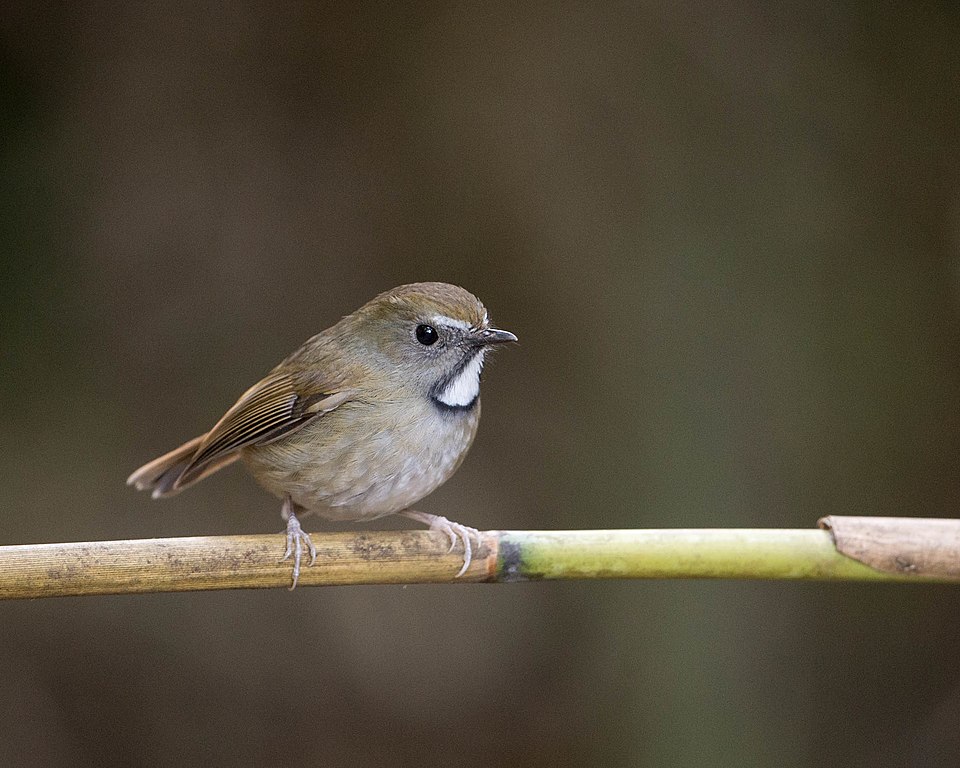
The Brown-backed Scrub Robin is easily identified by its warm brown upperparts, which contrast with its paler underparts. Adults exhibit a subtle white eyebrow stripe above the eye, giving them a distinctive facial appearance. The wings and tail are also brown, with the tail often displaying faint barring. In terms of size, this species is medium for a songbird, with an average length of about 15 centimeters. Juveniles resemble adults but may have more scaly patterns on their underparts and a slightly less pronounced eyebrow stripe. Both males and females appear similar, making sexing in the field challenging without observing behavior. Compared to similar species, the Brown-backed Scrub Robin can be distinguished by its unique song and preference for drier habitats. Its flight silhouette, while not particularly distinctive, features a medium-length tail that fans out slightly when the bird is in flight. When perching, this robin often holds its tail slightly cocked, a posture that can help in identification.
Having trouble telling birds apart? Upload a photo to our bird identification tool for an instant species match.
Brown-backed Scrub Robin Habitat and Range
Preferred Habitat
The Brown-backed Scrub Robin inhabits a range of dry, open environments, primarily favoring wooded savannas and thornbush areas. It can be found at elevations ranging from sea level to about 2,000 meters, although it tends to avoid dense forests. This species thrives in regions where the vegetation is sparse enough to allow for easy foraging but dense enough to provide ample cover from predators. During the dry season, it may shift to areas with more permanent water sources or denser vegetation. The Brown-backed Scrub Robin is not commonly found in urban environments, preferring rural and semi-natural settings where human disturbance is minimal.
Geographic Range
The Brown-backed Scrub Robin's range extends across much of sub-Saharan Africa. It breeds in countries such as Kenya, Tanzania, Uganda, and Zambia, where it occupies a variety of habitats. This species does not engage in long-distance migrations but may undertake local movements in response to seasonal changes in food availability and habitat conditions. Population densities are highest in regions where optimal habitat conditions prevail, such as the acacia-dominated savannas of northern Tanzania and southern Kenya. In these areas, the Brown-backed Scrub Robin can be quite common, although its presence is less obvious due to its secretive nature and preference for dense cover.
Want to know which birds visit your area? Browse our backyard birds by location guides for region-specific species lists.
What Does the Brown-backed Scrub Robin Eat?
The diet of the Brown-backed Scrub Robin consists primarily of insects and other invertebrates, which it gleans from the ground and low vegetation. Common prey items include beetles, ants, and caterpillars. During the breeding season, when energy demands are high, it may also consume small fruits and seeds, particularly those that are easily accessible. This robin employs a methodical foraging technique, hopping along the ground and flipping over leaf litter to uncover hidden prey. It typically feeds during the cooler parts of the day, such as early morning and late afternoon, when insect activity is highest and the risk of predation is lower.
Brown-backed Scrub Robin Behavior and Social Structure
The Brown-backed Scrub Robin exhibits a solitary or paired social structure, especially during the breeding season when pairs establish territories. Males engage in conspicuous courtship displays, including song flights and wing flicking, to attract females and defend their territory. They are territorial birds, often engaging in aggressive displays to ward off intruders. While generally not flocking birds, they may join mixed-species foraging flocks outside the breeding season, benefiting from the increased vigilance against predators. When threatened by predators, the Brown-backed Scrub Robin often employs distraction displays, such as feigning injury, to draw attention away from nests or fledglings. Daily activity patterns revolve around feeding and territorial maintenance, with peak activity occurring during the cooler parts of the day.
Brown-backed Scrub Robin Nesting and Reproduction
The Brown-backed Scrub Robin typically constructs a cup-shaped nest using twigs, grasses, and roots, lining it with softer materials like feathers and hair. Nests are usually placed low in shrubs or small trees, well-concealed among foliage to protect against predators. The typical clutch size ranges from two to four eggs, which are pale and speckled with brown or reddish markings. Both parents share incubation duties, which last approximately 14 days. Once hatched, the chicks remain in the nest for another two weeks before fledging. During this period, both males and females actively feed and protect the young. The species is capable of raising two broods per year if conditions are favorable.
Brown-backed Scrub Robin Sounds and Vocalizations
The Brown-backed Scrub Robin's primary song is a series of melodious whistles and trills, often delivered from a prominent perch. The rhythm and pitch of the song can vary, making it a useful tool for individual recognition among conspecifics. Its call notes are softer but equally distinctive, consisting of a series of short, sharp chups. Alarm calls, which are harsher and more urgent, are used to alert mates or warn off potential threats. This robin participates in the dawn chorus, where its song can be heard prominently, adding to the rich tapestry of sounds that characterize its habitat.
Interesting Facts About the Brown-backed Scrub Robin
- 1The Brown-backed Scrub Robin can mimic the calls of other bird species, adding complexity to its song.
- 2This robin's nest placement, often low and concealed, helps protect its young from predation.
- 3Despite its preference for dry habitats, the Brown-backed Scrub Robin is adept at finding water sources.
- 4It has a varied diet that includes both insects and fruits, adapting to seasonal food availability.
- 5The species' song repertoire can contain over a dozen distinct phrases, each with unique pitches and rhythms.
- 6Brown-backed Scrub Robins are known to participate in mixed-species flocks, benefiting from shared vigilance.
- 7Their territorial behavior intensifies during the breeding season, with males fiercely defending boundaries.
Brown-backed Scrub Robin Conservation Status
The Brown-backed Scrub Robin currently holds a status of Least Concern according to the IUCN. Its population appears stable, with no immediate threats causing significant declines. However, habitat degradation and loss due to agricultural expansion and human settlement pose potential risks. Conservation efforts focus on habitat preservation and restoration, particularly in regions where its preferred habitats are under threat. Historical population changes have been minimal, suggesting a robust adaptability to environmental changes, provided sufficient habitat remains.
Other Muscicapidae Species


Birds Similar to the Brown-backed Scrub Robin
These species are often confused with the Brown-backed Scrub Robin due to similar appearance or overlapping range.

