
Karoo Scrub Robin
Tychaedon coryphoeus
Order: Passeriformes / Family: Muscicapidae

Wikimedia Commons
About the Karoo Scrub Robin
The Karoo Scrub Robin (Tychaedon coryphoeus) is a small passerine bird native to the arid regions of southern Africa, primarily within the countries of South Africa and Namibia. This species is particularly associated with the Karoo, a semi-desert natural region of South Africa, where it finds both habitat and sustenance. The bird's adaptability to this harsh environment exemplifies its ecological significance. The Karoo Scrub Robin plays a vital role in the ecosystem as an insectivore, helping to control insect populations and thus contributing to the ecological balance within its habitat. In addition to its ecological role, it is a species of interest for birdwatchers, often highlighted due to its active and conspicuous behavior within its preferred scrubland habitat, where it often perches conspicuously on low shrubs or rocks. The species exhibits certain seasonal behaviors, which include increased vocal activity during the breeding season, which typically occurs during the southern hemisphere spring and early summer months (September to December). This period sees the males singing vigorously to defend territories and attract mates. During the non-breeding season, the Karoo Scrub Robin becomes less vocal and more elusive, although it remains within its home range, displaying site fidelity. The bird is well-adapted to the scrubby, arid environments of the Karoo, thriving where many other species cannot. Its presence in these areas is a testament to its evolutionary adaptations, which include efficient water retention and a diet that can vary with the availability of food sources.
The Karoo Scrub Robin belongs to the family Muscicapidae, within the order Passeriformes. These birds typically live average 3-5 years with a maximum recorded of 7 years..
How to Identify a Karoo Scrub Robin
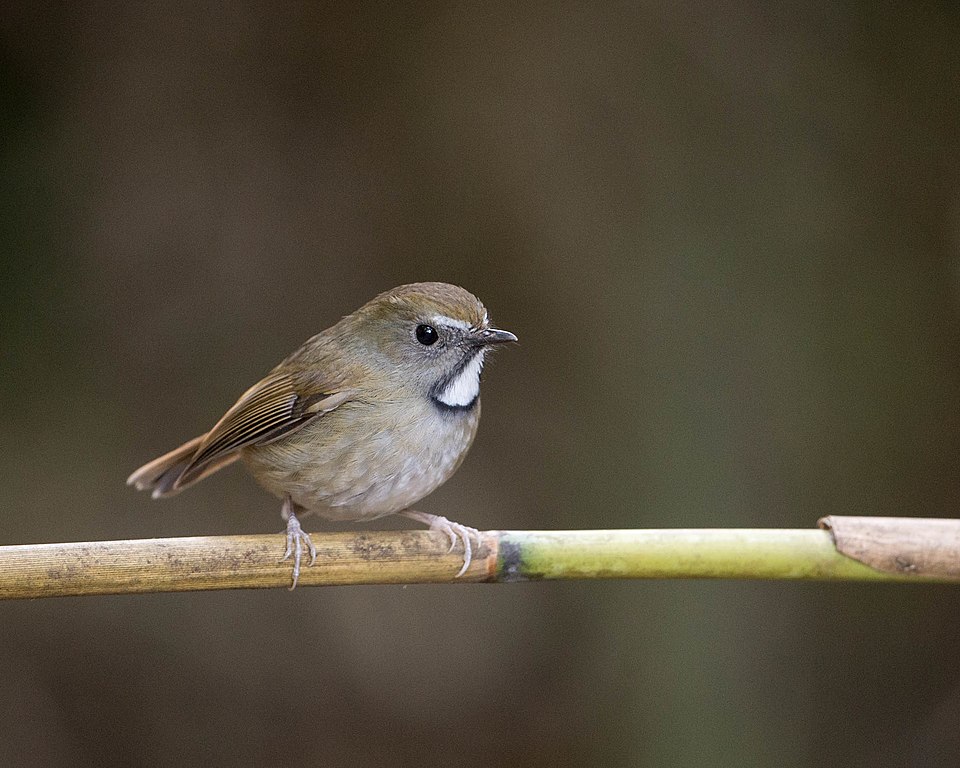
The Karoo Scrub Robin is a small bird, approximately 14-15 cm in length, with a relatively long tail that is often flicked and fanned. The adult plumage is predominantly brown, providing excellent camouflage against the scrubby backdrop of its habitat. The underparts are paler, with a distinctive white eye-stripe that contrasts with its darker face and crown. The tail, a key identification feature, is brown with white edges, particularly visible when the bird flicks it up and down. This tail flicking is a characteristic behavior, aiding in its identification. Males and females are similar in appearance, making sex differentiation challenging in the field. Juveniles resemble adults but have a more mottled appearance due to their immature feathers. Compared to similar species, such as the Familiar Chat, the Karoo Scrub Robin's longer tail and distinctive tail flicking behavior are reliable distinguishing features. In flight, the Karoo Scrub Robin appears agile and quick, though it prefers to remain within its scrubby terrain, rarely venturing into open areas. When perched, it often holds its body at an angle, with its tail characteristically cocked upwards.
Having trouble telling birds apart? Upload a photo to our bird identification tool for an instant species match.
Karoo Scrub Robin Habitat and Range
Preferred Habitat
The Karoo Scrub Robin inhabits arid scrublands, particularly favoring the Karoo biome, which consists of sparse vegetation, low shrubs, and rocky outcrops. This habitat type is characteristic of the inland regions of South Africa, including the Western and Northern Cape provinces, as well as parts of Namibia. The bird thrives at low to moderate elevations, generally ranging from sea level up to 1,500 meters. Although it primarily inhabits rural and natural environments, the Karoo Scrub Robin occasionally ventures into the outskirts of towns and farms, where scrubland persists. Seasonal habitat shifts are minimal, as the bird is largely sedentary, maintaining territories year-round within its scrub habitat.
Geographic Range
The Karoo Scrub Robin's range is predominantly in southern Africa, where it occupies the semi-arid regions of South Africa and extends into parts of Namibia. The species is a resident breeder throughout its range and does not exhibit long-distance migratory behavior. Notably, it is common in the Karoo regions of South Africa, with population density hotspots in areas such as the Succulent Karoo and Nama Karoo biomes. While its range is primarily limited to these regions, the bird's adaptability to arid environments allows it to maintain a stable population across its range. There are no significant migration corridors, as the species does not undertake seasonal migrations.
Want to know which birds visit your area? Browse our backyard birds by location guides for region-specific species lists.
What Does the Karoo Scrub Robin Eat?
The Karoo Scrub Robin primarily feeds on insects, making it an important insectivore within its ecosystem. Its diet consists of beetles, ants, and caterpillars, which it actively forages from the ground and low vegetation. During the breeding season, when insect abundance peaks, the bird intensifies its foraging activity to meet the increased energy demands of rearing young. In addition to insects, the Karoo Scrub Robin occasionally consumes seeds and small fruits, particularly during times when insect prey is less available. The bird employs a 'hop-and-pick' foraging technique, characterized by hopping along the ground and picking prey items from surfaces. Its foraging activity is diurnal, with peak feeding occurring during the cooler morning and late afternoon hours.
Karoo Scrub Robin Behavior and Social Structure
The Karoo Scrub Robin exhibits solitary and territorial behavior, with pairs defending territories vigorously during the breeding season. Territorial disputes involve vocal displays and, occasionally, physical confrontations. The bird's courtship displays are subtle, involving song and mutual preening between mates. Unlike some other robin species, the Karoo Scrub Robin does not form flocks, maintaining solitary or pair-based existence throughout the year. In response to predators, such as snakes and birds of prey, the Karoo Scrub Robin employs alarm calls and seeks cover within dense vegetation. The bird's daily activity patterns are influenced by temperature, with increased activity during cooler parts of the day, including a pronounced dawn chorus during the breeding season. This early morning activity is driven by the need to establish and defend territory through song.
Karoo Scrub Robin Nesting and Reproduction
The Karoo Scrub Robin constructs a cup-shaped nest, typically placed low to the ground within dense shrubs or concealed among rocks. The nest is crafted from fine grasses and lined with softer materials such as feathers or plant down. Nesting sites are selected with care, prioritizing concealment from predators. The typical clutch size ranges from two to four eggs, which are pale with brown speckles. The female primarily incubates the eggs over a period of approximately 14 days. Both parents participate in feeding the nestlings, which fledge after about 15 days post-hatching. The Karoo Scrub Robin may produce one to two broods per year, depending on food availability and environmental conditions.
Karoo Scrub Robin Sounds and Vocalizations
The primary song of the Karoo Scrub Robin is a melodious series of whistled notes, often delivered from a conspicuous perch. This song is rhythmic and moderately pitched, serving as both a territorial and a courtship call. In addition to its song, the bird emits a variety of call notes, including a sharp 'chack' sound used as an alarm call when predators are nearby. The dawn chorus, particularly during the breeding season, is marked by heightened singing activity, with the male's song carrying far across the scrubland. Compared to other species, the Karoo Scrub Robin's song is less complex but is notable for its clarity and consistency.
Interesting Facts About the Karoo Scrub Robin
- 1The Karoo Scrub Robin's tail flicking is not just for show; it helps in flushing insects from cover.
- 2This bird can tolerate high temperatures, often seen active during the heat of the day when many species seek shade.
- 3Despite its small size, the Karoo Scrub Robin defends territories aggressively, even against larger birds.
- 4The species plays a crucial role in seed dispersal, aiding the regeneration of scrubland vegetation.
- 5Karoo Scrub Robins can often be heard before they are seen, using their song to establish territories.
- 6The bird's adaptability to arid environments serves as a model for studying climate resilience in avian species.
- 7Karoo Scrub Robins are an indicator species for the health of the Karoo biome, reflecting changes in ecosystem conditions.
Karoo Scrub Robin Conservation Status
The Karoo Scrub Robin is currently listed as 'Least Concern' by the IUCN, with a stable population trend. The species benefits from its adaptability to arid environments, which are less susceptible to human-induced changes than other habitats. Primary conservation threats include habitat degradation due to overgrazing and the spread of invasive plant species. Conservation efforts focus on habitat preservation and managing land use to ensure the maintenance of suitable scrubland environments. Historically, the population of the Karoo Scrub Robin has remained stable, with no significant declines noted.
Other Muscicapidae Species


Birds Similar to the Karoo Scrub Robin
These species are often confused with the Karoo Scrub Robin due to similar appearance or overlapping range.

