Brown-capped Tyrannulet
Ornithion brunneicapillus
Order: Passeriformes / Family: Tyrannidae
Wikimedia Commons
About the Brown-capped Tyrannulet
The Brown-capped Tyrannulet (Ornithion brunneicapillus) is a diminutive but lively member of the family Tyrannidae, notable for its role as an insectivore in the lush forests of South America. This species thrives in subtropical and tropical moist lowland forests and is primarily found in countries such as Brazil, Colombia, Venezuela, Peru, and Ecuador. The presence of the Brown-capped Tyrannulet contributes significantly to the ecosystem by controlling insect populations, thus maintaining a balance in its habitat. Typically, this bird inhabits mid to upper forest canopies, where its subtle coloration helps it blend seamlessly with the surrounding foliage. This camouflage is crucial for avoiding predators while foraging. Researchers have observed that this species may exhibit nomadic behavior, moving in response to seasonal changes in food availability. Unlike some other tyrannulets, the Brown-capped Tyrannulet does not engage in long-distance migration but may shift its range slightly within the forest in response to seasonal variations. The bird plays a critical ecological role, not only through insect control but also by serving as prey for larger avian predators. Its presence indicates a healthy, functioning ecosystem, and it contributes to the complex web of forest life. During the breeding season, which generally corresponds with the wet season when insect abundance is at its peak, the Brown-capped Tyrannulet becomes more vocal and active. This seasonality ensures that food is plentiful for raising young, and the lush forest provides ample nesting sites. The bird's adaptability to different forest types across its range reflects its ecological plasticity, allowing it to thrive in various forest conditions.
The Brown-capped Tyrannulet belongs to the family Tyrannidae, within the order Passeriformes. These birds typically live average 4 years, max recorded 7 years.
How to Identify a Brown-capped Tyrannulet
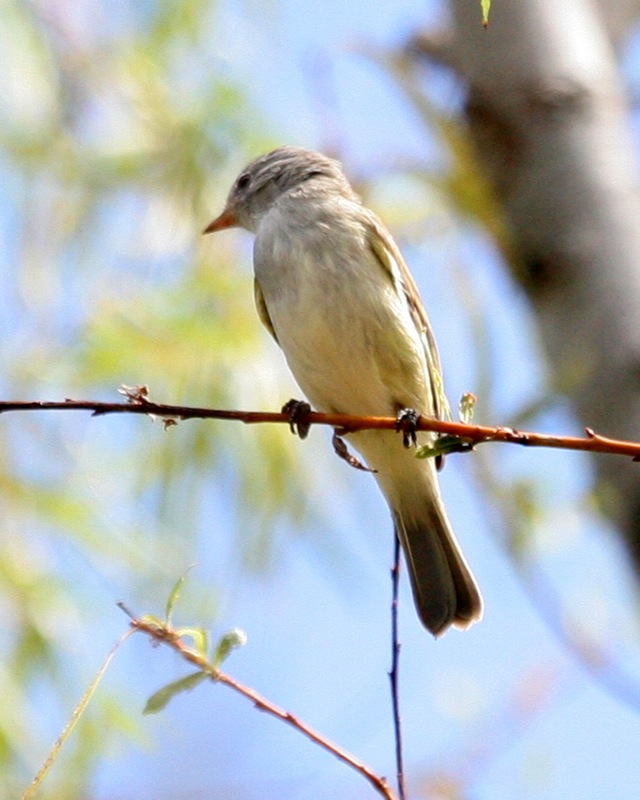
The Brown-capped Tyrannulet is a small bird, approximately 10 centimeters in length, with a distinctive brown cap that gives the species its name. Adults display a predominantly olive-green plumage on their upperparts, which contrasts with a paler yellowish underbelly. The brown cap is a key field mark, although it can be subtle when seen from a distance. Juveniles resemble adults but may have less pronounced cap coloration. Both sexes look similar, making it challenging to distinguish between males and females in the field. The Brown-capped Tyrannulet can be confused with other tyrannulets, especially those in overlapping ranges, such as the Yellow-crowned Tyrannulet. However, the Brown-capped Tyrannulet's unique cap and less vibrant overall coloration help differentiate it. In flight, the bird's silhouette is compact, with rapid wingbeats typical of tyrannulets. When perched, it often exhibits an upright posture, flicking its wings and tail nervously, a behavior that can assist in identification from a distance.
Having trouble telling birds apart? Upload a photo to our bird identification tool for an instant species match.
Brown-capped Tyrannulet Habitat and Range
Preferred Habitat
The Brown-capped Tyrannulet primarily inhabits lowland tropical and subtropical moist forests. It prefers forest edges, clearings, and secondary growth areas where the canopy is not too dense, allowing for easier foraging. This bird can be found from sea level up to elevations of about 1,000 meters, although it is most abundant in lower elevations. Unlike some forest birds, the Brown-capped Tyrannulet does not typically venture into urban areas, remaining closely tied to its forest habitat. During the wet season, it may move slightly within its habitat in search of areas with higher insect concentrations, though it remains within forested regions.
Geographic Range
The range of the Brown-capped Tyrannulet extends across northern South America, with a presence in Brazil, Colombia, Venezuela, Peru, and Ecuador. It thrives in the Amazon Basin and the Orinoco River regions, where dense forest habitats provide ample resources. This species is not migratory; instead, it remains resident within its range throughout the year. Population density tends to be higher in areas with well-preserved forests, particularly in national parks and reserves where habitat disturbance is minimal. Although it is widespread in suitable habitats, the bird's presence is patchy, often confined to regions with optimal forest conditions.
Want to know which birds visit your area? Browse our backyard birds by location guides for region-specific species lists.
What Does the Brown-capped Tyrannulet Eat?
The Brown-capped Tyrannulet primarily feeds on insects and other small arthropods, employing active foraging techniques that include gleaning from leaves and branches in the forest canopy. Its diet comprises a variety of insects such as beetles, caterpillars, and spiders, which it captures with quick, agile movements. During the wet season, when insects are more abundant, the tyrannulet's diet expands to include a wider range of prey, adjusting to availability. The bird typically feeds throughout the day, with peak activity occurring in the early morning and late afternoon, aligning with periods of increased insect activity.
Brown-capped Tyrannulet Behavior and Social Structure
The Brown-capped Tyrannulet exhibits a solitary or pair-based social structure, often seen foraging alone or in pairs within its arboreal habitat. It defends small territories through vocalizations and displays, particularly during the breeding season. Courtship involves aerial chases and vocal exchanges between potential mates. Although not typically a flocking species, this tyrannulet may join mixed-species foraging flocks, benefiting from the vigilance of other birds and increased foraging opportunities. In response to predators, the Brown-capped Tyrannulet employs a combination of vocal alarms and rapid evasive maneuvers, using its small size and agility to escape threats. Its daily activity patterns are diurnal, with periods of increased activity at dawn and dusk.
Brown-capped Tyrannulet Nesting and Reproduction
The Brown-capped Tyrannulet constructs a small cup-shaped nest, often situated in the forks of tree branches in the mid to upper canopy. Nests are crafted from fine plant materials, moss, and spider silk, providing a well-camouflaged structure. The typical clutch size ranges from two to three eggs, which are incubated primarily by the female for about two weeks. Both parents participate in feeding the chicks post-hatching, with fledging occurring approximately 15 days after hatching. The species may raise one to two broods per year, depending on environmental conditions and food availability.
Brown-capped Tyrannulet Sounds and Vocalizations
The primary song of the Brown-capped Tyrannulet consists of a series of high-pitched, rapid notes that rise and fall in a rhythmic pattern, often described as a 'tseet-tseet-tseet' sequence. Calls are generally sharp and can include short 'chip' notes used for communication between mates or as alarm calls. During the dawn chorus, this tyrannulet's song contributes to the vibrant acoustic landscape of its forest habitat, though its calls are less prominent compared to more vocal species.
Interesting Facts About the Brown-capped Tyrannulet
- 1The Brown-capped Tyrannulet is one of the smallest members of the Tyrannidae family, weighing just 8 grams.
- 2This species is known for its 'nervous' behavior, often flicking its wings and tail when perched.
- 3Despite its small size, the Brown-capped Tyrannulet plays a vital role in controlling insect populations.
- 4It can be challenging to spot due to its excellent camouflage among the forest canopy foliage.
- 5The Brown-capped Tyrannulet's song can often be heard before the bird is seen, especially during the breeding season.
Brown-capped Tyrannulet Conservation Status
The Brown-capped Tyrannulet is currently listed as Least Concern by the IUCN, with populations considered stable across its range. However, habitat loss due to deforestation poses a significant threat, particularly in regions where logging and agricultural expansion are prevalent. Conservation efforts focus on preserving forest habitats and establishing protected areas to ensure long-term population stability. Historical data suggest that while some local declines have occurred, the overall population has remained relatively stable due to the species' adaptability to secondary growth forests.
Other Tyrannidae Species


Birds Similar to the Brown-capped Tyrannulet
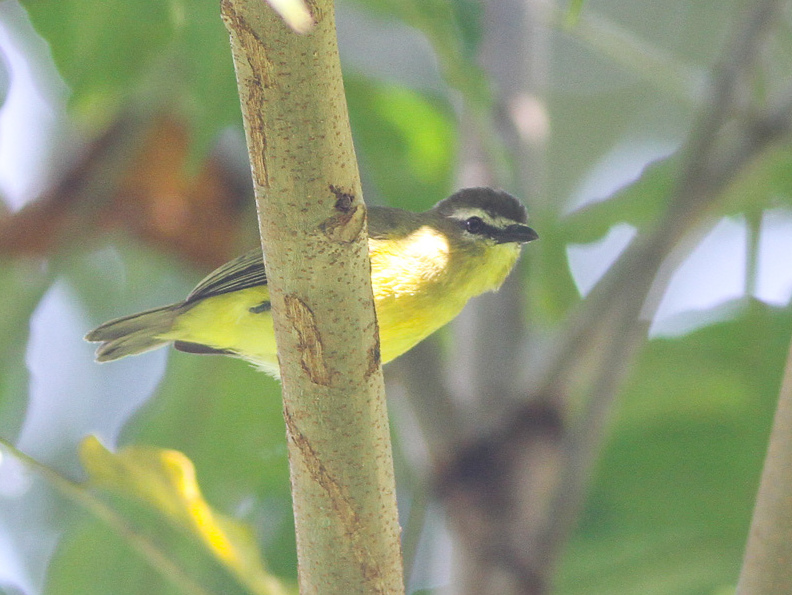
These species are often confused with the Brown-capped Tyrannulet due to similar appearance or overlapping range.