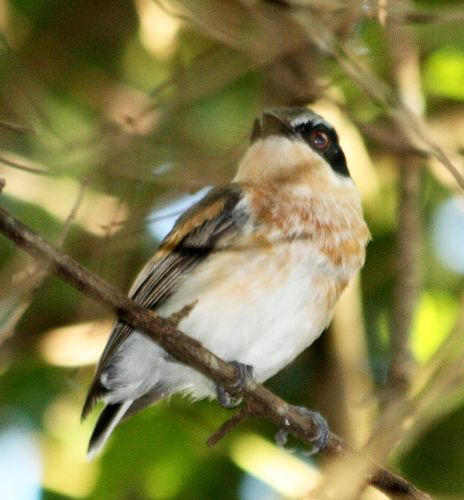
Cape Batis
Batis capensis
Order: Passeriformes / Family: Platysteiridae

Wikimedia Commons
About the Cape Batis
The Cape Batis (Batis capensis) is a small, charismatic songbird native to the southern regions of Africa. Its presence is predominantly in the forests and woodlands of South Africa and parts of Swaziland and Lesotho. This bird is a staple of the Platysteiridae family, embodying the quintessential traits of the genus Batis with its striking plumage and active foraging behaviors. The Cape Batis plays a vital role in its ecosystem, primarily as an insectivore, helping to control insect populations within its habitat. This bird is particularly significant in the montane forests of eastern South Africa, where it is a common sight. These forests, often shrouded in mist, provide a rich environment for a diverse array of flora and fauna, with the Cape Batis contributing to the ecological balance. During the breeding season, which typically spans from spring to early summer, the Cape Batis becomes more vocal, with its distinctive calls echoing through the forest canopy. Its role extends beyond mere insect control, as it also serves as prey for larger predators, thereby fitting into the complex food web of its native regions. In the broader ecological context, the Cape Batis is an indicator of healthy forest ecosystems. Its presence suggests a thriving habitat, as these birds prefer well-vegetated areas with ample insect life. Conservation efforts focused on preserving the Cape Batis' habitat can have cascading benefits for other species sharing the same environment. As the seasons change, the Cape Batis exhibits some altitudinal migration, moving to lower elevations during the colder months. This seasonal behavior ensures it remains within an optimal feeding range year-round. The bird's adaptability to various forested environments, from dense woodlands to more open forest edges, underscores its resilience, an essential trait for survival in the ever-changing climates of southern Africa.
The Cape Batis belongs to the family Platysteiridae, within the order Passeriformes. These birds typically live approximately 5-8 years, with a maximum recorded of 10 years..
How to Identify a Cape Batis
Adult Cape Batis males display a bold black face mask contrasted by white supercilia and throat, with a striking rufous-brown band across the breast. Their back is olive to gray, and the wings are black with white stripes. Females are similar but have a duller breast band and lack the male's intense black facial markings. Juveniles resemble females but exhibit a more mottled appearance. Differentiating between sexes can be challenging at a distance, but the male's darker, more vivid markings provide a reliable clue. In flight, the Cape Batis presents a compact silhouette with rapid, direct wingbeats, often flying short distances between perches. When perched, it displays a characteristic upright posture, often flicking its wings and tail. Confusion with similar species such as the Pririt Batis is possible, but the latter's habitat preferences and subtle differences in plumage aid in differentiation.
Having trouble telling birds apart? Upload a photo to our bird identification tool for an instant species match.
Cape Batis Habitat and Range
Preferred Habitat
The Cape Batis thrives in forested areas, with a preference for montane and coastal forests. It occupies elevations ranging from sea level up to 2,000 meters. Within these habitats, it favors dense undergrowth and well-vegetated areas. Seasonal habitat shifts are minimal, though some altitudinal movement to lower elevations occurs in winter. In urban settings, the Cape Batis can be found in well-treed gardens and parks, provided there is adequate cover and food supply. Unlike many bird species, it is less common in open or arid environments.
Geographic Range
The Cape Batis is a resident bird with a range concentrated in southern Africa. It inhabits the eastern and southern regions of South Africa, extending into Swaziland and Lesotho. The bird's range is largely non-migratory, though it exhibits some altitudinal migration, moving to lower elevations during colder months. Population density is highest in the Afromontane forests of the Drakensberg range and the coastal forests of KwaZulu-Natal. It is less frequently observed in the drier interior regions, which do not support its preferred habitat.
Want to know which birds visit your area? Browse our backyard birds by location guides for region-specific species lists.
What Does the Cape Batis Eat?
The Cape Batis primarily feeds on insects and other arthropods, making it an important insectivore. Its diet includes beetles, caterpillars, and flies, with occasional consumption of small spiders. Foraging typically occurs in the mid to upper canopy, where it gleans prey from leaves and branches. During the breeding season, its diet shifts slightly to include more protein-rich prey to support chick development. The Cape Batis employs a sit-and-wait hunting technique, often perching quietly before darting out to snatch prey. It generally feeds during daylight hours, with peak activity in the early morning and late afternoon.
Cape Batis Behavior and Social Structure
The Cape Batis is a socially monogamous species, often seen in pairs or small family groups. Territorial behavior is pronounced during the breeding season, with both sexes participating in territory defense. Males engage in elaborate courtship displays, including fluttering flights and vocalizations to attract females. Flocking behavior is uncommon outside the breeding season, as these birds maintain defined territories year-round. When faced with predators, the Cape Batis employs a variety of alarm calls and will often join other forest birds in mobbing behavior to deter threats. Daily activity patterns include periods of foraging interspersed with rest and preening.
Cape Batis Nesting and Reproduction
Cape Batis nests are neat, cup-shaped structures typically constructed in the fork of a tree or shrub. Preferred nesting materials include fine twigs, moss, and lichen, which provide excellent camouflage. Nests are usually located 2-4 meters above the ground. The typical clutch consists of two to three eggs, with an incubation period of about 16 days. Both parents share incubation duties and subsequent feeding of the chicks. Fledging occurs approximately 18-21 days after hatching, with young birds remaining dependent on parents for an additional few weeks. The Cape Batis typically raises one or two broods per year.
Cape Batis Sounds and Vocalizations
The primary song of the Cape Batis is a series of clear, melodious whistles, often rendered as 'pee-pee-pi-pi' with a descending cadence. These songs are especially prominent at dawn, contributing to the forest's dawn chorus. Call notes include sharp 'chip' or 'chit' sounds, used for communication between mates or as alarm signals. The alarm calls are more rapid and intense, alerting nearby birds to potential danger. The Cape Batis' vocalizations play a crucial role in maintaining pair bonds and establishing territory.
Interesting Facts About the Cape Batis
- 1Cape Batises build their nests primarily with moss and lichens, creating excellent camouflage.
- 2Males and females of the Cape Batis can be hard to distinguish due to their similar size and plumage.
- 3The Cape Batis is known to participate in mixed-species flocks outside the breeding season.
- 4Despite their small size, Cape Batises are aggressive in defending their territory from intruders.
- 5Cape Batis chicks fledge at around 18-21 days but remain dependent on parents for several more weeks.
- 6The Cape Batis' song is a staple of the African forest soundscape, especially during breeding season.
- 7Cape Batises have a unique foraging technique that involves 'hover-gleaning' from foliage.
Cape Batis Conservation Status
The Cape Batis is currently listed as Least Concern by the IUCN, with a stable population trend. Habitat loss due to deforestation remains a primary threat, though its adaptability to secondary growth and gardens mitigates some risk. Conservation efforts focus on preserving its natural forest habitats, particularly in regions facing agricultural expansion and urban development. Historical population data suggest the species has maintained a stable presence across its range, benefiting from protected areas and reserves in key habitats.