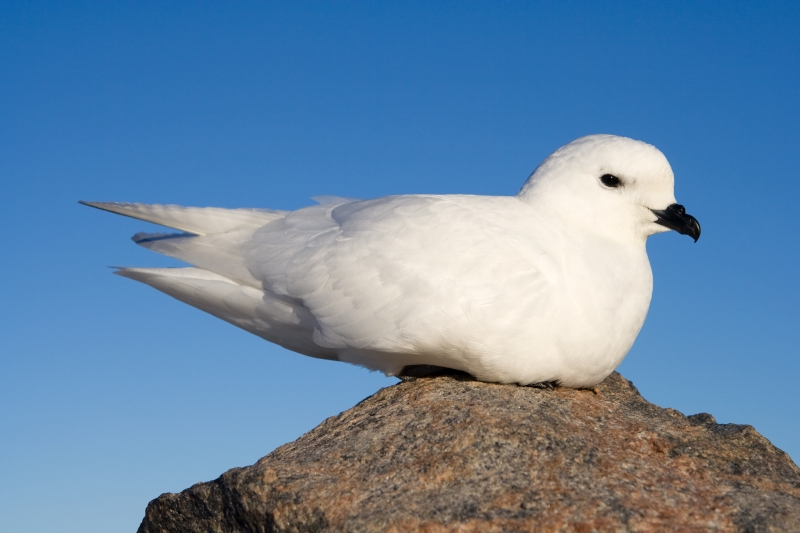
Cape Petrel
Daption capense
Order: Procellariiformes / Family: Procellariidae

Wikimedia Commons
About the Cape Petrel
The Cape Petrel, known scientifically as Daption capense, is a captivating seabird native to the Southern Hemisphere. This species exhibits a striking contrast in its plumage, with a distinctive black-and-white checkered pattern that makes it easily recognizable. The Cape Petrel holds a significant role in the marine ecosystems it inhabits, primarily found in the Southern Ocean and surrounding sub-Antarctic and Antarctic waters. These birds often frequent the cold, nutrient-rich waters off the coasts of Antarctica, South Georgia, and the Falkland Islands, where they are a common sight throughout the year.
One of the Cape Petrel's key ecological roles is as a scavenger and predator, feeding on a variety of marine organisms. By consuming krill, squid, and fish, they help maintain the balance of marine populations. Additionally, their scavenging habits play a role in cleaning up carrion from the ocean's surface. The Cape Petrel is also known for its unique feeding behavior. It employs a surface-seizing technique, often joining multi-species feeding flocks to efficiently exploit food resources.
Seasonally, the Cape Petrel displays interesting behavioral adaptations. During the breeding season, which occurs in the austral summer from November to March, these birds are more commonly found near their nesting sites on rocky cliffs and islands. Their nesting colonies are densely packed and can number in the thousands, highlighting their colonial lifestyle. Outside the breeding season, Cape Petrels are highly pelagic, spending most of their time at sea, where they cover vast distances in search of food. Their ability to glide effortlessly on the wind currents of the Southern Ocean is a testament to their adaptation to the harsh, unpredictable conditions of their environment.
The Cape Petrel belongs to the family Procellariidae, within the order Procellariiformes. These birds typically live typically 15-20 years, with some individuals known to live over 30 years..
How to Identify a Cape Petrel
Adult Cape Petrels are medium-sized seabirds, measuring about 35-42 cm in length with a wingspan ranging from 80-91 cm. Their most distinctive feature is their bold black-and-white plumage, which resembles a checkerboard pattern. The upper wings are predominantly black with white patches, while the underparts are largely white with black spots. This striking coloration is not only visually appealing but also serves as camouflage against the ocean's surface, breaking up their outline from potential predators.
Juvenile Cape Petrels resemble adults but tend to have a slightly duller plumage, lacking the sharp contrast seen in mature individuals. Males and females appear similar, with no significant sexual dimorphism in terms of size or plumage coloration, making visual differentiation challenging in the field.
In flight, the Cape Petrel's silhouette is characterized by its broad, rounded wings and short tail. Their flight is buoyant and graceful, frequently gliding on stiff wings close to the ocean surface. When perched, they exhibit a slightly hunched posture, often resting on rocky outcrops or floating on the water. While similar species like the Antarctic Petrel might confuse observers, the Cape Petrel's distinct plumage pattern and smaller size are reliable identification markers.
Having trouble telling birds apart? Upload a photo to our bird identification tool for an instant species match.
Cape Petrel Habitat and Range
Preferred Habitat
The Cape Petrel is a true denizen of the Southern Ocean, typically inhabiting cold, open oceanic waters. These birds are pelagic for most of their life cycle, rarely venturing far from the sea. Their preferred habitats include the nutrient-rich waters around the Antarctic continent and sub-Antarctic islands, such as South Georgia, the South Sandwich Islands, and the Falkland Islands.
During the breeding season, Cape Petrels seek out rocky cliffs and islands where they establish large nesting colonies. These breeding sites are usually located on remote islands free from land predators, ensuring the safety of their eggs and chicks. The elevation at which they nest varies, often found from sea level up to 200 meters above sea level, depending on the island's topography.
Cape Petrels do not commonly inhabit urban areas, as they are highly adapted to the marine environment. Their presence near human settlements is generally limited to areas near their breeding colonies, where they might be seen by researchers and tourists visiting the islands.
Geographic Range
The Cape Petrel has a circumpolar distribution in the Southern Hemisphere, primarily inhabiting the Southern Ocean. Its breeding range is concentrated on sub-Antarctic islands and the Antarctic Peninsula. Notable breeding locations include islands like South Georgia, the South Sandwich Islands, the South Orkney Islands, and the Antarctic mainland.
During the non-breeding season, Cape Petrels disperse widely across the Southern Ocean, moving northward to reach the waters off the coasts of southern South America, including Chile and Argentina. Their migration patterns are influenced by oceanic currents and food availability, leading to fluctuations in their range depending on environmental conditions.
Population density hotspots occur around productive areas of the Southern Ocean, particularly where upwellings bring nutrient-rich waters to the surface, supporting abundant marine life. While not migratory in the traditional sense, Cape Petrels exhibit a wide-ranging pelagic lifestyle, covering vast distances in search of food while remaining within the confines of the Southern Ocean.
Want to know which birds visit your area? Browse our backyard birds by location guides for region-specific species lists.
What Does the Cape Petrel Eat?
The Cape Petrel's diet primarily consists of krill, making up a substantial portion of their food intake. These small crustaceans are abundant in the Southern Ocean and form the base of the marine food web. In addition to krill, Cape Petrels consume squid and small fish, capturing their prey through surface-seizing and dipping behaviors.
Seasonal changes in prey availability can influence the diet of Cape Petrels. During the summer months, when krill swarms are plentiful, these birds focus on exploiting this abundant resource. In winter, when krill becomes less accessible, Cape Petrels may rely more on scavenging and feeding on carrion, including the remains of marine mammals and fish.
The Cape Petrel's foraging technique involves skimming the ocean's surface while in flight, using their keen eyesight to spot prey below. They often join feeding flocks with other seabirds, taking advantage of disturbed prey driven to the surface. This opportunistic feeding behavior allows them to maximize their energy intake in the challenging environment of the Southern Ocean.
Cape Petrel Behavior and Social Structure
The Cape Petrel is known for its social and colonial behavior, often seen in large flocks both at sea and at their breeding colonies. These birds exhibit a highly social structure, relying on group dynamics for efficient foraging and predator avoidance. During the breeding season, Cape Petrels display territorial behavior, fiercely defending their nesting sites from intruders.
Courtship displays in Cape Petrels involve mutual preening and vocalizations, strengthening pair bonds and ensuring synchrony for the breeding cycle. Once paired, these birds remain monogamous, often returning to the same nesting site with the same partner year after year.
In response to predators, such as skuas, Cape Petrels exhibit mobbing behavior, where groups of birds collectively harass and drive away potential threats. This collective defense mechanism is essential for the protection of eggs and chicks, which are vulnerable to predation.
Daily activity patterns of Cape Petrels are largely influenced by the availability of food. They spend significant time foraging at sea, often commuting vast distances between feeding areas and nesting sites. This pelagic lifestyle requires efficient energy management, with periods of intense activity followed by rest and preening on the water's surface.
Cape Petrel Nesting and Reproduction
Cape Petrels nest in large, densely packed colonies on remote islands and rocky cliffs, preferring sites that offer protection from land predators. Their nests are simple scrapes on the ground, often lined with small stones and bits of vegetation.
The clutch size for Cape Petrels typically consists of a single egg, with both parents sharing incubation duties. The incubation period lasts around 45 days, after which the chick hatches. Parental care is highly cooperative, with both parents taking turns feeding the chick and guarding the nest.
Fledging occurs approximately 45-55 days after hatching, depending on food availability and weather conditions. Once fledged, the young birds spend time honing their flight skills before embarking on their life at sea. Cape Petrels typically raise only one brood per year, investing considerable parental effort into ensuring the survival of their single offspring.
Cape Petrel Sounds and Vocalizations
Cape Petrels are not known for a melodious song, but rather produce a range of calls and vocalizations. Their primary call is a harsh, cackling sound, often described as reminiscent of a small dog barking. This call is used in various social interactions, particularly during courtship and territorial disputes.
In addition to their primary call, Cape Petrels produce a series of grunts and croaks, used for communication within the colony. These vocalizations are most frequently heard during the breeding season, when birds are more vocal in defending their nests and interacting with mates.
Alarm calls are sharp and piercing, serving as a warning to other colony members of potential threats, such as skuas or other predators. Cape Petrels do not participate in a dawn chorus, as their calls are more functional than musical, serving specific communicative purposes within their social structure.
Interesting Facts About the Cape Petrel
- 1Cape Petrels are also known as 'Cape Pigeons' due to their resemblance to pigeons when seen from a distance.
- 2These birds can live for more than 20 years, with some individuals reaching up to 25 years in the wild.
- 3Cape Petrels have a unique gland near their eyes that helps excrete salt, allowing them to drink seawater.
- 4They are capable of flying for long distances, covering hundreds of kilometers a day in search of food.
- 5During the breeding season, Cape Petrels can form colonies with tens of thousands of pairs, a spectacular sight.
- 6The checkerboard pattern of the Cape Petrel's plumage provides camouflage against the ocean surface, useful for avoiding predators.
- 7Cape Petrels are known to follow ships, taking advantage of the food scraps thrown overboard.
Cape Petrel Conservation Status
The Cape Petrel is currently listed as Least Concern by the IUCN, with a stable population trend. Despite their wide distribution and large population, Cape Petrels face several threats, including climate change, which affects prey availability, and human activities such as fishing, which can lead to accidental bycatch. Conservation efforts focus on monitoring population trends and protecting critical breeding habitats from human disturbance. Historical changes in population dynamics have been influenced by the introduction of invasive species to breeding islands, though successful eradication programs have mitigated some of these threats. Overall, the Cape Petrel benefits from its remote breeding locations and adaptability to varying oceanic conditions, which have contributed to its resilience in the face of environmental challenges. Continued monitoring and conservation efforts are essential to ensure the long-term stability of Cape Petrel populations.
Other Procellariidae Species


Birds Similar to the Cape Petrel
These species are often confused with the Cape Petrel due to similar appearance or overlapping range.