
Cave Swiftlet
Collocalia linchi
Order: Apodiformes / Family: Apodidae
Wikimedia Commons
About the Cave Swiftlet
The Cave Swiftlet, known scientifically as Collocalia linchi, is a small, agile bird within the family Apodidae. These birds are particularly fascinating due to their ability to use echolocation, a trait shared with only a few other bird species. Inhabiting Southeast Asia, particularly Indonesia, the Cave Swiftlet thrives in the limestone caves of Java, Bali, and the Lesser Sunda Islands. These birds play a vital ecological role as aerial insectivores, keeping insect populations in check. Their presence is a significant indicator of healthy cave ecosystems. The species nests inside caves, favoring high ceilings where they construct nests from saliva, a rare characteristic among birds. This swiftlet is an integral part of traditional cultures, particularly in Java, where its nests are harvested for bird's nest soup, a delicacy in many Asian cuisines. The Cave Swiftlet's ability to navigate through complete darkness using echolocation is a remarkable adaptation. This capability allows them to venture deep into cave systems where few other bird species can survive. During the breeding season, these birds exhibit a high level of site fidelity, returning to the same nesting sites year after year. The swiftlet's migratory and seasonal behaviors are minimal, as they typically reside in the same general area year-round. However, they may adjust their foraging range slightly with seasonal insect availability. The Cave Swiftlet contributes to the biodiversity of the regions it inhabits, supporting the intricate web of life within tropical ecosystems.
The Cave Swiftlet belongs to the family Apodidae, within the order Apodiformes. These birds typically live average 4-6 years, with a maximum recorded of 10 years..
How to Identify a Cave Swiftlet
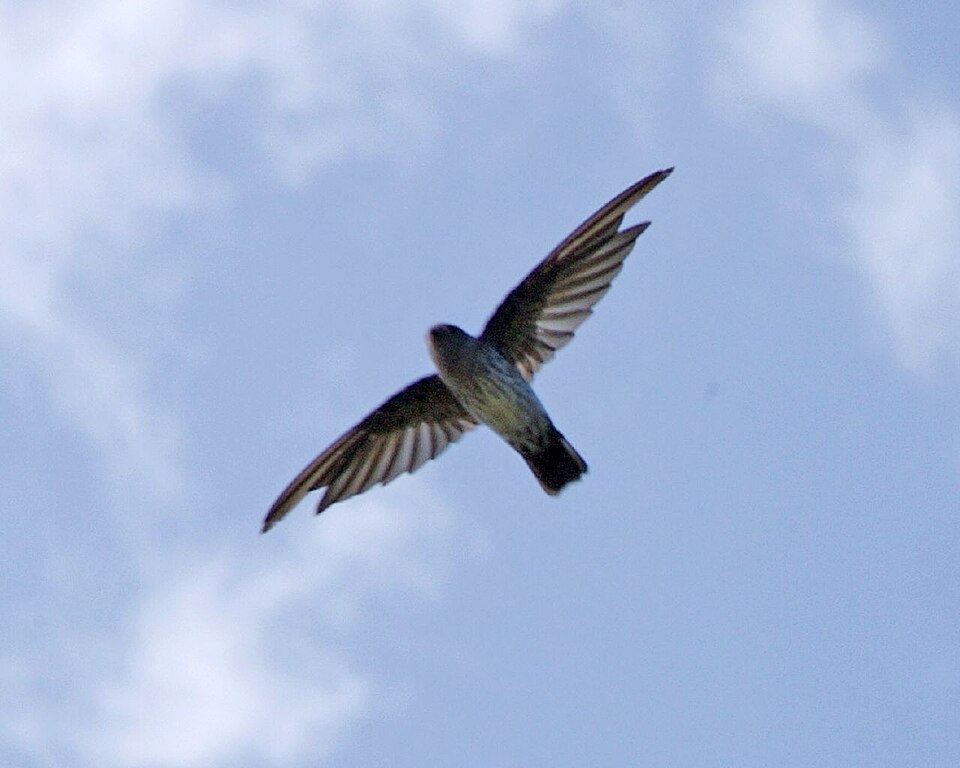
The Cave Swiftlet is a small bird, measuring around 11 cm in length with a wingspan of approximately 27 cm. Its plumage is predominantly dark gray, which provides excellent camouflage against the rocky interiors of its cave habitat. Adult swiftlets have a slightly paler underside, which can help differentiate them from similar species like the Glossy Swiftlet, which has a more uniform dark appearance. Juveniles resemble adults but may exhibit slightly duller plumage. Both male and female Cave Swiftlets look alike, making sex differentiation in the field challenging. In flight, the swiftlet's silhouette is distinctive with its sharp, sickle-shaped wings and a short, squared tail. Unlike many other swift species, the Cave Swiftlet's flight pattern is characterized by rapid, fluttering wingbeats interspersed with gliding. Their perching posture is unique as they cling to vertical cave walls rather than traditional perches, using their strong feet and claws. This adaptation helps them remain stationary in their cave environments, an essential trait for nesting and resting.
Having trouble telling birds apart? Upload a photo to our bird identification tool for an instant species match.
Cave Swiftlet Habitat and Range
Preferred Habitat
The Cave Swiftlet is primarily associated with limestone caves, which provide essential nesting and roosting sites. These caves are typically located in lowland and foothill regions, often surrounded by dense tropical forests. In Indonesia, they are commonly found in the karst landscapes of Java, Bali, and the Lesser Sunda Islands. The swiftlet prefers elevations up to 1500 meters but is most frequently observed below 1000 meters. It occasionally ventures into urban areas, particularly where caves or cave-like structures exist. While their primary habitat remains caves, they forage over a variety of landscapes, including forests and open fields, taking advantage of abundant insect life. Seasonal habitat shifts are minimal due to their year-round presence in their native regions.
Geographic Range
The Cave Swiftlet's range is predominantly confined to Southeast Asia, with a strong presence in Indonesia. Within Indonesia, they are notably abundant in Java, Bali, and the Lesser Sunda Islands. These islands offer the karst landscapes that the swiftlets prefer for nesting. Unlike many other swift species, the Cave Swiftlet is not known for long-distance migration. Instead, they maintain a stable presence within their range throughout the year. Population density is highest in areas with abundant limestone caves, where they can form large colonies. While they are not migratory, their foraging range might expand slightly during different seasons to follow insect availability.
Want to know which birds visit your area? Browse our backyard birds by location guides for region-specific species lists.
What Does the Cave Swiftlet Eat?
The Cave Swiftlet's diet consists mainly of small, airborne insects, which they catch in-flight using their wide, gaping beaks. Their primary food sources include flies, beetles, and other small insects. Seasonal changes in diet are minimal, as they rely on the abundance of insects year-round in tropical climates. The swiftlets employ a foraging technique known as aerial hawking, where they fly swiftly through the air, capturing insects on the wing. Prey size generally ranges from 1 to 5 millimeters. Feeding typically occurs during daylight hours, peaking in the morning and late afternoon when insect activity is highest.
Cave Swiftlet Behavior and Social Structure
Cave Swiftlets are highly social birds, often found in large colonies within their cave habitats. These colonies can number in the hundreds or even thousands, providing safety in numbers. They exhibit minimal territorial behavior, largely due to the communal nature of their nesting sites. Courtship displays are subtle and primarily involve aerial chases and vocalizations. Unlike many bird species, the Cave Swiftlet does not engage in elaborate displays. Flocking patterns are evident during foraging, where groups of swiftlets can be seen flying together in tight formations. In response to predators, these birds rely on their incredible agility and speed to evade capture. Their daily activity patterns include early morning departures from caves to forage, followed by a return to the caves in the late afternoon.
Cave Swiftlet Nesting and Reproduction
Cave Swiftlets construct their nests primarily from their own saliva, which hardens to form a small, cup-like structure. These nests are affixed to the smooth walls or ceilings of caves, often in high, inaccessible locations. They prefer dark, humid environments for nesting, which offer protection from predators and environmental stressors. A typical clutch consists of two white eggs, which both parents incubate over a period of around 18 to 23 days. After hatching, the chicks remain in the nest for approximately five weeks before fledging. Both parents participate equally in feeding and caring for the young. The species typically raises one brood per year, although conditions permitting, they may attempt a second.
Cave Swiftlet Sounds and Vocalizations
The Cave Swiftlet's primary song consists of a series of high-pitched, rapid clicks and whistles. These sounds aid in echolocation, allowing the bird to navigate its dark cave habitats. The rhythm of these clicks is irregular, becoming faster as the bird approaches an object. Call notes are simple, sharp chirps used for communication within colonies. Alarm calls are more intense, serving to alert other swiftlets of potential threats. During the dawn chorus, the caves resonate with the collective vocalizations of hundreds of swiftlets, a sound that can be likened to a muted cacophony of crickets.
Interesting Facts About the Cave Swiftlet
- 1Cave Swiftlets use echolocation similar to bats, which is rare among birds.
- 2Their nests, made from hardened saliva, are a key ingredient in bird's nest soup.
- 3Swiftlet colonies can number in the thousands, creating a bustling cave ecosystem.
- 4They can fly at speeds of up to 100 km/h, making them agile insect hunters.
- 5The swiftlet's echolocation clicks are among the highest frequency sounds produced by birds.
- 6Despite their small size, they can travel over 100 kilometers daily in search of food.
- 7Cave Swiftlets have adapted to life in perpetual darkness, rarely needing to rely on sight.
Cave Swiftlet Conservation Status
The IUCN currently lists the Cave Swiftlet as a species of Least Concern, with populations considered stable. However, certain local populations face threats from habitat destruction, particularly the loss of limestone cave environments due to quarrying. The practice of nest harvesting for culinary use poses additional pressure, though sustainable management has been implemented in some regions. Conservation efforts focus on preserving nesting sites and regulating nest collection. Historically, populations have fluctuated with changes in human activity, but overall, the species has maintained its numbers.
Other Apodidae Species


Birds Similar to the Cave Swiftlet
These species are often confused with the Cave Swiftlet due to similar appearance or overlapping range.

