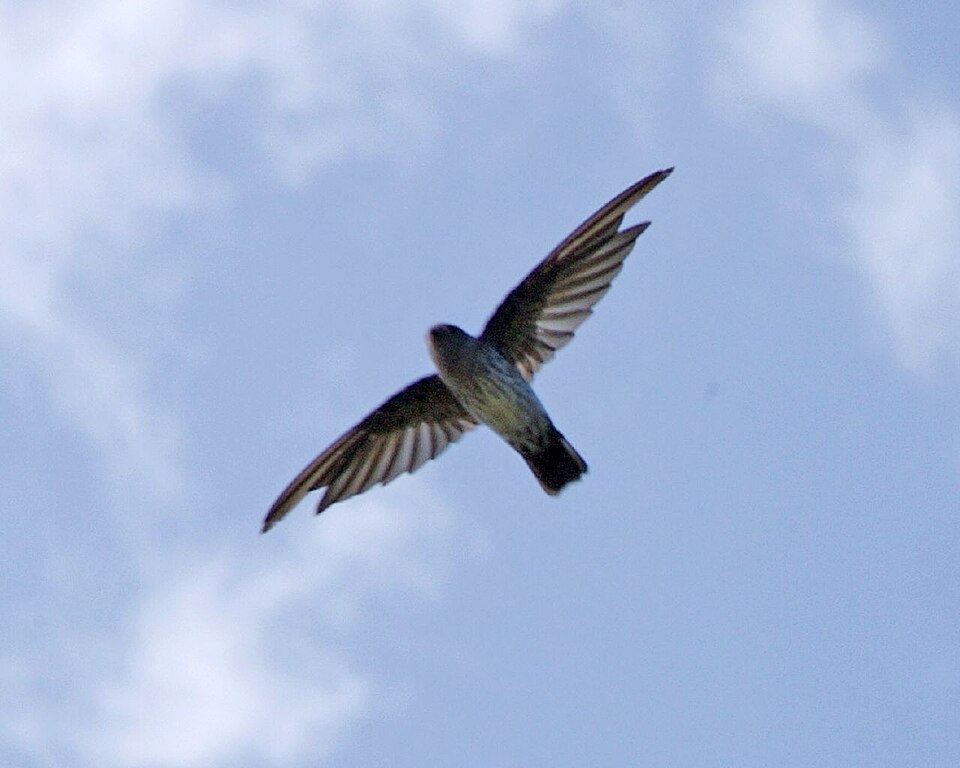
Gray-rumped Swiftlet
Collocalia marginata
Order: Apodiformes / Family: Apodidae

Wikimedia Commons
About the Gray-rumped Swiftlet
The Gray-rumped Swiftlet (Collocalia marginata) is an intriguing avian species belonging to the Apodidae family. This bird is predominantly found across the varied terrains of Southeast Asia, including the Philippines, Borneo, and the Malay Peninsula. Its ecological significance is substantial, as it plays a crucial role in maintaining the balance of insect populations, given its insectivorous diet. The swiftlet's presence often indicates healthy forest ecosystems, and it is a key species in the food web. Gray-rumped Swiftlets are known for their remarkable adaptability, thriving in both lowland rainforests and highland areas, where they perform aerial acrobatics in pursuit of insects.
These birds exhibit seasonal behaviors that are tightly linked to the monsoon cycles typical of their habitats. During the breeding season, which often coincides with the arrival of the rains, Gray-rumped Swiftlets are more active as they forage extensively to meet the energy demands of raising their young. Outside of the breeding period, they form larger flocks, which can be seen gliding gracefully over forest canopies or near water bodies. This flocking behavior not only aids in predator avoidance but also enhances foraging efficiency.
In terms of ecological roles, the Gray-rumped Swiftlet contributes significantly to seed dispersal, albeit indirectly. By consuming a variety of insects, some of which are pollinators or seed dispersers themselves, the swiftlet helps maintain the dynamic equilibrium of its ecosystem. Furthermore, the swiftlet's nesting habits are particularly interesting. They prefer to nest in caves, often in large colonies, where they construct nests using saliva, which hardens upon exposure to air. These nests are not only vital for their reproductive success but also have economic significance, as they are harvested for bird's nest soup, a delicacy in some cultures. However, this practice has raised conservation concerns, necessitating sustainable harvesting practices.
The Gray-rumped Swiftlet belongs to the family Apodidae, within the order Apodiformes. These birds typically live typically 4-7 years, with some living up to 10 years..
How to Identify a Gray-rumped Swiftlet
The Gray-rumped Swiftlet is a small bird, measuring approximately 11 to 12 centimeters in length. Its plumage is predominantly dark gray to brown, with a distinctive gray rump that provides the bird its name. The underparts are slightly lighter, showcasing a pale gray throat and breast. Unlike many birds, there is little sexual dimorphism in this species; males and females appear similar, making gender identification challenging in the field. Juveniles closely resemble adults but may have slightly duller plumage, lacking the sheen seen in older birds.
In flight, the Gray-rumped Swiftlet displays a streamlined silhouette with long, pointed wings that allow for agile and rapid flight. Its tail is relatively short and forked, a feature that aids in quick directional changes while hunting insects mid-air. The swiftlet's flight pattern is characterized by swift, direct movements interspersed with rapid wing beats. When perched, which is rare for swiftlets, they exhibit a slightly hunched posture due to their short legs and compact body.
Confusion with similar species is possible, particularly with other swiftlets in the same range, such as the Glossy Swiftlet. However, the Gray-rumped Swiftlet's distinct gray rump and smaller size help distinguish it. Observers often rely on the combination of flight behavior and plumage characteristics to make accurate identifications.
Having trouble telling birds apart? Upload a photo to our bird identification tool for an instant species match.
Gray-rumped Swiftlet Habitat and Range
Preferred Habitat
The Gray-rumped Swiftlet inhabits a range of forested environments across Southeast Asia. It thrives in both primary and secondary forests, showing a preference for areas with dense canopy cover. These birds can be found from sea level up to elevations of 2,000 meters, although they are more commonly encountered in mid-elevation forests.
Seasonal shifts in habitat use are not pronounced, as the swiftlet remains in suitable forested areas throughout the year. However, during breeding periods, they may frequent caves and cliff faces more often, where they establish nesting colonies. Unlike some avian species, the Gray-rumped Swiftlet shows limited presence in urban areas, as it relies heavily on natural, undisturbed habitats for foraging and nesting.
Despite its preference for natural landscapes, the swiftlet can occasionally be found near rural settlements, especially those adjacent to forested areas. Its adaptability to different forest types makes it a resilient species, although habitat destruction poses a significant threat to its population.
Geographic Range
The Gray-rumped Swiftlet's range spans several countries within Southeast Asia. It is predominantly found in the Philippines, parts of Borneo, and across the Malay Peninsula. In the Philippines, it inhabits various islands, including Luzon, Mindanao, and Palawan, where it is a common sight in forested areas.
The species does not undertake long-distance migrations like some other birds. However, it may exhibit local movements in response to food availability and climatic conditions. During the breeding season, populations tend to concentrate around specific nesting sites, which are often located in caves or on steep cliffs.
Population density is highest in regions where suitable nesting and foraging habitats overlap. While the swiftlet is generally widespread within its range, local densities can vary significantly, with some areas supporting large colonies while others have only scattered individuals.
Want to know which birds visit your area? Browse our backyard birds by location guides for region-specific species lists.
What Does the Gray-rumped Swiftlet Eat?
The diet of the Gray-rumped Swiftlet primarily consists of a wide variety of flying insects. These include beetles, flies, and moths, which are abundant in the forested environments the swiftlet inhabits. Insects are captured mid-flight, a testament to the bird's aerial agility and keen eyesight. The swiftlet's foraging occurs predominantly during daylight hours, with peak activity in the early morning and late afternoon when insect activity is also high.
Seasonal changes can influence the swiftlet's diet composition. During the wet season, there is an increase in insect abundance, allowing the swiftlet to consume a more diverse range of prey. In drier months, diet composition may shift slightly, with the bird focusing on the most readily available insect species.
The foraging technique of the Gray-rumped Swiftlet involves rapid, agile flight patterns, often in groups, which increases the efficiency of capturing prey. The swiftlet's small size allows it to maneuver easily through the forest canopy, where many of its prey species are found. Prey size typically ranges from small to medium-sized insects, ensuring the bird can consume them efficiently.
Gray-rumped Swiftlet Behavior and Social Structure
Gray-rumped Swiftlets exhibit social behavior, often forming flocks that can range from a few individuals to large congregations. These flocks provide safety in numbers, reducing individual predation risk. The swiftlets are highly territorial during the breeding season, defending their nesting sites with vigor. Courtship displays are subtle, involving aerial chases and synchronized flight patterns that strengthen pair bonds.
Flocking behavior is particularly notable outside the breeding season, as swiftlets forage in groups, maximizing their chances of locating insect swarms. These flocks are dynamic, with individuals joining and leaving as they traverse the forest canopy. In response to predators, such as raptors, swiftlets rely on their agility and speed, performing evasive maneuvers to escape.
The daily activity pattern of the Gray-rumped Swiftlet revolves around feeding and nesting maintenance. They are most active at dawn and dusk, aligning with the peak activity of their insect prey. Despite being primarily diurnal, they may continue foraging into the twilight hours if conditions allow.
Gray-rumped Swiftlet Nesting and Reproduction
The nesting habits of the Gray-rumped Swiftlet are fascinating, particularly due to their unique use of saliva in nest construction. Swiftlets typically nest in colonies within caves or on steep cliffs, where they attach their cup-shaped nests to vertical surfaces. The nests are composed of hardened saliva, which provides both structure and adherence to rocky surfaces.
Clutch size generally consists of one to two eggs, which are incubated by both parents. The incubation period lasts approximately 20 to 23 days, after which the chicks hatch blind and featherless. During this vulnerable period, the parents take turns foraging and attending to the nestlings.
Fledging occurs about 40 to 50 days post-hatching, with young birds taking their first flight from the nesting site. Parental roles are evenly divided, with both male and female contributing to feeding and protecting the young. The Gray-rumped Swiftlet typically raises one brood per year, although favorable conditions may allow for a second.
Gray-rumped Swiftlet Sounds and Vocalizations
The vocalizations of the Gray-rumped Swiftlet are distinctive, characterized by high-pitched, rapid series of chirps and clicks. These sounds serve multiple purposes, including communication within flocks and echolocation within dark caves. The primary song consists of a rhythmic series of short notes, often described as a series of 'tseep' or 'chip' sounds, given in quick succession.
In addition to these songs, swiftlets produce various call notes, particularly when in flight or when interacting with other individuals. Alarm calls are sharper and more abrupt, serving to alert other swiftlets of potential danger. During the dawn chorus, swiftlets can be heard vocalizing as they leave their roosts to begin foraging.
The sounds produced by the Gray-rumped Swiftlet are crucial for maintaining social bonds and navigating their often-complex environments. These vocalizations are reminiscent of other swiftlet species, though the rhythm and pace can vary slightly between species.
Interesting Facts About the Gray-rumped Swiftlet
- 1The Gray-rumped Swiftlet can fly continuously for hours without landing, showcasing exceptional stamina.
- 2Swiftlets use echolocation, similar to bats, to navigate and forage in the complete darkness of caves.
- 3The nests of the Gray-rumped Swiftlet, made of saliva, are a key ingredient in bird's nest soup, a delicacy in Asian cuisine.
- 4During breeding season, Gray-rumped Swiftlets may produce two eggs per clutch, but often only one chick survives to fledge.
- 5In flight, the Gray-rumped Swiftlet can reach speeds up to 100 km/h, making it one of the faster small birds.
- 6Their saliva-based nests harden like cement, allowing them to adhere to cave walls and withstand harsh conditions.
- 7Gray-rumped Swiftlets are known to travel over 100 kilometers in a day during their foraging excursions.
Gray-rumped Swiftlet Conservation Status
The International Union for Conservation of Nature (IUCN) currently lists the Gray-rumped Swiftlet as a species of Least Concern. This status reflects its relatively stable population trend across its range. However, the species faces several threats, primarily habitat destruction due to deforestation and urban development. These activities reduce the availability of suitable nesting and foraging habitats, potentially impacting local populations. Conservation efforts focus on protecting critical habitats, particularly caves and forested areas, which are essential for the swiftlet's lifecycle. Sustainable harvesting practices for nests are also encouraged, as overharvesting can disrupt breeding success. Historical population changes have been minimal, though localized declines are possible in heavily disturbed areas. Ongoing research and monitoring are vital to ensure that the Gray-rumped Swiftlet's population remains stable, allowing it to continue its role in the ecosystem. Continued conservation action and awareness-raising among local communities are necessary to preserve this fascinating bird.
Other Apodidae Species


Birds Similar to the Gray-rumped Swiftlet
These species are often confused with the Gray-rumped Swiftlet due to similar appearance or overlapping range.