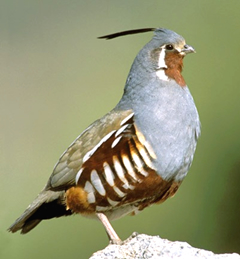
Chestnut Wood-Quail
Odontophorus hyperythrus
Order: Galliformes / Family: Odontophoridae

Wikimedia Commons
About the Chestnut Wood-Quail
The Chestnut Wood-Quail (Odontophorus hyperythrus) is a striking bird endemic to the humid montane forests of Colombia. It plays a critical role in the ecosystem due to its ground-foraging habits, which help in seed dispersal and soil aeration. Typically found at elevations ranging from 1,800 to 3,000 meters, this quail prefers dense vegetation where it can safely forage. Its presence is significant in the Andean cloud forests, which are biodiversity hotspots crucial for many endemic species. These forests provide the ideal environment for the Chestnut Wood-Quail, offering abundant food resources and shelter from predators.
Seasonal behavior of the Chestnut Wood-Quail includes slight altitudinal migrations in response to food availability and climatic conditions. During the wetter months, they remain at higher elevations, where the forest understory is lush with food. As the dry season progresses, some populations may move to lower elevations to find adequate resources. The Chestnut Wood-Quail is often heard rather than seen, as it prefers to remain hidden in the underbrush, venturing out in small family groups during early morning and late afternoon.
The ecological role of the Chestnut Wood-Quail extends beyond its immediate environment, influencing forest regeneration and the health of the Andean ecosystem. By foraging on the forest floor, these quails contribute to the breakdown of organic material, enriching the soil. Their diet, primarily comprising seeds and small invertebrates, assists in maintaining the balance of plant and insect populations. The Chestnut Wood-Quail's presence is an indicator of forest health, as it relies on undisturbed habitats with adequate cover and food supply.
The Chestnut Wood-Quail belongs to the family Odontophoridae, within the order Galliformes. These birds typically live average 5-7 years, with a maximum recorded of 10 years..
How to Identify a Chestnut Wood-Quail
Adult Chestnut Wood-Quails sport a predominantly rich chestnut plumage, giving them their name. Their underparts are a lighter, rusty orange, while the back and wings display a darker chestnut hue. The head has an intricate pattern, with a striking white throat patch and a dark crown, often leading to confusion with similar species. However, the distinctive chestnut coloration sets them apart. Males and females appear similar, though males may have slightly more pronounced head markings.
Juvenile quails are duller in appearance, with a more mottled brown plumage that provides effective camouflage in forest undergrowth. Structural differences between adults and juveniles are subtle, primarily noted in size and feather texture. When observing the Chestnut Wood-Quail, note its compact size and robust build, typical of ground-dwelling birds. Its short, rounded wings and tail aid in rapid, low-level flight, ideal for navigating dense forest environments.
In flight, the Chestnut Wood-Quail exhibits a silhouette that is characteristic of Odontophoridae, with a stocky body and rapid wingbeats. On the ground, it maintains an upright posture, often seen darting between thickets or scratching the leaf litter in search of food.
Having trouble telling birds apart? Upload a photo to our bird identification tool for an instant species match.
Chestnut Wood-Quail Habitat and Range
Preferred Habitat
The Chestnut Wood-Quail's preferred habitat is the montane cloud forests of the Andes, particularly within Colombia. These forests, characterized by high humidity and frequent cloud cover, provide dense understory vegetation and abundant ground cover, crucial for the quail's survival. Typically found at elevations of 1,800 to 3,000 meters, these birds need environments that offer both food and protection from predators.
Within these forests, the Chestnut Wood-Quail favors areas with a thick layer of leaf litter and a rich diversity of plant species, which support a robust invertebrate population. Seasonal habitat shifts occur, with some populations moving to slightly lower elevations during dry periods to access food and water sources. Unlike many other bird species, the Chestnut Wood-Quail is rarely found in urban areas, as it requires the dense cover and specific ecological conditions offered by its natural forest habitat.
Geographic Range
The Chestnut Wood-Quail is endemic to Colombia, primarily inhabiting the Andes mountain range. Its range includes several isolated populations across the central and southern parts of the country. This quail does not migrate long distances but may exhibit altitudinal movements within its range in response to seasonal changes in food availability.
While the species' entire range is confined to Colombia, its population density varies significantly across regions. Some populations are more concentrated in protected areas where habitat disturbance is minimal. The breeding range aligns closely with its overall distribution, as the species is a resident bird that does not undertake long migrations.
Hotspots for the Chestnut Wood-Quail include the cloud forests of the Central and Eastern Andes. These areas provide the necessary ecological conditions for breeding and feeding, supporting relatively stable populations. Conservation efforts in these regions aim to preserve the unique habitats essential for the quail's survival.
Want to know which birds visit your area? Browse our backyard birds by location guides for region-specific species lists.
What Does the Chestnut Wood-Quail Eat?
The Chestnut Wood-Quail's diet consists mainly of seeds, fruits, and small invertebrates, reflecting its adaptation to the forest floor environment. During the wet season, seeds and fruits become abundant, forming the bulk of their diet. The quail forages in the leaf litter, using its feet to scratch and uncover hidden food sources.
In the dry season, when seeds are less plentiful, the Chestnut Wood-Quail relies more on invertebrates such as insects and small arthropods. This dietary flexibility helps it survive varying seasonal conditions. The quail's foraging technique is deliberate and methodical, often seen probing the ground and flipping over leaves to find prey.
Prey size varies, but the quail typically targets small insects that are easily managed. Feeding occurs throughout the day, with peaks in activity during the cooler early morning and late afternoon hours. This schedule reduces exposure to predators and ensures optimal foraging efficiency.
Chestnut Wood-Quail Behavior and Social Structure
The Chestnut Wood-Quail exhibits a complex social structure, often forming small family groups rather than large flocks. These groups, usually consisting of a breeding pair and their offspring, display strong territorial behavior. Vocalizations play a significant role in territory defense, with calls used to warn off intruders and maintain group cohesion.
Courtship displays are subtle, involving calls and mutual preening rather than elaborate visual displays. The male's role in courtship largely revolves around vocalizations that signal his presence and readiness to mate. Breeding pairs tend to be monogamous, maintaining a close bond throughout the breeding season.
In response to predators, the Chestnut Wood-Quail relies on its cryptic plumage and the dense forest understory for concealment. When threatened, the birds may freeze or take sudden, low flights to evade detection. Daily activity patterns see them most active during dawn and dusk, aligning with periods of reduced predator activity and optimal foraging conditions.
Chestnut Wood-Quail Nesting and Reproduction
The Chestnut Wood-Quail typically nests on the ground, preferring well-concealed sites among dense underbrush or near fallen logs. Nest construction involves scraping a shallow depression in the ground, which is then lined with leaves and grass for insulation and camouflage.
Clutch size ranges from 5 to 8 eggs, with the female primarily responsible for incubation. The incubation period lasts approximately 22 to 24 days, during which the male may assist by bringing food and standing guard. Once hatched, chicks are precocial, leaving the nest within hours to follow their parents.
Fledging occurs around two weeks post-hatching, as the young quails develop the strength and coordination necessary to navigate their environment. Parental roles extend beyond fledging, with both parents involved in feeding and protecting the young until they are self-sufficient. The Chestnut Wood-Quail typically raises one brood per year, although favorable conditions may lead to a second.
Chestnut Wood-Quail Sounds and Vocalizations
The primary song of the Chestnut Wood-Quail is a series of melodious whistles, each note rising in pitch and clear in quality. This song serves both to establish territory and attract mates. Call notes are short and sharp, used for communication within family groups. These calls vary in intensity, conveying different messages such as alarm or cohesion.
Alarm calls are rapid and repetitive, alerting other quails to potential threats. The dawn chorus, a symphony of quail whistles and calls, heralds the start of daily activities. The vocalizations of the Chestnut Wood-Quail can be compared to a flute-like whistle, distinct yet harmonizing with the forest soundscape.
Interesting Facts About the Chestnut Wood-Quail
- 1The Chestnut Wood-Quail's rich chestnut plumage aids in blending with the forest floor, providing excellent camouflage.
- 2Unlike many quails, the Chestnut Wood-Quail prefers to walk rather than fly, using its strong legs to navigate the forest.
- 3The species is often heard before seen, as its vocalizations are a key identifier in dense forest habitats.
- 4Despite their elusive nature, Chestnut Wood-Quails are important seed dispersers, contributing to forest regeneration.
- 5The quail's diet shifts seasonally, showcasing its adaptability to different food availabilities in its habitat.
- 6During courtship, males may engage in duet calling with females, strengthening pair bonds.
- 7Chestnut Wood-Quails are non-migratory, allowing them to maintain and defend territories year-round in suitable habitats.
Chestnut Wood-Quail Conservation Status
The Chestnut Wood-Quail is currently listed as Near Threatened by the IUCN due to habitat loss and fragmentation. Deforestation for agriculture and urban expansion presents the primary threat to its survival. Population trends suggest a gradual decline, prompting conservation actions focused on habitat preservation. Protected areas in Colombia, such as national parks and reserves, play a crucial role in maintaining stable populations. Conservation efforts also include habitat restoration projects and community engagement to promote sustainable land-use practices. Historically, populations have fluctuated with changes in land use, emphasizing the need for continued monitoring and habitat protection.