
Chinese Rubythroat
Calliope tschebaiewi
Order: Passeriformes / Family: Muscicapidae

Wikimedia Commons
About the Chinese Rubythroat
The Chinese Rubythroat (Calliope tschebaiewi) is a captivating bird that has garnered interest among ornithologists and birdwatchers alike due to its vibrant plumage and distinctive vocalizations. This species belongs to the family Muscicapidae and is classified under the order Passeriformes. It is primarily distributed across the mountainous regions of Asia, particularly in China, Bhutan, and Nepal. The Chinese Rubythroat thrives in dense undergrowth within montane forests, where it plays a vital ecological role as both a predator of insects and a seed disperser.
During the breeding season, which typically spans from May to July, the Chinese Rubythroat can be found in the cool, high-altitude regions of the Himalayas. Its preference for dense shrubbery and underbrush makes it a somewhat elusive species to observe, though its distinctive song often betrays its presence. As a ground-foraging bird, it contributes significantly to controlling insect populations, thereby maintaining the delicate ecological balance within its habitat.
In addition to its ecological contributions, the Chinese Rubythroat holds cultural significance in various regions. Its striking appearance and melodious songs have made it a subject of admiration in local folklore and birdwatching communities. The bird's migratory patterns, which see it traveling to lower altitudes during the winter months, further highlight its adaptability and resilience in the face of changing environmental conditions. Overall, the Chinese Rubythroat serves as a fascinating study of avian adaptation and survival in the diverse landscapes of Asia.
The Chinese Rubythroat belongs to the family Muscicapidae, within the order Passeriformes. These birds typically live average 4 years with a max recorded of 7 years..
How to Identify a Chinese Rubythroat
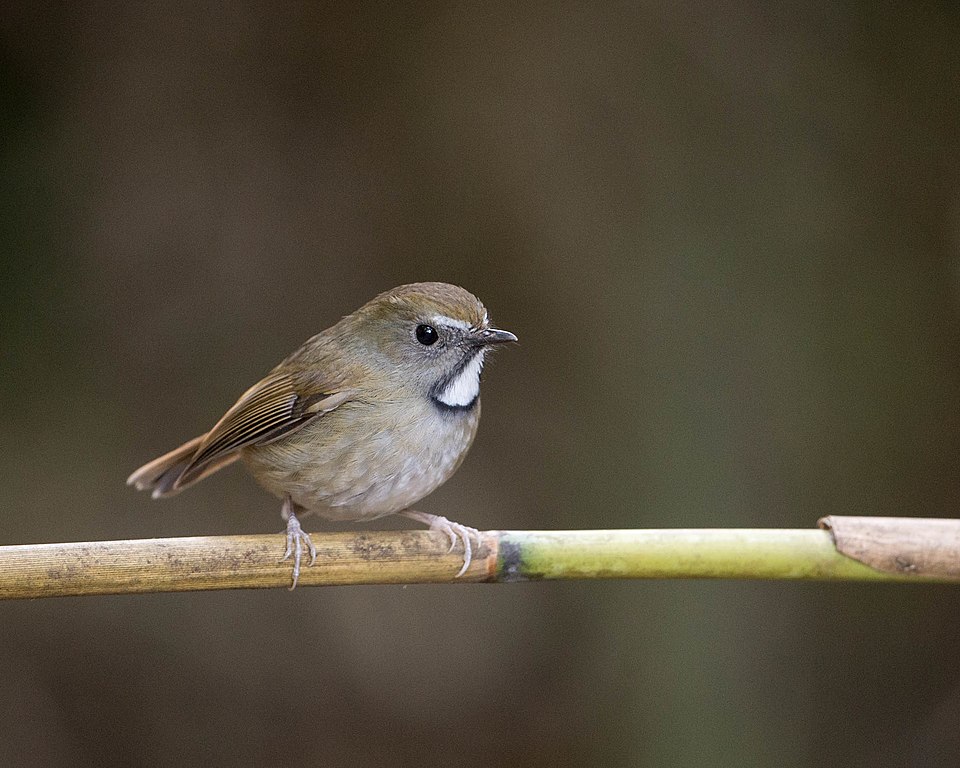
The Chinese Rubythroat is a small to medium-sized passerine, measuring approximately 15 centimeters in length. The adult male is particularly striking with its vivid red throat patch, a feature that makes it easy to distinguish from other species. This patch is bordered by a white line, enhancing its visibility. The upper parts of the male are olive-brown, transitioning to a paler underbelly. In contrast, the female has a more subdued appearance with brownish upper parts and lacks the male's vibrant throat coloration, possessing instead a pale buff throat.
Juvenile Chinese Rubythroats resemble females but are generally more mottled, which provides them with additional camouflage against predators. The bird's flight silhouette is characterized by rapid wing beats and a slightly undulating flight pattern, typical of many small passerines. When perched, the Chinese Rubythroat maintains an upright posture, often flicking its tail and wings as it engages in its characteristic calls.
Similar species that might cause confusion include the Siberian Rubythroat, which also exhibits a red throat patch. However, the Siberian Rubythroat generally has a more pronounced white eyebrow and a larger size. Observers should also note the Chinese Rubythroat's distinctive vocalizations, which, combined with its visual markers, help to differentiate it from similar species.
Having trouble telling birds apart? Upload a photo to our bird identification tool for an instant species match.
Chinese Rubythroat Habitat and Range
Preferred Habitat
The Chinese Rubythroat predominantly inhabits montane forests and shrublands, where it favors dense undergrowth and thickets. It is commonly found at elevations ranging from 2,500 to 4,500 meters in the Himalayas, where the cool climate and abundant vegetation provide ideal conditions for breeding and foraging. During the winter months, the bird descends to lower altitudes, often reaching foothill forests and scrublands, where it continues to forage in dense vegetation.
In terms of habitat preference, the Chinese Rubythroat is primarily associated with rural and semi-rural areas rather than urban environments. It thrives in regions that offer a mixture of shrubs, tall grasses, and small trees, which offer both food resources and protection from predators. The bird's preference for secluded and densely vegetated areas often makes it a challenging species to observe, though it is commonly heard due to its distinctive song.
Geographic Range
The Chinese Rubythroat's breeding range is primarily centered in the high-altitude regions of the Himalayas, spanning countries such as China, Bhutan, Nepal, and parts of northern India. During the breeding season, the bird resides in these mountainous areas, taking advantage of the cool climate and dense vegetation for nesting and rearing young. As winter approaches, the Chinese Rubythroat migrates to lower altitudes, extending its range to include parts of southern China and northern Myanmar.
Migration corridors for this species are not well-documented, but the general movement involves altitudinal migration rather than long-distance travel. Within its range, population density tends to be higher in areas with abundant shrub cover and minimal human disturbance. The bird is considered to be locally common in suitable habitats, though its preference for remote and rugged terrain can make population assessments challenging.
Want to know which birds visit your area? Browse our backyard birds by location guides for region-specific species lists.
What Does the Chinese Rubythroat Eat?
The primary diet of the Chinese Rubythroat consists of insects and other small invertebrates, which it forages for on the ground among dense vegetation. Common prey items include beetles, ants, caterpillars, and spiders, which the bird captures using quick, darting movements. During the breeding season, the abundance of insects in its montane forest habitat provides ample food for both adults and their fledglings.
In addition to insects, the Chinese Rubythroat occasionally consumes berries and seeds, particularly during the autumn and winter months when insect availability declines. This dietary flexibility allows the bird to adapt to seasonal changes in food resources, ensuring its survival across various habitats. The bird's feeding schedule is primarily diurnal, with peak foraging activity occurring in the early morning and late afternoon when temperatures are cooler and insect activity is high.
Chinese Rubythroat Behavior and Social Structure
The Chinese Rubythroat exhibits a solitary or loosely paired social structure, especially during the breeding season when males become highly territorial. Males defend their territory through song and visual displays, often perching conspicuously to announce their presence to rivals. The bird's courtship displays include a combination of song and plumage exhibition, with the male fluffing its throat feathers to enhance the visibility of its red patch.
Outside the breeding season, the Chinese Rubythroat is more tolerant of the presence of conspecifics and may be observed foraging in loose flocks. Its response to predators involves a series of alarm calls and rapid retreat into dense cover, where its cryptic plumage offers protection. The bird's daily activity patterns are influenced by temperature and light, with peak vocal and foraging activities occurring during the cooler parts of the day.
Chinese Rubythroat Nesting and Reproduction
The nesting habits of the Chinese Rubythroat reflect its preference for secure and concealed locations. It typically builds a cup-shaped nest using grasses, leaves, and moss, often positioned low to the ground within dense shrubbery. This choice of nesting site provides both camouflage and protection from predators. The clutch size usually ranges from three to five eggs, which are incubated primarily by the female for about 12 to 14 days.
Upon hatching, the chicks are altricial and require significant parental care. Both parents participate in feeding the young, providing a diet rich in insects to ensure rapid growth. Fledging occurs approximately 10 to 14 days after hatching, with the young remaining dependent on their parents for food for several more weeks. The Chinese Rubythroat typically raises one to two broods per year, depending on environmental conditions and food availability.
Chinese Rubythroat Sounds and Vocalizations
The primary song of the Chinese Rubythroat is a series of melodious, fluty notes that resonate through its montane habitat. This song, often delivered from a conspicuous perch, serves both to attract mates and to establish territory. The rhythm is generally steady and measured, with a clear, whistle-like quality that can be heard over considerable distances.
In addition to its song, the Chinese Rubythroat emits various call notes, including sharp 'tsek-tsek' sounds used to communicate with mates or signal alarm. During the dawn chorus, the bird's song becomes particularly prominent, contributing to the vibrant soundscape of its forested environment. The alarm calls are harsher and more abrupt, serving as a warning to potential predators and a signal for retreat to dense cover.
Interesting Facts About the Chinese Rubythroat
- 1The Chinese Rubythroat can be distinguished from the similar Siberian Rubythroat by its smaller size and less pronounced white brow.
- 2During the breeding season, male Chinese Rubythroats sing vigorously to establish and defend their territories.
- 3The species' migratory patterns are primarily altitudinal, moving to lower elevations during colder months.
- 4Chinese Rubythroats have a notable preference for dense, shrubby undergrowth where they forage for insects.
- 5The vibrant red throat patch of the male Chinese Rubythroat plays a crucial role in attracting mates during courtship displays.
Chinese Rubythroat Conservation Status
The Chinese Rubythroat is currently listed as Least Concern by the IUCN, with population trends considered stable across its range. While the exact numbers are not well-documented, the species benefits from inhabiting remote and less-disturbed high-altitude regions, which offer some protection from human encroachment. However, habitat loss due to deforestation and agricultural expansion poses potential threats, particularly in lower altitude wintering areas. Conservation efforts focus on habitat protection and monitoring population trends to ensure the species remains secure. Historical population changes are not well-documented, but the bird's adaptability to varied altitudinal habitats likely contributes to its resilience. Continued conservation actions aim to mitigate threats and preserve the delicate montane ecosystems that support this vibrant species.
Other Muscicapidae Species


Birds Similar to the Chinese Rubythroat
These species are often confused with the Chinese Rubythroat due to similar appearance or overlapping range.