
Chinese Shortwing
Brachypteryx sinensis
Order: Passeriformes / Family: Muscicapidae

Wikimedia Commons
About the Chinese Shortwing
The Chinese Shortwing (Brachypteryx sinensis) is a small bird belonging to the family Muscicapidae, remarkable for its secretive behavior and preference for dense, shady undergrowth in montane forests. This species is primarily found in southern China, with populations extending into northern Laos and Vietnam. The Chinese Shortwing thrives in subtropical and tropical moist montane forests, typically at elevations ranging from 1,000 to 2,500 meters. These birds play a crucial ecological role as insectivores, helping to control insect populations in their forest habitats. During the breeding season, which occurs from March to July, males become notably vocal, emitting a series of rich, melodious songs to establish territories and attract mates. Unlike many other bird species, the Chinese Shortwing maintains a low-profile existence throughout the year, making it more often heard than seen. This tendency to remain hidden within dense foliage makes field observations challenging but rewarding. The presence of the Chinese Shortwing in its native habitats serves as an indicator of healthy forest ecosystems, as it requires undisturbed environments with ample insect prey. Despite its elusive nature, the bird's melodious song contributes significantly to the soundscape of its forest home, particularly during the dawn and dusk hours when it is most active. Conservation efforts for this species focus on preserving its natural habitat, as deforestation poses a significant threat to its populations. The Chinese Shortwing's reliance on specific montane forest environments underscores the importance of habitat protection for its continued survival.
The Chinese Shortwing belongs to the family Muscicapidae, within the order Passeriformes. These birds typically live average 5-6 years, with some living up to 8 years..
How to Identify a Chinese Shortwing
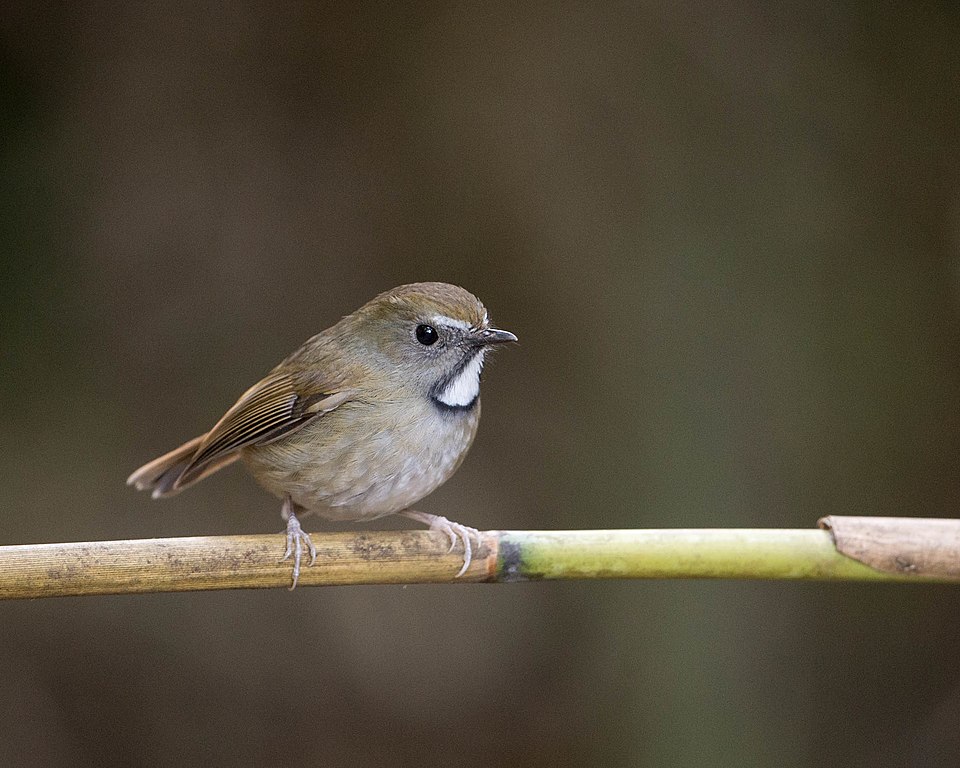
The Chinese Shortwing is a small, compact bird measuring approximately 14 centimeters in length. Adult males exhibit a striking plumage with a combination of deep blue-gray and white underparts. Females and juveniles, however, display a more subdued brownish coloration with paler underparts, which provides effective camouflage in the forest undergrowth. The lack of sexual dimorphism in plumage color is compensated by vocal differences, with males being the primary songsters. In terms of morphology, the Chinese Shortwing features short wings, which are not designed for long-distance flight but rather for quick, agile movements through dense vegetation. This bird's posture while perching is typically upright, and it often flicks its tail, a behavior that can help in field identification. The Chinese Shortwing can sometimes be confused with similar species such as the White-bellied Redstart, but the latter has a distinct red tail and more vibrant, contrasting plumage. Observers should note the Chinese Shortwing's more monotonous coloration and distinct song when identifying this bird in the field.
Having trouble telling birds apart? Upload a photo to our bird identification tool for an instant species match.
Chinese Shortwing Habitat and Range
Preferred Habitat
The Chinese Shortwing inhabits montane forests characterized by dense undergrowth and rich biodiversity. These habitats are typically found at elevations between 1,000 and 2,500 meters, often on steep slopes and in areas with high rainfall. The bird favors subtropical and tropical moist montane forests, where the dense vegetation offers ample cover and abundant insect prey. Seasonal shifts in habitat are minimal, as the Chinese Shortwing is largely sedentary, relying on the stability of its forest environment. While primarily a forest dweller, the bird is occasionally found in secondary growth and edges of clearings, especially when these areas retain sufficient underbrush. It rarely ventures into urban areas, preferring the seclusion offered by its natural habitat.
Geographic Range
The Chinese Shortwing's range is concentrated in southern China, with populations extending into northern Laos and Vietnam. It can be found in provinces such as Yunnan, where it inhabits the region's rugged montane forests. Though considered sedentary, the Chinese Shortwing may exhibit some local movements in response to resource availability, but these are not long-distance migrations. The bird's population density is greatest in well-preserved forest areas, where human disturbance is minimal. Hotspots for observing the Chinese Shortwing include protected areas like the Gaoligongshan National Nature Reserve, where conservation efforts help maintain suitable habitats for the species. Due to its reliance on specific forest environments, the Chinese Shortwing's distribution is patchy, with populations scattered across its range.
Want to know which birds visit your area? Browse our backyard birds by location guides for region-specific species lists.
What Does the Chinese Shortwing Eat?
The Chinese Shortwing primarily feeds on insects and other small invertebrates, which it diligently hunts in the leaf litter and undergrowth of its forest habitat. Its diet includes a variety of beetles, ants, and caterpillars, which provide the necessary protein and nutrients for its active lifestyle. During the breeding season, the bird's dietary needs increase, leading to intensified foraging behavior. The Chinese Shortwing employs a technique known as 'gleaning', where it picks prey from leaves and branches, often hopping and flitting through the underbrush with agility. This bird shows a preference for foraging during the early morning and late afternoon, coinciding with peak insect activity. Seasonal variations in diet are minimal, as the bird remains in its montane forest habitat year-round, where insect populations are relatively stable.
Chinese Shortwing Behavior and Social Structure
The Chinese Shortwing is a solitary bird, known for its secretive nature and preference for dense cover. It exhibits strong territorial behavior, particularly during the breeding season, when males sing persistently to defend their territory and attract mates. The song is an important tool for communication, helping males establish dominance and ward off rivals. Courtship displays are subtle, primarily involving song and gentle interactions rather than elaborate rituals. The Chinese Shortwing is generally non-flocking, with individuals maintaining distance from one another outside of the breeding season. When faced with predators, the bird relies on its cryptic plumage and the dense forest cover to evade detection, often freezing motionless to avoid drawing attention. Daily activity patterns are crepuscular, with peaks in activity during the early morning and late afternoon.
Chinese Shortwing Nesting and Reproduction
The Chinese Shortwing constructs its nest close to the ground, often hidden within the dense vegetation of its montane forest habitat. The nest is cup-shaped, made from moss, leaves, and rootlets, providing camouflage and protection from predators. Preferred nesting sites include sheltered spots among roots or fallen logs, where the nest remains inconspicuous. The typical clutch consists of 2 to 4 eggs, which the female incubates for approximately 14 to 16 days. Both parents participate in feeding the chicks, which fledge about 12 to 14 days after hatching. The Chinese Shortwing typically raises one brood per year, although favorable conditions may occasionally allow for a second. The breeding season aligns with the rainy season, ensuring abundant food resources for the growing chicks.
Chinese Shortwing Sounds and Vocalizations
The primary song of the Chinese Shortwing is a melodious series of whistles and trills, delivered at a moderate tempo. The pitch is variable, often rising and falling in a pattern that resembles a flute melody. These songs are most commonly heard during the breeding season, serving both to establish territory and to attract mates. In addition to their complex songs, Chinese Shortwings produce a variety of call notes, including a soft 'chup' or 'chit' sound used for communication between mates. Alarm calls are sharper and more abrupt, designed to warn of potential threats. The dawn chorus is a notable feature of the Chinese Shortwing's vocal behavior, with males singing vigorously at first light.
Interesting Facts About the Chinese Shortwing
- 1The Chinese Shortwing's song has been likened to the sound of a flute, with its rich tonal quality attracting bird enthusiasts.
- 2Despite being elusive, the Chinese Shortwing is more often heard than seen, making its song a primary way to locate it in the wild.
- 3The species is adept at navigating dense undergrowth, using its short wings for quick maneuverability rather than long-distance flight.
- 4The Chinese Shortwing's cryptic plumage helps it blend seamlessly into the forest floor, providing effective camouflage from predators.
- 5This bird's preference for montane forests means it thrives in environments with high humidity and dense vegetation.
- 6The Chinese Shortwing plays a crucial role in controlling insect populations, highlighting its importance in forest ecosystem health.
- 7During courtship, the male Chinese Shortwing's melodious song is its most vital tool in attracting a mate.
Chinese Shortwing Conservation Status
The Chinese Shortwing is currently listed as Least Concern by the IUCN, with stable population trends. However, habitat destruction due to deforestation poses a significant threat to its future stability. Conservation efforts focus on habitat preservation, particularly in protected areas where the species is prevalent. Historical population changes have been minimal, largely due to the bird's relatively inaccessible montane habitat, which offers some protection from human encroachment. Continued monitoring and habitat conservation are essential to ensure the long-term survival of this species, as its specialized habitat requirements make it vulnerable to environmental changes.
Other Muscicapidae Species


Birds Similar to the Chinese Shortwing
These species are often confused with the Chinese Shortwing due to similar appearance or overlapping range.

