
White-browed Shortwing
Brachypteryx montana
Order: Passeriformes / Family: Muscicapidae

Wikimedia Commons
About the White-browed Shortwing
The White-browed Shortwing (Brachypteryx montana) is a small passerine bird belonging to the family Muscicapidae. This elusive bird is commonly found in the dense, humid montane forests of Southeast Asia, particularly in regions such as the Himalayas, extending through northern India, Nepal, and Bhutan, as well as isolated pockets in Southeast Asia like Malaysia and Indonesia. Its preference for higher altitudes makes the White-browed Shortwing a specialist in its habitat, thriving in environments that offer dense undergrowth and a cool, moist climate. This bird plays a significant ecological role as a ground-dwelling insectivore, aiding in the control of insect populations within its habitat.
The White-browed Shortwing is notable for its adaptability to different elevations, typically ranging from 1000 to 3000 meters above sea level, although it can be found slightly lower in some regions. During the breeding season, which often coincides with the monsoon period, these birds become particularly active, engaging in courtship displays and vocalizations. Their presence contributes to the rich biodiversity of montane ecosystems, where they occupy a niche that requires a keen ability to forage for insects and small invertebrates among the forest floor's leaf litter.
Seasonally, the White-browed Shortwing may exhibit altitudinal migrations, moving to lower elevations during colder months. This seasonal behavior showcases its adaptability and survival strategies in response to climatic changes. As an indicator species, the health of the White-browed Shortwing populations often reflects the condition of montane forest ecosystems, emphasizing its ecological importance.
The White-browed Shortwing belongs to the family Muscicapidae, within the order Passeriformes. These birds typically live average 5-6 years, with some living up to 8 years..
How to Identify a White-browed Shortwing
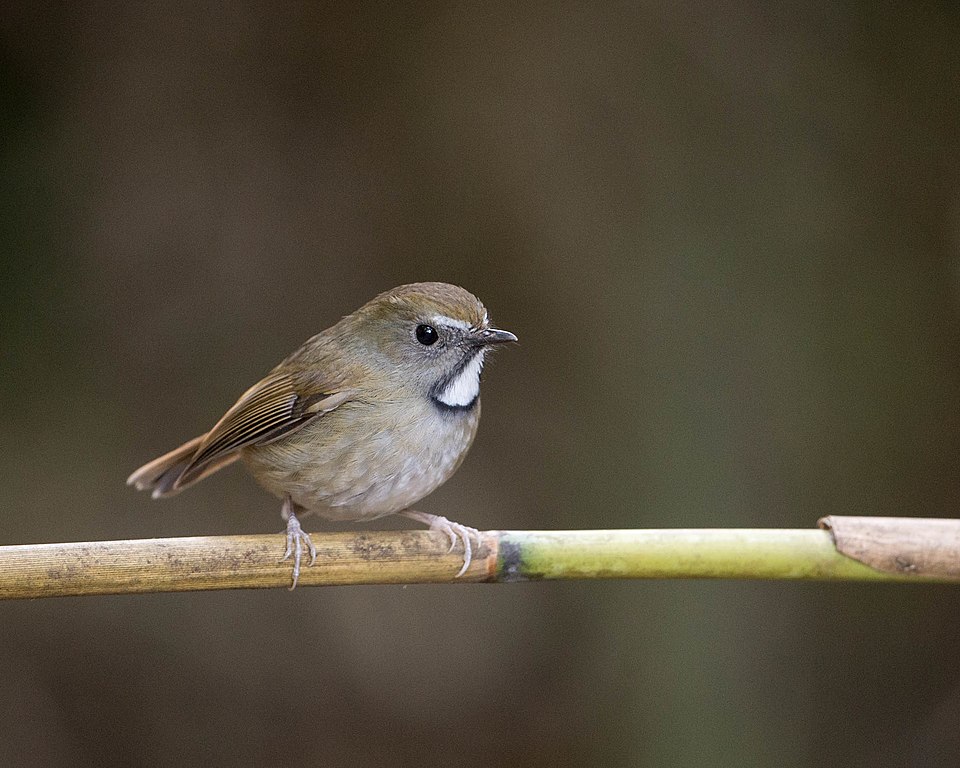
The White-browed Shortwing is a small bird, measuring around 14 cm in length. Its most distinguishing feature is the prominent white supercilium or eyebrow, which contrasts sharply against its otherwise dark plumage. Adult males typically exhibit darker, slate-blue plumage, while females and juveniles are more brownish, allowing them to blend into their forested environments. Female White-browed Shortwings lack the striking blue tones found in males, which can lead to them being overlooked by less experienced observers.
Juveniles often resemble females but with more pronounced spotting and streaking on the underparts, which fades as they mature. The bird's compact build, short wings, and tail contribute to its skulking nature, often remaining close to the forest floor. In flight, their rapid wing beats and low, darting flight profile make them challenging to observe.
Due to their similar habitats and overlapping ranges, the White-browed Shortwing can sometimes be confused with other small, dark, forest-dwelling birds, such as certain species of thrushes and chats. However, the distinctive white brow and unique vocalizations help in distinguishing them from these other species.
Having trouble telling birds apart? Upload a photo to our bird identification tool for an instant species match.
White-browed Shortwing Habitat and Range
Preferred Habitat
The White-browed Shortwing inhabits montane forests, particularly favoring areas with dense undergrowth and a rich layer of leaf litter. This environment offers ample cover and foraging opportunities. Typically found at elevations between 1000 and 3000 meters, the bird is most common in the subtropical and temperate regions of the Himalayas, Southeast Asia, and parts of Indonesia.
Within these forests, it prefers damp, shaded areas, often near streams or other water bodies, which support its insect-rich diet. The dense shrubbery provides both food and protection from predators. Although primarily a forest dweller, the White-browed Shortwing may occasionally venture into more open areas or secondary growth forests, particularly if these habitats border their primary forest environments.
Geographic Range
The White-browed Shortwing has a wide but fragmented distribution across Asia. Its breeding range extends from the Eastern Himalayas, including regions in Nepal, Bhutan, and northeastern India, through to southern China, northern Myanmar, and parts of Southeast Asia, including Malaysia and Indonesia. These birds are predominantly sedentary but may undergo altitudinal movements in response to seasonal changes.
During the colder months, some populations may descend to lower elevations to escape harsh conditions, although extensive migrations are not typical of this species. In terms of population density, they are most commonly found in the dense, undisturbed montane forests that provide the ideal conditions for their lifestyle. The fragmented nature of these habitats can lead to isolated populations, which makes understanding their specific range within these regions crucial for conservation planning.
Want to know which birds visit your area? Browse our backyard birds by location guides for region-specific species lists.
What Does the White-browed Shortwing Eat?
The diet of the White-browed Shortwing primarily consists of insects and other small invertebrates. It forages on the forest floor, using its short wings to maneuver through dense underbrush. During the breeding season, when energy demands are higher, it may also consume small quantities of berries and seeds to supplement its diet.
The bird employs a methodical foraging technique, often seen flipping over leaves and debris to uncover hidden prey. This behavior is most active during the early morning and late afternoon, when insects are more abundant. Seasonal variations in diet are influenced by the availability of prey, with wetter months typically offering a richer variety of insects. The White-browed Shortwing's feeding strategy plays a role in controlling insect populations, thereby maintaining ecological balance within its habitat.
White-browed Shortwing Behavior and Social Structure
The White-browed Shortwing is generally solitary or found in pairs, displaying strong territorial behavior, especially during the breeding season. Males are known to perform elaborate courtship displays, which include singing and showing off their plumage to attract females. These displays occur primarily at dawn and dusk, when the forest is quieter, allowing their songs to carry further.
In terms of social structure, these birds are not known for flocking, preferring to maintain small territories that they defend vigorously from intruders. When threatened by predators, the White-browed Shortwing will often retreat into thick underbrush, using its cryptic coloration to avoid detection. Daily activity patterns revolve around foraging and territory defense, with peak activity during cooler parts of the day.
The bird's response to predators includes a variety of calls and displays meant to distract or deter would-be threats. Such behaviors underscore the importance of both vocal and visual signals in their communication strategies.
White-browed Shortwing Nesting and Reproduction
The White-browed Shortwing constructs its nest close to the ground, often in a concealed location within dense vegetation or among roots and rocks. The nest is cup-shaped, crafted from a mixture of moss, grass, and leaves, providing camouflage and protection for the eggs.
Typically, the female lays a clutch of 2 to 4 eggs, with the incubation period lasting around 14 to 16 days. Both parents participate in feeding the chicks, though the female may take on a more significant role in brooding. Fledging occurs approximately 14 to 17 days after hatching, although the young may remain dependent on their parents for some time after.
The White-browed Shortwing usually raises one brood per year, although in optimal conditions, a second brood may be attempted. The nesting habits and parental care exhibited by this species reflect their adaptation to the challenging montane environment.
White-browed Shortwing Sounds and Vocalizations
The primary song of the White-browed Shortwing is a melodious series of whistles and trills, often delivered from a concealed perch within the forest. The song is characterized by its clear, fluting quality, which carries well through the dense forest. Males sing more frequently during the breeding season, using their vocalizations to establish territory and attract mates.
Call notes are typically softer and less musical, used for communication between mates or as alarm signals when predators are nearby. The alarm calls are sharper and more abrupt, serving as an effective warning to others in the vicinity. During the dawn chorus, the White-browed Shortwing's song stands out for its clarity and complexity, adding to the rich tapestry of sounds in the montane forest.
Interesting Facts About the White-browed Shortwing
- 1The White-browed Shortwing is known for its elusive nature, often being heard rather than seen due to its preference for dense undergrowth.
- 2Despite its name, the White-browed Shortwing does not have particularly short wings compared to other birds; the name reflects its preference for staying close to the ground.
- 3In some areas, the White-browed Shortwing is considered a keystone species due to its role in controlling insect populations.
- 4The bird's song is highly variable, with individuals capable of mimicking other bird species within their habitat.
- 5The White-browed Shortwing's diet shifts seasonally, demonstrating its adaptability to changing food availability in montane forests.
- 6These birds are known for their unique courtship display, which involves a combination of song and visual signals to attract mates.
- 7The White-browed Shortwing plays a critical role in seed dispersal, contributing to the regeneration of its forest habitat.
White-browed Shortwing Conservation Status
Currently, the White-browed Shortwing is classified as a species of Least Concern by the IUCN. However, its population is experiencing pressures from habitat loss due to deforestation and land conversion. The bird's reliance on undisturbed montane forests makes it vulnerable to such environmental changes. Despite these challenges, conservation efforts in some regions focus on preserving and restoring forest habitats, which are critical for the survival of this species. Historical data suggest a stable population, although localized declines have been recorded in areas with significant habitat disruption. Continuing conservation measures are essential to ensure the resilience of White-browed Shortwing populations in the face of ongoing environmental threats.
Other Muscicapidae Species


Birds Similar to the White-browed Shortwing
These species are often confused with the White-browed Shortwing due to similar appearance or overlapping range.

