Chlorospingus canipileus
Chlorospingus canipileus
Order: Passeriformes / Family: Passerellidae
About the Chlorospingus canipileus
The Sooty-capped Bush Tanager, known scientifically as Chlorospingus canipileus, thrives in the montane forests of Central America, specifically in Costa Rica and western Panama. This bird is a member of the Passerellidae family, which includes sparrows and similar small to medium-sized perching birds. The species plays a crucial role in its ecosystem by participating in seed dispersal and insect control. Its presence in high-altitude cloud forests, from 1,500 to 3,000 meters, highlights its adaptability to specific ecological niches.
The Sooty-capped Bush Tanager exhibits fascinating seasonal behaviors. During the breeding season, which occurs from March to June, individuals become more territorial, often defending areas rich in food resources. Outside of the breeding season, these birds demonstrate a more social nature, frequently joining mixed-species flocks. This behavior aids in reducing predation risk and increasing foraging efficiency. Furthermore, their adaptability to different altitudinal zones allows them to exploit varying resources throughout the year, showcasing their ecological flexibility.
In terms of ecological significance, Chlorospingus canipileus contributes to forest health by controlling insect populations through its feeding habits. The bird's diet consists mainly of insects and fruits, making it an integral part of the food web. Its presence indicates a healthy forest ecosystem, as these tanagers are sensitive to habitat disturbances such as deforestation and climate change. Conservation efforts to preserve their habitat are vital, as these forests provide essential ecosystem services beyond supporting avian life.
The Chlorospingus canipileus belongs to the family Passerellidae, within the order Passeriformes. These birds typically live typically 4-5 years, with some individuals reaching 7 years..
How to Identify a Chlorospingus canipileus
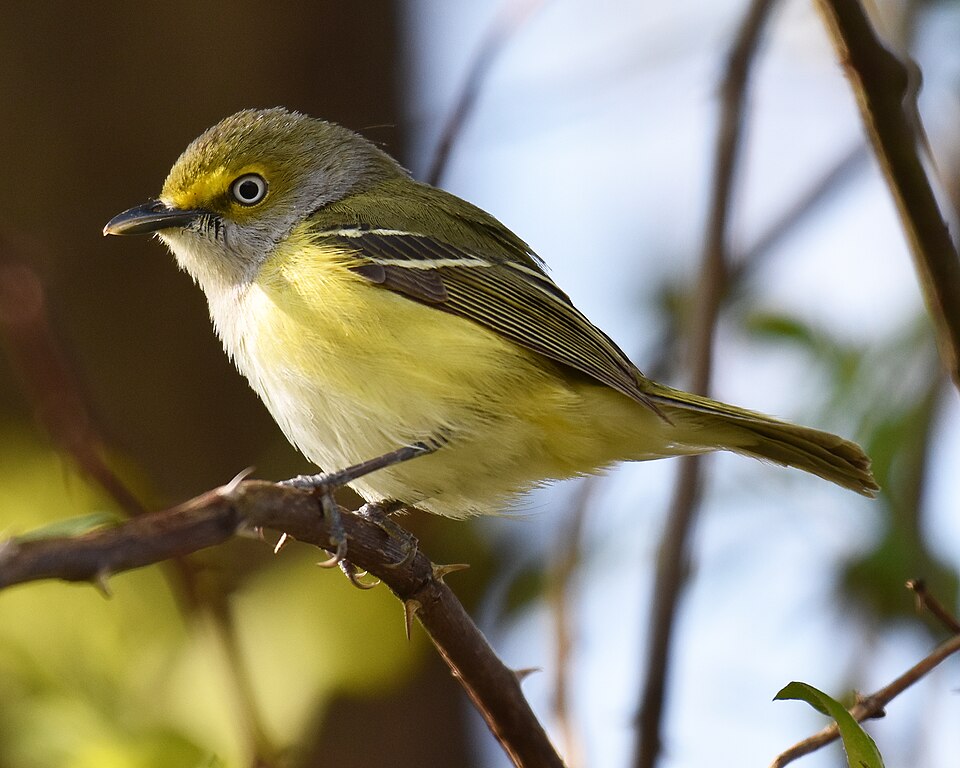
The Sooty-capped Bush Tanager is a small bird, measuring approximately 12-13 centimeters in length. Its plumage is predominantly olive-green, with a striking gray cap that gives the species its common name. This gray crown is bordered by a black line above the eye, which enhances its distinctive appearance. The underparts of the bird are lighter, with a yellowish hue on the belly. Juveniles resemble adults but tend to have duller plumage and less defined markings.
Males and females of Chlorospingus canipileus share similar coloration, making sex differentiation in the field challenging. However, subtle differences in size and behavior during the breeding season might provide clues to experienced observers. The bird's flight silhouette is compact, with a short tail and rounded wings that facilitate quick, maneuverable movements through dense foliage.
One might confuse the Sooty-capped Bush Tanager with similar species in its range, such as the Common Bush Tanager, but careful observation of the gray cap and distinctive eye line helps in accurate identification. When perched, these birds exhibit a characteristic upright posture, often flicking their wings and tail as a form of communication with other flock members.
Having trouble telling birds apart? Upload a photo to our bird identification tool for an instant species match.
Chlorospingus canipileus Habitat and Range
Preferred Habitat
Chlorospingus canipileus thrives in montane cloud forests, a habitat characterized by high humidity, dense understory, and frequent cloud cover. These forests are predominantly found in Costa Rica and western Panama, at elevations ranging from 1,500 to 3,000 meters. Within these forests, the Sooty-capped Bush Tanager prefers areas with abundant epiphytes and mosses, which provide ample foraging opportunities.
Seasonal shifts in habitat use are minimal, as this species tends to remain within its montane environment year-round. However, slight altitudinal movements may occur in response to food availability and climatic conditions. While the species is primarily associated with forest interiors, it can occasionally be spotted at the forest edge or in adjacent secondary growth, indicating some adaptability to habitat changes.
Their presence is rare in urban settings, as these tanagers rely on the complex structure and resources provided by intact forest ecosystems. Conservation of their habitat is crucial, as montane forests face threats from agricultural expansion and climate change.
Geographic Range
The breeding range of the Sooty-capped Bush Tanager is restricted to the high-altitude forests of Costa Rica and western Panama. These regions provide the specific ecological conditions required for their survival, such as cool temperatures and abundant food resources. Unlike many other bird species, Chlorospingus canipileus does not undertake long-distance migrations, preferring to remain within its established range year-round.
Within this range, population densities vary, with higher concentrations often found in pristine forest areas that offer optimal habitat conditions. These areas include national parks and protected reserves where conservation efforts help maintain suitable environments for the species.
While the tanager's range is relatively limited geographically, its population is generally stable within this area. However, habitat fragmentation and environmental changes pose potential threats to its continued stability. Conservation initiatives in Costa Rica and Panama are crucial to preserving the natural habitats that sustain these birds.
Want to know which birds visit your area? Browse our backyard birds by location guides for region-specific species lists.
What Does the Chlorospingus canipileus Eat?
The diet of the Sooty-capped Bush Tanager is primarily insectivorous, consisting of small insects and their larvae, which it gleans from foliage in the forest understory. During certain times of the year, fruit becomes a significant component of its diet, providing essential nutrients and energy.
Seasonal variations in diet correspond with the availability of food resources. Insects dominate the diet during the wet season, when they are most abundant. As the dry season approaches and fruit becomes more available, the tanager shifts its foraging focus accordingly. This adaptability in diet is crucial for survival in the dynamic cloud forest environment.
The Sooty-capped Bush Tanager employs a variety of foraging techniques, including gleaning and sallying, to capture its prey. These methods allow it to exploit different food sources efficiently. Feeding primarily occurs during daylight hours, with peak activity in the early morning and late afternoon when insect activity is highest.
Chlorospingus canipileus Behavior and Social Structure
The Sooty-capped Bush Tanager exhibits a complex social structure, often forming part of mixed-species flocks within its montane forest habitat. These flocks provide safety in numbers and enhance foraging efficiency, as the diverse group can exploit a wider range of food resources and alert each other to predators.
Territorial behavior becomes more pronounced during the breeding season, when pairs establish and defend nesting territories. Courtship displays involve vocalizations and physical gestures, including wing and tail flicking, to attract mates and establish pair bonds. Once paired, the birds exhibit strong monogamous tendencies, working together to rear their young.
Daily activity patterns of Chlorospingus canipileus include periods of intense foraging interspersed with rest and preening. The birds are primarily diurnal, with peak activity occurring in the cooler hours of the day. In response to predators, they rely on their acute awareness and the protective cover of dense foliage, often using alarm calls to alert flock members of danger.
Chlorospingus canipileus Nesting and Reproduction
The Sooty-capped Bush Tanager constructs cup-shaped nests, typically situated in the fork of a tree or within dense shrubbery in the cloud forest. These nests are composed of moss, leaves, and other plant materials, providing a well-camouflaged environment for the eggs and chicks.
A typical clutch consists of two to three eggs, which are predominantly white with speckled markings. The female primarily undertakes incubation duties, lasting approximately 14 days, while the male supports by providing food and guarding the nest.
Once hatched, the chicks receive care from both parents, with feeding focused on protein-rich insects. Fledging occurs about two weeks after hatching, but young birds often remain with their parents and within the safety of the territory for an extended period. The species typically produces one brood per breeding season, although favorable conditions may lead to a second attempt.
Chlorospingus canipileus Sounds and Vocalizations
The Sooty-capped Bush Tanager's primary song consists of a series of high-pitched, rapid notes delivered in a rhythmic sequence. These notes have a musical quality, often described as a tinkling or chattering sound. The song serves multiple purposes, including mate attraction and territory defense, and is most frequently heard during the early breeding season.
Call notes are shorter and simpler, used primarily for communication within flocks or as alarm signals in the presence of predators. These calls are a mix of sharp 'tsee' and 'chip' sounds, easily distinguishable from the more complex song.
During the dawn chorus, the Sooty-capped Bush Tanager contributes its voice to the vibrant symphony of the cloud forest, a behavior that underscores its active role in the avian community. Its vocalizations can be likened to those of similar bush tanagers, yet the unique rhythm and pitch variations set it apart.
Interesting Facts About the Chlorospingus canipileus
- 1The Sooty-capped Bush Tanager can be found at elevations reaching up to 3,000 meters, demonstrating their adaptability to high-altitude environments.
- 2Despite their name, Sooty-capped Bush Tanagers are closely related to sparrows, not true tanagers, reflecting interesting evolutionary paths.
- 3These birds often join mixed-species flocks, which can include up to 30 different bird species, enhancing their foraging success.
- 4The gray crown of the Sooty-capped Bush Tanager is a key distinguishing feature, setting it apart from other bush tanagers.
- 5Their vocalizations contribute significantly to the dawn chorus, a daily phenomenon that marks the start of activity in cloud forests.
- 6Sooty-capped Bush Tanagers play a crucial role in insect control within their native cloud forests, supporting ecosystem balance.
- 7They have a monogamous breeding system, with pairs working closely together to raise their young, showcasing cooperative behavior.
Chlorospingus canipileus Conservation Status
The Sooty-capped Bush Tanager currently holds a status of Least Concern on the IUCN Red List, reflecting a stable population across its range. However, ongoing threats such as habitat destruction due to agricultural expansion and climate change pose significant risks to its montane forest environment. Conservation efforts focus on habitat preservation and the establishment of protected areas that safeguard the high-altitude ecosystems crucial for the species' survival. Historical population data suggests a relatively stable trend, but continuous monitoring is essential to detect any changes resulting from environmental pressures. Community-based conservation programs in Costa Rica and Panama play a vital role in promoting sustainable practices and raising awareness about the importance of preserving cloud forests. These efforts help mitigate some of the primary threats faced by the Sooty-capped Bush Tanager and other cohabiting species.
Other Passerellidae Species


Birds Similar to the Chlorospingus canipileus
These species are often confused with the Chlorospingus canipileus due to similar appearance or overlapping range.