
White-eyed Vireo
Vireo griseus
Order: Passeriformes / Family: Vireonidae
Wikimedia Commons
About the White-eyed Vireo
The White-eyed Vireo (Vireo griseus) captivates birdwatchers with its distinct appearance and melodious song. This small songbird plays a significant ecological role in the ecosystems it inhabits, primarily across the southeastern United States. Throughout the year, the White-eyed Vireo occupies dense thickets and scrubby habitats, proving particularly adaptable as it thrives in areas from Missouri to the Carolinas, extending south into Florida and west to eastern Texas. These birds are highly adaptable, often found in both natural and disturbed habitats such as regenerating forests, overgrown fields, and sometimes in suburban backyards where dense vegetation provides cover.
The White-eyed Vireo contributes significantly to the health of its ecosystem by participating in seed dispersal and insect population control. Its diet primarily consists of insects and spiders, which it forages from foliage and bark, helping to maintain a balanced ecosystem. The species exhibits a marked seasonal behavior, with individuals in more northern parts of the range migrating southward during winter months, while those in southern areas tend to remain year-round residents.
This vireo's ecological importance extends to its role as a prey species for various predators, including snakes, small mammals, and birds of prey, thus supporting the food web. The White-eyed Vireo also engages in intriguing behaviors such as complex vocal communications and territorial displays, which are crucial for mating and territory establishment during the breeding season. As a result, the White-eyed Vireo acts as both a predator and prey within its habitat, contributing to its biodiversity and ecological stability.
The White-eyed Vireo belongs to the family Vireonidae, within the order Passeriformes. These birds typically live average lifespan is around 5 years, with a maximum recorded of 10 years..
How to Identify a White-eyed Vireo
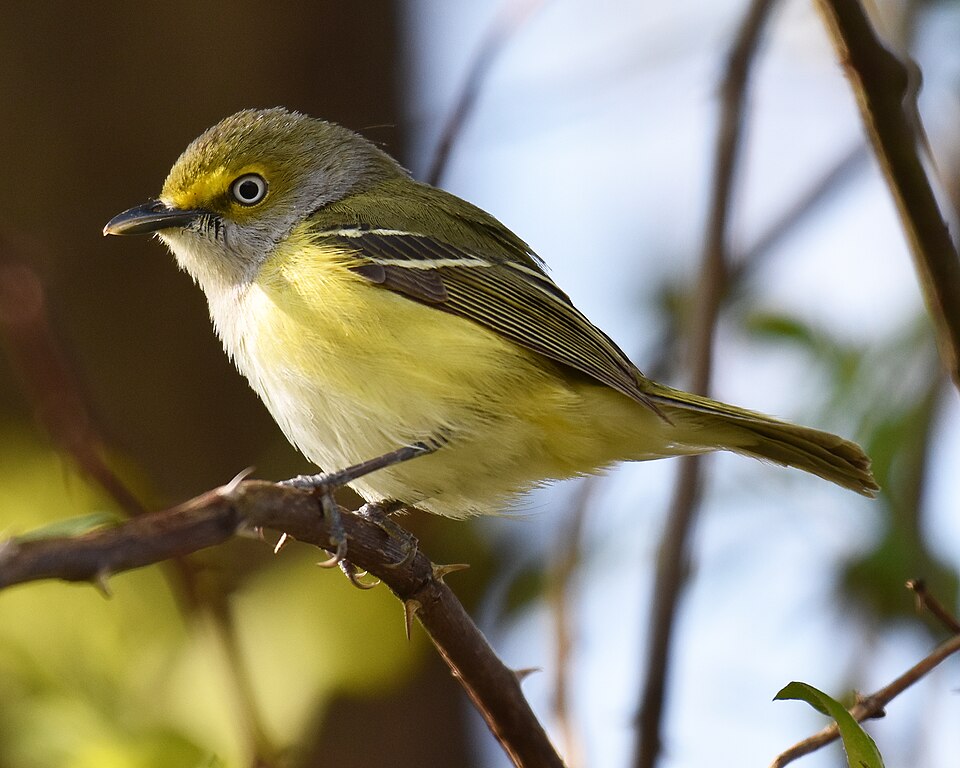
The White-eyed Vireo is a small, robust songbird, measuring about 12-14 cm in length with a wingspan ranging from 17-20 cm. Adult White-eyed Vireos are easily identified by their striking white eyes encircled by a yellow spectacle-like marking. Their upperparts are olive-green, while the underparts are white with a yellow wash on the flanks and sides of the breast. Both males and females exhibit similar plumage, making visual sex differentiation challenging in the field.
Juvenile White-eyed Vireos can be distinguished from adults by their darker eyes, which gradually change to white as they mature. When observing these birds in the field, birders should note the two white wing bars and the short, stout bill typical of vireos. The White-eyed Vireo's perching posture is upright, often accompanied by flicking movements of the wings and tail.
In terms of similar species, the White-eyed Vireo can be confused with the Yellow-throated Vireo, but the latter has a more vibrant yellow throat and lacks the distinctive white eye. Additionally, the Blue-headed Vireo has a bluish-gray head and yellowish flanks, differing in overall coloration. Observers should also pay attention to the bird's flight silhouette, which is agile and quick, often moving through dense shrubbery in search of food.
Having trouble telling birds apart? Upload a photo to our bird identification tool for an instant species match.
White-eyed Vireo Habitat and Range
Preferred Habitat
White-eyed Vireos prefer dense, shrubby environments that provide ample cover and foraging opportunities. They thrive in early successional habitats like overgrown fields, thickets, and young forests. The species is commonly found at elevations ranging from sea level to 600 meters, though it is more prevalent in lowland and coastal areas.
These birds exhibit some seasonal habitat shifts. During the breeding season, they occupy dense shrubs and edges of deciduous or mixed woodlands, favoring locations with ample underbrush. In winter, particularly in their southern range, they may move to slightly more open habitats but still seek dense cover.
In urban settings, the White-eyed Vireo can adapt to gardens and parks if sufficient shrubby vegetation is present. However, the species remains more common in rural and semi-rural areas where natural habitats are more prevalent.
Geographic Range
The White-eyed Vireo has a widespread breeding range across the southeastern United States. They breed from Missouri eastward to the Carolinas and south through Florida, extending westward to eastern Texas and occasionally as far north as the southern parts of New Jersey and Ohio. During the winter, northern populations migrate to the southern United States and parts of Mexico and Central America, including the Yucatán Peninsula.
These birds follow specific migration corridors, often moving along the Gulf Coast and through the southeastern coastal plains. The highest population densities occur in the southeastern states, where suitable habitat is abundant.
The White-eyed Vireo's migratory behavior means it can be encountered in various regions throughout the year, with non-breeding individuals sometimes observed as far south as Belize and Costa Rica during the winter months.
Want to know which birds visit your area? Browse our backyard birds by location guides for region-specific species lists.
What Does the White-eyed Vireo Eat?
The White-eyed Vireo's diet consists primarily of insects and other small invertebrates. It feeds on a variety of caterpillars, beetles, and spiders, which it gleans from foliage and bark. During the breeding season, these birds actively forage in dense shrubs and trees, using their sharp bills to pluck prey from leaves and twigs.
In addition to insects, the White-eyed Vireo consumes small amounts of fruit, especially during the fall and winter months when insect prey becomes less abundant. Berries from wild grape, poison ivy, and sumac are notable dietary components during these times.
The species employs a methodical foraging technique, moving through vegetation with deliberate movements, often hovering briefly to snatch prey from the undersides of leaves. It forages primarily during daylight hours, with peak activity during the early morning and late afternoon when insect prey is most active.
White-eyed Vireo Behavior and Social Structure
White-eyed Vireos exhibit a range of intriguing behaviors, particularly during the breeding season. They are territorial birds, with males establishing and defending territories through song and physical displays. The males' song is a loud, complex series of phrases, used both to attract mates and deter rivals.
Courtship displays involve the male fluttering his wings and presenting food to the female as a part of the pair-bonding process. Once paired, the birds often remain monogamous throughout the breeding season.
The White-eyed Vireo is generally solitary or found in pairs, especially during the breeding season. However, it may join mixed-species foraging flocks during the non-breeding season, which provides safety in numbers and increases foraging efficiency.
When faced with predators, the White-eyed Vireo relies on its agility and dense habitat to evade threats. Alarm calls are issued to alert nearby individuals of danger, and the species may also employ distraction displays to lead predators away from nests.
White-eyed Vireo Nesting and Reproduction
White-eyed Vireos construct cup-shaped nests, which they suspend from the fork of a small shrub or tree branch, typically 1-2 meters above the ground. The nest is meticulously woven from grasses, plant fibers, and spider silk, camouflaged with leaves and lichens to blend with the surrounding vegetation.
The female lays a clutch of 3-5 eggs, which she incubates for about 12-14 days. Both parents participate in feeding the chicks, which fledge approximately 9-11 days after hatching. The fledglings remain dependent on their parents for food and protection for several weeks after leaving the nest.
White-eyed Vireos typically raise one to two broods per year, depending on the length of the breeding season and environmental conditions. The species' nesting success is influenced by factors such as predation and habitat quality.
White-eyed Vireo Sounds and Vocalizations
The primary song of the White-eyed Vireo is a distinctive and complex series of phrases, often described as a rapid 'chick-a-per-weeoo-chick.' This song is typically delivered from a concealed perch within dense vegetation. The bird's calls include sharp 'chip' notes, used in communication between mates and as alarm signals.
During the dawn chorus, males sing more frequently to establish territory and attract females. The song's rhythm is fast-paced, with a variable pitch, often incorporating mimicry of other bird species, adding to its complexity.
Alarm calls are harsh and abrupt, serving to alert other birds of potential threats. The White-eyed Vireo's vocal repertoire plays a crucial role in its social interactions and territorial behavior.
Interesting Facts About the White-eyed Vireo
- 1The White-eyed Vireo's song is so complex that it often mimics sounds from other bird species, showcasing its vocal versatility.
- 2Despite their small size, White-eyed Vireos can be surprisingly aggressive, defending their territories with vigor against intruders.
- 3These birds have a unique foraging strategy, using quick, deliberate movements to pluck insects from the undersides of leaves.
- 4Juvenile White-eyed Vireos have darker eyes, which gradually lighten to the iconic white as they mature.
- 5White-eyed Vireos can be found as far south as Belize during the winter months, demonstrating their remarkable migratory capabilities.
- 6The species' nests are expertly camouflaged with lichens and leaves, making them difficult to spot even when close by.
- 7White-eyed Vireos often join mixed-species flocks during the non-breeding season, benefiting from shared vigilance against predators.
White-eyed Vireo Conservation Status
The White-eyed Vireo is currently listed as a species of Least Concern by the IUCN, with a stable population trend. While not threatened, the species faces challenges from habitat loss due to urbanization and agricultural expansion, which reduce the availability of suitable thickets and scrubby areas. Conservation efforts focus on preserving and restoring early successional habitats, ensuring the maintenance of dense vegetation essential for breeding and foraging. Historically, the White-eyed Vireo has shown resilience to some environmental changes, maintaining stable populations across much of its range. Ongoing monitoring and habitat management are crucial to ensure the continued health of White-eyed Vireo populations, particularly in areas where development pressures are significant.
Other Vireonidae Species



Birds Similar to the White-eyed Vireo
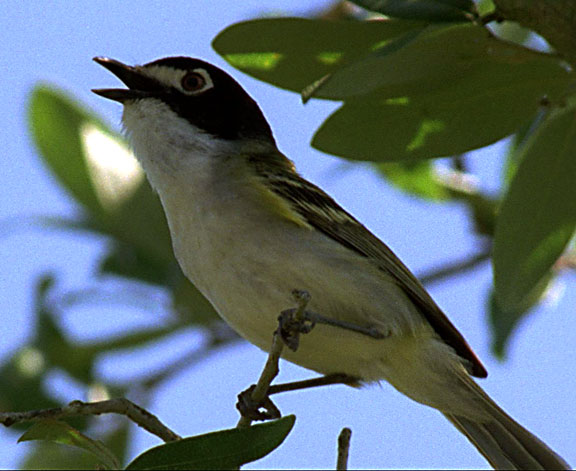
These species are often confused with the White-eyed Vireo due to similar appearance or overlapping range.


