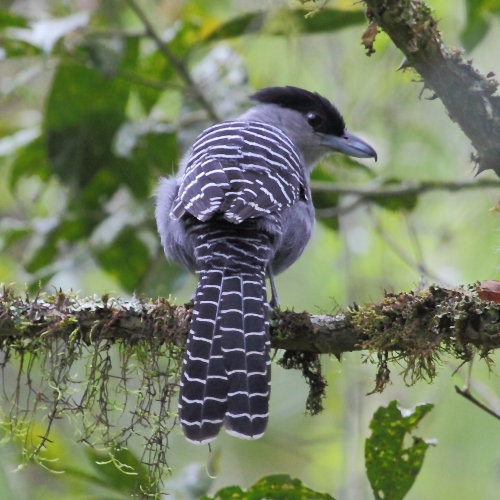
Creamy-bellied Antwren
Herpsilochmus motacilloides
Order: Passeriformes / Family: Thamnophilidae

Wikimedia Commons
About the Creamy-bellied Antwren
The Creamy-bellied Antwren, known scientifically as Herpsilochmus motacilloides, is a small passerine bird residing primarily in the dense tropical forests of South America. This species showcases a significant ecological role as it contributes to insect population control within its habitat. Found predominantly in Peru and parts of Brazil, the Creamy-bellied Antwren thrives in the humid, lowland rainforests where the dense canopy offers optimal foraging opportunities. Its presence in these regions underscores the importance of biodiversity in sustaining healthy forest ecosystems.
The significance of the Creamy-bellied Antwren extends beyond mere biodiversity; it plays a pivotal role in indicating the health of its environment. Because it is sensitive to habitat degradation, its population trends can reflect broader ecological changes. The antwren's reliance on intact forest habitats makes it an excellent bioindicator for conservationists and researchers monitoring forest health and biodiversity in the tropics. Preservation of its habitat, therefore, not only benefits this species but also supports countless other organisms sharing the ecosystem.
Ecologically, the Creamy-bellied Antwren is a crucial insectivore, consuming a wide variety of arthropods, which helps maintain a balance in the insect community. It often joins mixed-species foraging flocks, a behavior that reduces predation risk and increases foraging efficiency. During the breeding season, which aligns with the wet season, the antwren becomes more territorial. This period sees an increase in vocalizations as males defend their nesting territories and attract mates. The seasonality of its behaviors, such as increased vocal activity and territorial displays, reflects its adaptation to the cyclical nature of tropical environments.
The Creamy-bellied Antwren belongs to the family Thamnophilidae, within the order Passeriformes. These birds typically live average 3-4 years, with a max recorded of 5 years.
How to Identify a Creamy-bellied Antwren
The Creamy-bellied Antwren exhibits distinct field marks that aid in its identification. Adults have a prominent creamy-white belly that contrasts sharply with their gray upperparts and blackish wings adorned with white wingbars. This coloration pattern is consistent across both sexes, although males may exhibit slightly darker plumage on the head. Juveniles resemble adults but often have a more subdued color palette.
A key feature distinguishing this species is its short, slightly decurved bill, which is well-suited to probing foliage for insects. In flight, the Creamy-bellied Antwren appears agile and quick, with a tendency to dart between branches, a behavior characteristic of many antwrens. Perched, it often displays an upright posture, frequently moving its tail in a wagging motion.
Confusion with similar species, such as other antwrens in the Herpsilochmus genus, can occur, but the creamy underparts and specific vocalizations of the Creamy-bellied Antwren are reliable identifiers. Observers should also note the size and shape of its wings and tail, as these can help differentiate it from sympatric species.
Having trouble telling birds apart? Upload a photo to our bird identification tool for an instant species match.
Creamy-bellied Antwren Habitat and Range
Preferred Habitat
The Creamy-bellied Antwren favors humid, tropical lowland forests, often inhabiting areas with dense canopy cover that provide abundant foraging opportunities. It is typically found at elevations ranging from sea level to about 1200 meters. Within these forests, the antwren tends to select areas with significant understory vegetation, as this provides both food resources and protection from predators.
Seasonal shifts in habitat are minimal for this species due to the relatively stable climate of its tropical environment. However, during the wet season, the availability of food resources such as insects may lead to slight adjustments in its foraging areas within the forest. While primarily a forest-dwelling species, the Creamy-bellied Antwren is not typically found in urban areas, as it relies heavily on intact forest ecosystems for survival.
Geographic Range
The Creamy-bellied Antwren's range is largely confined to South America, specifically within Peru and western Brazil. This species is considered non-migratory, maintaining a relatively stable presence in its preferred habitats throughout the year. Its breeding range coincides closely with its general range, as it remains within the tropical forests where it resides.
In terms of population density, certain regions within Peru, such as the Loreto and Ucayali areas, are known hotspots where the species is more commonly observed. These areas provide the dense forest cover essential for its survival and reproduction. Although the Creamy-bellied Antwren exhibits a limited geographic range, its populations appear to be stable in these core areas, provided that the forest remains undisturbed.
Want to know which birds visit your area? Browse our backyard birds by location guides for region-specific species lists.
What Does the Creamy-bellied Antwren Eat?
The diet of the Creamy-bellied Antwren consists primarily of small arthropods, including insects and spiders. This bird employs a foraging technique known as 'gleaning,' where it plucks prey from foliage while moving nimbly through the canopy. Its short bill is particularly adept at extracting insects from crevices and undersides of leaves.
Seasonal changes in diet are minimal due to the consistent availability of insects in tropical forests. However, during the wet season, an increase in insect abundance may allow the antwren to exploit a wider range of prey. The bird's feeding schedule is largely diurnal, with peak foraging activity occurring during the early morning and late afternoon when insects are most active.
Creamy-bellied Antwren Behavior and Social Structure
The Creamy-bellied Antwren exhibits a social structure typical of many small forest passerines. It often joins mixed-species flocks, which provide safety in numbers and increase foraging success. While generally non-aggressive, this antwren becomes territorial during the breeding season.
Courtship displays include vocalizations and subtle postures, with males showcasing their plumage to attract females. Once paired, both sexes participate in nest building and territorial defense. As a response to predators, the Creamy-bellied Antwren relies on its agility and the protective cover of dense foliage, often freezing or flitting to a new perch when threatened.
Daily activity patterns reveal a bird that is most active during dawn and dusk, with a noticeable lull in activity during the hottest midday hours. This crepuscular pattern aligns with the activity of its insect prey, optimizing foraging efficiency while avoiding peak predator activity.
Creamy-bellied Antwren Nesting and Reproduction
Nesting for the Creamy-bellied Antwren involves constructing a small, cup-shaped nest hidden within the dense foliage of the forest understory. The nest is typically built from fine plant fibers and leaves, camouflaged to blend with the surroundings.
The preferred nesting sites are often located at a moderate height, around 1 to 3 meters above the ground, to protect against ground predators. The typical clutch size ranges from two to three eggs, which are incubated primarily by the female, although the male may assist.
The incubation period lasts approximately 14 days, with both parents participating in feeding and caring for the hatchlings. Fledging occurs about two weeks post-hatching, after which the young are gradually introduced to independent foraging. The Creamy-bellied Antwren usually raises one or two broods per year, depending on food availability and environmental conditions.
Creamy-bellied Antwren Sounds and Vocalizations
The primary song of the Creamy-bellied Antwren consists of a rapid series of high-pitched notes, often described as a trilled 'ti-ti-ti-ti.' These vocalizations play a crucial role in territory defense and mate attraction, especially during the breeding season.
Call notes include a more subdued 'chip' or 'tsik,' used in communication between mates or flock members. Alarm calls differ in urgency and frequency, becoming sharper and faster when predators are near. During the early morning hours, the Creamy-bellied Antwren participates in a dawn chorus, contributing its distinctive trills to the symphony of forest sounds.
Interesting Facts About the Creamy-bellied Antwren
- 1The Creamy-bellied Antwren can be identified by its unique foraging method, called 'gleaning,' which involves picking insects off leaves and branches.
- 2Despite its small size, the Creamy-bellied Antwren is a vocal bird, often heard within a 30-meter radius during the breeding season.
- 3This antwren is an indicator species for forest health, as it relies heavily on intact ecosystems for survival.
- 4During the breeding season, the Creamy-bellied Antwren increases its vocal activity by up to 50% to defend territory and attract mates.
- 5The species is often found in the company of other birds, forming mixed-species flocks that can contain up to 20 different bird species.
- 6The Creamy-bellied Antwren's nest is expertly camouflaged, making it difficult for predators and humans alike to spot.
- 7This bird's range is limited to specific regions in Peru and Brazil, emphasizing the importance of localized conservation efforts.
Creamy-bellied Antwren Conservation Status
The Creamy-bellied Antwren is currently evaluated as Least Concern by the IUCN, with populations considered stable in its limited range. However, habitat destruction poses an ongoing threat, particularly due to deforestation for agriculture and logging. Conservation efforts focus on preserving large tracts of intact forest, which are essential for the survival of this species. Protected areas in Peru and Brazil offer some refuge, but continued monitoring is necessary to ensure that population levels remain stable. Historically, the Creamy-bellied Antwren has maintained a stable population, reflecting the relatively undisturbed nature of its habitat until recent pressures from human activities.