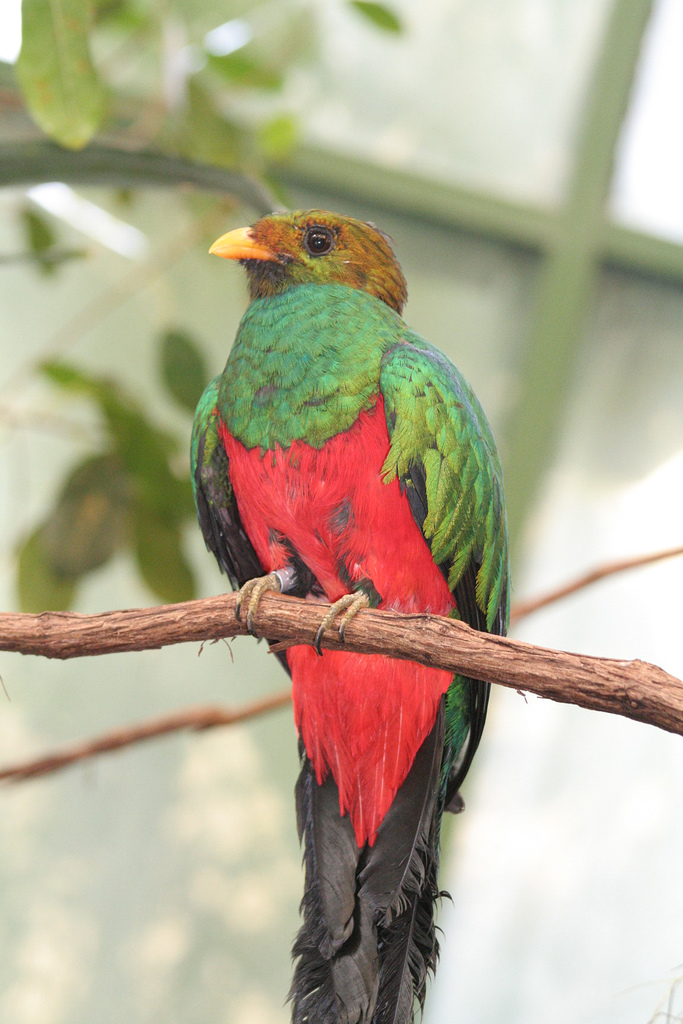
Crested Quetzal
Pharomachrus antisianus
Order: Trogoniformes / Family: Trogonidae

Wikimedia Commons
About the Crested Quetzal
The Crested Quetzal (Pharomachrus antisianus) is a captivating bird of the Trogonidae family, known for its brilliant coloration and crest. This species inhabits the humid montane forests of the Andes, spanning from Venezuela to Bolivia. It thrives in elevations ranging from 1,400 to 3,000 meters, making it a highland specialist. The Crested Quetzal plays a crucial role in its ecosystem as a seed disperser, particularly favoring fruit-bearing trees native to the Andean cloud forests.
The significance of the Crested Quetzal extends beyond its ecological role. It is an important cultural symbol in several indigenous traditions, representing freedom and beauty. The bird's presence indicates healthy, biodiverse forest ecosystems, as it relies on intact habitats for feeding and breeding. Observers often find the Crested Quetzal in mixed-species flocks, particularly during the non-breeding season, contributing to the dynamics of avian communities.
Ecologically, the Crested Quetzal's role as a frugivore helps maintain the forest's health by aiding in seed dispersal. During the breeding season, which typically occurs from March to July, the bird becomes territorial, ensuring adequate resources for its offspring. The seasonal behaviors of the Crested Quetzal, such as their altitudinal movements in search of food and nesting sites, reflect the intricate balance between the species and its environment.
Due to its reliance on specific habitat conditions, the Crested Quetzal acts as an indicator species for environmental changes. Conservation efforts aimed at preserving Andean cloud forests are vital not only for the quetzal but for numerous other species sharing its habitat. The bird's vibrant presence and intriguing behaviors continue to attract birdwatchers and researchers, making it a focal point for conservation and ecological studies.
The Crested Quetzal belongs to the family Trogonidae, within the order Trogoniformes. These birds typically live average 6-7 years with a maximum recorded of 11 years..
How to Identify a Crested Quetzal
Adult Crested Quetzals boast vibrant emerald green plumage that appears iridescent in sunlight, with a distinct golden-green sheen on the back and wings. Males are particularly striking with a vivid red belly, contrasting sharply with their green upperparts. The crest, a tuft of elongated feathers atop the head, gives the bird its name. Females, while similarly colored, exhibit duller tones and a less pronounced crest.
Juveniles resemble females but are even less vibrant, with a more subdued palette lacking the full brilliance of adults. Both sexes have yellow eye rings and a short, broad bill ideal for their frugivorous diet. The tail, shorter than that of the more famous Resplendent Quetzal, still contributes to their distinctive silhouette when perched.
In flight, the Crested Quetzal's broad wings and short tail create a unique shape, with slow, deliberate wing beats that reflect their tropical forest habitat. Their posture when perched is upright, often remaining still for extended periods as they scan for food or mates. While their coloration might cause confusion with the male Resplendent Quetzal, their range and habitat preferences help distinguish them.
Having trouble telling birds apart? Upload a photo to our bird identification tool for an instant species match.
Crested Quetzal Habitat and Range
Preferred Habitat
Crested Quetzals reside primarily in the humid montane forests of the Andes, from Venezuela through Colombia, Ecuador, Peru, and into Bolivia. They prefer cloud forests and mature, undisturbed woodlands rich in fruit-bearing trees. These environments offer the dense canopy cover and diverse fruit resources they require.
The elevation range for this species is typically between 1,400 and 3,000 meters, where they can find the microclimates they favor. During the breeding season, they may move slightly downslope to find optimal nesting sites and resources. Unlike some species, the Crested Quetzal does not adapt well to urban environments, relying instead on pristine habitats.
Seasonal habitat shifts are modest, generally involving altitudinal movements rather than long-distance migrations. They remain in forested areas year-round, highlighting the importance of forest conservation in their range. Their preference for high-elevation forests makes them less visible in lowland areas, thus concentrating their presence in montane ecosystems.
Geographic Range
The Crested Quetzal's range spans the Andes, from the subtropical forests of Venezuela through Colombia, Ecuador, and Peru, extending into Bolivia. These regions offer the necessary combination of cloud forests and highland woodlands.
During the breeding season, they occupy specific areas within this range, favoring protected reserves and national parks where habitat conditions are optimal. In Colombia, the Eastern Cordillera hosts significant populations, while in Ecuador, they are frequently observed in the Podocarpus National Park.
The species exhibits altitudinal rather than extensive latitudinal movements, remaining within their Andean range throughout the year. Unlike migratory species, the Crested Quetzal does not travel vast distances, but their altitudinal shifts ensure access to seasonal food resources and suitable nesting sites. Population densities are highest in areas with intact forest ecosystems, particularly in protected regions where human disturbance is minimal.
Want to know which birds visit your area? Browse our backyard birds by location guides for region-specific species lists.
What Does the Crested Quetzal Eat?
Primarily frugivorous, the Crested Quetzal's diet consists mainly of fruits from various forest trees, including those from the Lauraceae and Ericaceae families. These fruits provide the necessary nutrients and energy required for their active lifestyle.
During the breeding season, their diet expands to include small invertebrates, which provide additional protein for growing chicks. The quetzal employs a sit-and-wait foraging strategy, remaining perched until spotting a potential food source before making short, direct flights to snatch fruits or insects.
Seasonal diet changes are influenced by fruit availability, with the bird adjusting its foraging behavior and location accordingly. They typically feed during the early morning and late afternoon, capitalizing on the cooler temperatures and active fruiting periods of their preferred trees.
The size of prey and fruit consumed varies, but they often target small to medium-sized items easily manageable within their broad bills. Their frugivorous habits play a crucial role in seed dispersal, aiding the maintenance of their forest habitat.
Crested Quetzal Behavior and Social Structure
Crested Quetzals exhibit a complex social structure, often joining mixed-species flocks outside the breeding season. This behavior enhances their foraging efficiency and provides safety in numbers. Territorial during breeding, males establish and defend areas with optimal resources.
Courtship involves elaborate displays, where males showcase their vibrant plumage and vocal abilities to attract females. These displays are crucial for pair bonding and successful mating. The birds are predominantly solitary or found in pairs during the breeding season, with a strong pair bond forming between mates.
Flocking patterns emerge more prominently after the breeding season, with the quetzal joining other fruit-eating species in search of abundant food sources. Their response to predators is typically passive, relying on their cryptic coloration and canopy cover for protection. Predation risks are mitigated by their preference for dense, undisturbed forests.
Daily activity patterns involve active feeding during the early morning and late afternoon, resting during the heat of midday. This schedule aligns with the availability of their primary food sources and minimizes exposure to potential predators.
Crested Quetzal Nesting and Reproduction
Crested Quetzals prefer to nest in natural cavities found in large, mature trees within their montane forest habitats. They occasionally use abandoned woodpecker holes, which provide the necessary protection and insulation for their eggs.
The female typically lays a clutch of two eggs, with both parents sharing incubation duties. The incubation period lasts about 17-19 days, during which the parents alternate between incubating the eggs and foraging for food.
Once hatched, the chicks are altricial, requiring continuous care and feeding from both parents. Fledging occurs approximately 23-25 days after hatching, when the young are capable of making their first flights.
Crested Quetzals generally have one brood per year, aligning with the peak availability of food resources to support their offspring. Parental roles are shared, with both male and female contributing to feeding and protecting the young. This cooperative breeding strategy increases the chances of successful fledging in their challenging montane environment.
Crested Quetzal Sounds and Vocalizations
The Crested Quetzal's primary song is a series of sharp, high-pitched notes that rise and fall in a melodic rhythm, often compared to a flute. These vocalizations are most prominent during the breeding season, when males use them to attract mates and establish territories.
Their call notes consist of short, choppy phrases that serve as contact calls between mates or flock members. Alarm calls are harsher and more abrupt, signaling potential threats to nearby conspecifics.
The dawn chorus features prominently in their daily routine, with males actively singing during the early morning hours. This behavior not only marks their territory but also emphasizes their presence in the dense forest habitat.
Compared to other forest birds, the Crested Quetzal's vocalizations are distinct and easily recognizable to experienced birders, providing an auditory clue to their presence even when they remain hidden in the canopy.
Interesting Facts About the Crested Quetzal
- 1The Crested Quetzal's iridescent green feathers are due to microscopic structures that refract light, similar to a prism.
- 2Unlike the Resplendent Quetzal, the Crested Quetzal has a much shorter tail, which is less of a burden in dense forest habitats.
- 3Crested Quetzals contribute significantly to forest regeneration by dispersing seeds of over 50 tree species across their range.
- 4These birds can consume more than 20 different fruit types in a single day, showcasing their dietary diversity.
- 5Despite their bright colors, Crested Quetzals can be surprisingly difficult to spot due to their stillness and the dense canopy they prefer.
- 6The cultural significance of quetzals dates back to pre-Columbian civilizations, where they symbolized freedom and wealth.
- 7The Crested Quetzal's diet shift to include more insects during the breeding season reflects the increased nutritional demands of raising young.
Crested Quetzal Conservation Status
The IUCN currently lists the Crested Quetzal as Least Concern, with populations considered stable across much of its range. However, habitat loss due to deforestation and agricultural expansion poses significant threats to their long-term survival. Conservation efforts focus on protecting the montane forests they inhabit, with initiatives aimed at preserving critical habitats and establishing protected areas. National parks and reserves in countries like Colombia and Ecuador play vital roles in maintaining suitable environments for the species. Historical population changes have been influenced by fluctuating habitat conditions and human activities. While not immediately endangered, continued deforestation could lead to declines, emphasizing the importance of proactive conservation measures. Efforts to raise awareness and promote sustainable forest management practices are crucial in ensuring the Crested Quetzal's ongoing presence in its Andean range, safeguarding the biodiversity of these essential ecosystems.
Other Trogonidae Species


Birds Similar to the Crested Quetzal
These species are often confused with the Crested Quetzal due to similar appearance or overlapping range.