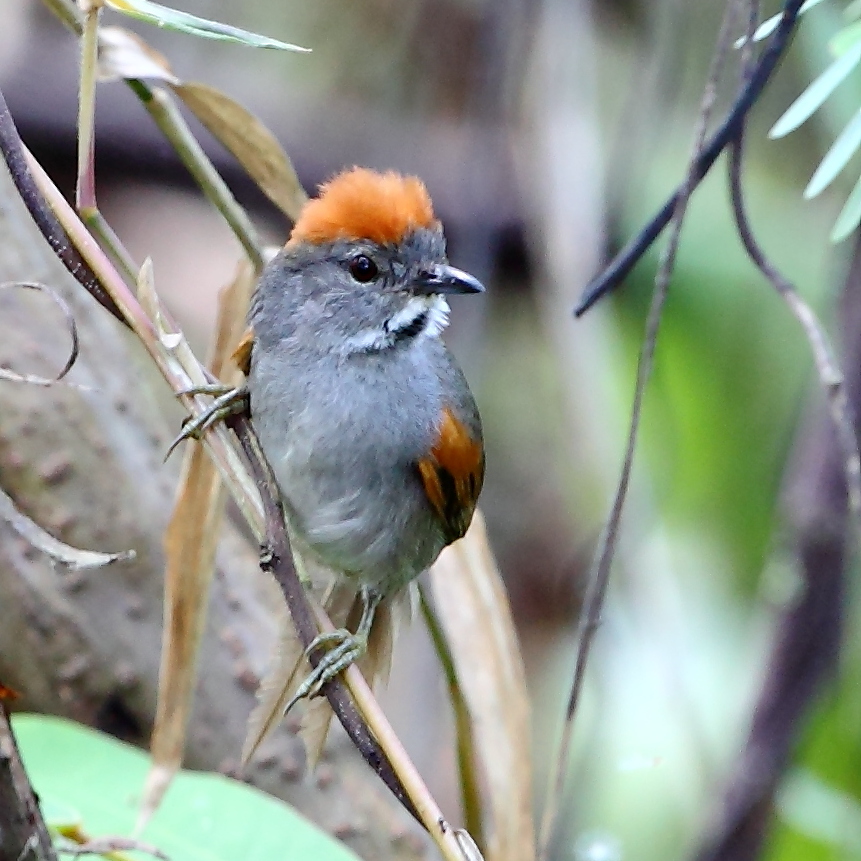
Pale-breasted Spinetail
Synallaxis albescens
Order: Passeriformes / Family: Furnariidae

Wikimedia Commons
About the Pale-breasted Spinetail
The Pale-breasted Spinetail (Synallaxis albescens) is a notable member of the Furnariidae family, a group well-known for their complex nests and diverse habitats. Found predominantly in South America, this species inhabits countries such as Brazil, Argentina, and Peru. It thrives in a variety of wooded environments, including deciduous forests, scrublands, and even plantations. Its ecological role is significant as it contributes to the control of insect populations and the dispersion of plant seeds. During the breeding season, which generally spans from August to December in the southern parts of its range, the Pale-breasted Spinetail becomes more conspicuous as it engages in vocal displays and aggressive territorial defense. This seasonality aligns with the availability of food resources, such as insects and other invertebrates, which are crucial for rearing young. Additionally, this bird plays a role in the ecosystem as a prey species for larger birds and mammals, thus forming a vital link in the food web. The Pale-breasted Spinetail's adaptability to altered landscapes, including secondary growth and agricultural lands, underscores its resilience, although it still faces threats from habitat destruction and changes in land use. Conservation efforts focused on preserving its natural habitats are essential for maintaining the population stability of this and many other species in the Furnariidae family.
The Pale-breasted Spinetail belongs to the family Furnariidae, within the order Passeriformes. These birds typically live average 4 years with a max recorded of 6 years..
How to Identify a Pale-breasted Spinetail
The Pale-breasted Spinetail is a small bird, measuring around 16-17 cm in length, with a wingspan of approximately 20 cm. Its most distinguishing feature is its pale underparts, a characteristic that gives the species its name. The upperparts are largely brown, with a rufous tinge on the wings and tail. The throat is often a lighter shade, providing a subtle contrast with the rest of the underparts. Juvenile spinetails resemble adults but may appear slightly duller and have softer plumage. There is little sexual dimorphism between males and females, making them difficult to distinguish in the field. When compared to similar species such as the Rufous-fronted Thornbird, the Pale-breasted Spinetail’s lack of a rufous forehead and its paler breast are key differentiators. In flight, the bird displays a distinctive silhouette with rounded wings and a slightly elongated tail, often fanned out during short flights between vegetation. When perched, it adopts an upright posture, often flicking its tail in a rhythmic manner.
Having trouble telling birds apart? Upload a photo to our bird identification tool for an instant species match.
Pale-breasted Spinetail Habitat and Range
Preferred Habitat
Pale-breasted Spinetails occupy a diverse range of habitats, primarily favoring dense undergrowth in deciduous forests, scrublands, and the edges of plantations. They can be found at elevations ranging from sea level up to about 2,500 meters, although they primarily inhabit lowland areas. Seasonal movements are minimal, with the species largely remaining in their territories year-round, though slight shifts in altitude may occur in response to seasonal changes in food availability. While they are more commonly found in rural settings, Pale-breasted Spinetails can occasionally be observed in urban green spaces that provide suitable dense vegetation.
Geographic Range
The Pale-breasted Spinetail's distribution spans much of South America, from the Amazon Basin in Brazil down to the subtropical regions of northern Argentina. It is also present in Bolivia, Paraguay, Uruguay, and parts of eastern Peru. The species is non-migratory, residing year-round within its range, although some altitudinal movements may occur in response to climatic conditions. Population densities are higher in areas with abundant undergrowth and less human disturbance, such as protected parks and reserves. However, the bird's adaptability has allowed it to maintain stable populations even in areas of moderate habitat alteration.
Want to know which birds visit your area? Browse our backyard birds by location guides for region-specific species lists.
What Does the Pale-breasted Spinetail Eat?
Diet primarily consists of insects and other small invertebrates. The Pale-breasted Spinetail uses a technique known as 'gleaning,' where it picks prey from foliage and twigs. It may also occasionally consume seeds and small fruits, particularly during periods when insect prey is less abundant. Foraging occurs throughout the day, with peak activity in the early morning and late afternoon. This bird often forages alone or in pairs, using its slender bill to probe crevices and foliage within dense vegetation.
Pale-breasted Spinetail Behavior and Social Structure
Pale-breasted Spinetails are known for their solitary or paired behavior, rarely forming larger groups. They exhibit strong territoriality, especially during the breeding season, often engaging in vocal duets to defend their territory. Courtship displays involve mutual preening and soft vocalizations between mates. When faced with predators, they rely on their cryptic coloration to remain undetected, often freezing in place within the undergrowth. Their daily activities are primarily diurnal, with periods of increased activity at dawn and dusk, aligned with foraging and territorial defense.
Pale-breasted Spinetail Nesting and Reproduction
The Pale-breasted Spinetail constructs elaborate nests, typically choosing dense vegetation as a site. Nests are dome-shaped structures made from twigs, leaves, and other plant materials, often with a long entrance tunnel. Clutch size generally ranges from two to three eggs, with an incubation period of approximately 15-18 days. Both parents participate in feeding the chicks, which fledge about 15-20 days after hatching. The species may produce one to two broods per year, depending on environmental conditions and food availability.
Pale-breasted Spinetail Sounds and Vocalizations
The primary song of the Pale-breasted Spinetail is a series of rapid, high-pitched notes that can sound like a repetitive 'chip-chip-chip.' These vocalizations are often delivered in a duet form, with mated pairs calling together. The bird's calls are sharp and can serve as alarm signals when predators are nearby. During the dawn chorus, their voices mingle with those of other woodland species, contributing to the vibrant acoustic landscape of their habitats.
Interesting Facts About the Pale-breasted Spinetail
- 1The Pale-breasted Spinetail is adept at constructing some of the most complex nests in the avian world, with structures often exceeding 50 cm in length.
- 2Despite their small size, Pale-breasted Spinetails play a crucial role in controlling pest populations, particularly in agricultural areas.
- 3These birds are part of the diverse Furnariidae family, which includes over 300 species known as 'ovenbirds' due to their unique nesting habits.
- 4Pale-breasted Spinetails are non-migratory, a rarity among many bird species, allowing them to maintain long-term territories.
- 5The species' adaptability to various habitats has allowed it to thrive even in moderately disturbed environments.
- 6Juvenile Pale-breasted Spinetails often remain in their natal territory for extended periods, learning critical survival skills from their parents.
- 7Their vocal duets play a significant role in mate bonding and territory defense, showcasing complex social behaviors.
Pale-breasted Spinetail Conservation Status
The Pale-breasted Spinetail is classified as Least Concern by the IUCN, with stable population trends across its range. Primary threats include habitat destruction due to agricultural expansion and urban development. Conservation efforts focus on habitat preservation and mitigating the impacts of deforestation. Historically, this species has demonstrated adaptability to changing environments, which has helped maintain its widespread presence. Continued monitoring is necessary to ensure long-term population health.
Other Furnariidae Species


Birds Similar to the Pale-breasted Spinetail
These species are often confused with the Pale-breasted Spinetail due to similar appearance or overlapping range.