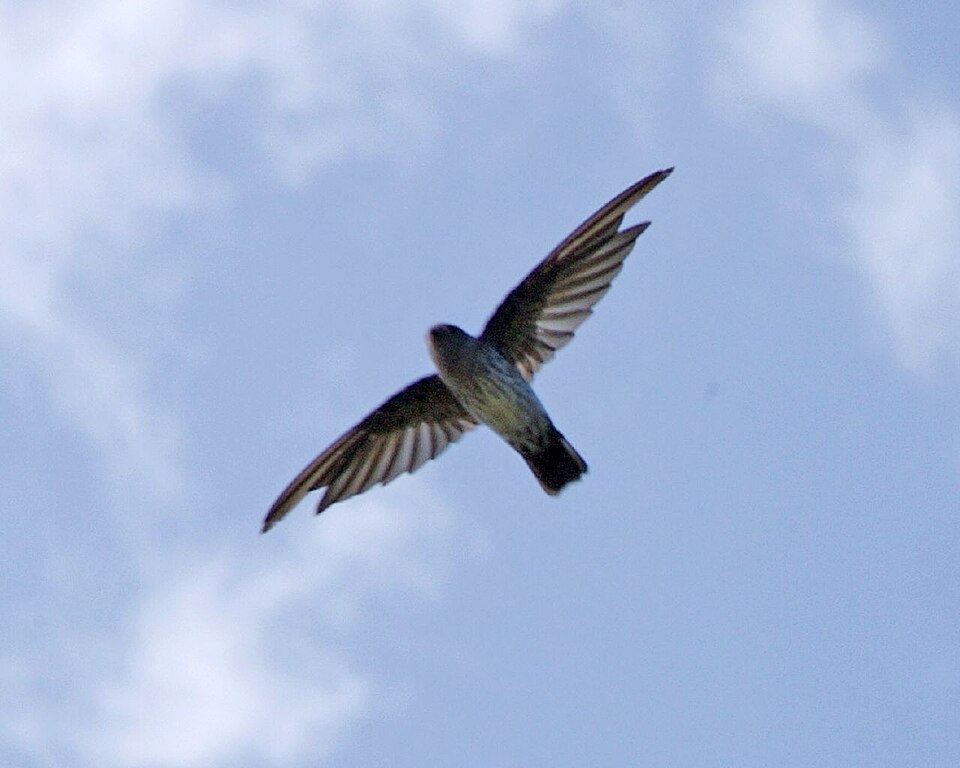
Drab Swiftlet
Collocalia neglecta
Order: Apodiformes / Family: Apodidae

Wikimedia Commons
About the Drab Swiftlet
The Drab Swiftlet, scientifically known as Collocalia neglecta, is a member of the Apodidae family and is characterized by its plain, unassuming plumage. This swiftlet is primarily found in Southeast Asia, where it inhabits both forested regions and urban environments. Unlike many other swiftlet species, the Drab Swiftlet lacks the glossy sheen that often distinguishes its relatives, making it less conspicuous against the backdrop of its natural habitat. Despite its modest appearance, the Drab Swiftlet plays a significant ecological role as an insectivore, contributing to pest control and maintaining ecological balance. In areas like Malaysia, Indonesia, and parts of Thailand, this bird is a year-round resident, seldom migrating but rather adapting to different seasonal conditions within its range. Its presence in both lowlands and mountainous regions highlights its adaptability and resilience in diverse environments. The Drab Swiftlet is known for its rapid, agile flight, which is essential for catching insects mid-air. This behavior underscores its significant role in controlling insect populations, thus benefiting both natural ecosystems and agricultural areas. Unlike migratory birds that travel long distances, the Drab Swiftlet remains within a relatively confined geographic area, exhibiting slight seasonal movements in response to food availability and climatic conditions. As an integral part of the avian community, the Drab Swiftlet contributes to the complex web of interactions that sustain the ecosystems it inhabits.
The Drab Swiftlet belongs to the family Apodidae, within the order Apodiformes. These birds typically live averages 4-6 years, with some living up to 8 years..
How to Identify a Drab Swiftlet
The Drab Swiftlet is a small bird, measuring approximately 10 to 11 centimeters in length, with a wingspan of about 25 centimeters. Its plumage is predominantly gray-brown, which can make it difficult to spot against dull backgrounds. Adults exhibit a uniform coloration without distinctive markings or iridescence. Juvenile Drab Swiftlets closely resemble adults but may appear slightly duller in coloration. There is no significant sexual dimorphism, meaning males and females look alike. In flight, the Drab Swiftlet is identified by its rapid wingbeats and agile maneuvers. Its silhouette is characterized by long, narrow wings and a slightly forked tail. Compared to similar species like the Glossy Swiftlet, the Drab Swiftlet lacks the metallic sheen, making it easier to differentiate in good lighting conditions. While perching, which is relatively rare, the Drab Swiftlet may adopt a hunched posture on vertical surfaces, often in caves or under eaves.
Having trouble telling birds apart? Upload a photo to our bird identification tool for an instant species match.
Drab Swiftlet Habitat and Range
Preferred Habitat
The Drab Swiftlet inhabits a range of environments, from lowland forests to mountainous regions. It is commonly found at elevations up to 1500 meters. In Southeast Asia, this swiftlet thrives in both primary and secondary forests. Urban areas with tall buildings and abundant insect populations also support their presence, as these environments offer suitable foraging opportunities. Seasonal habitat shifts are minimal, but during the wetter months, the Drab Swiftlet may be found in areas with increased insect activity. While it does inhabit urban areas, it is more frequently observed in rural settings where natural habitats are abundant. The presence of caves or large man-made structures is crucial for roosting and nesting.
Geographic Range
The Drab Swiftlet's range primarily includes parts of Southeast Asia, with significant populations in Malaysia, Indonesia, and Thailand. It is a resident species, meaning it does not undergo long-distance migrations like some other swiftlets. However, the Drab Swiftlet may engage in local movements in response to changes in food availability and climatic conditions. In Malaysia and Indonesia, it is frequently found in both coastal regions and inland areas, with population density hotspots in areas with abundant insect prey and suitable nesting sites. Although its range does not extend to the northern regions of Asia, the Drab Swiftlet remains widespread within its preferred habitats.
Want to know which birds visit your area? Browse our backyard birds by location guides for region-specific species lists.
What Does the Drab Swiftlet Eat?
The Drab Swiftlet primarily feeds on small insects, which it captures in flight using its agile maneuvers. Its diet consists largely of flying ants, beetles, and other aerial insects. Seasonal variations in diet occur, with an increase in the consumption of flying termites during swarming events. The swiftlet employs a foraging technique known as aerial hawking, where it deftly catches prey mid-air. Prey size is generally small, typically less than 5 millimeters in length. The Drab Swiftlet is most active during dawn and dusk, when insect activity is at its peak, although it can be seen foraging throughout the day.
Drab Swiftlet Behavior and Social Structure
The Drab Swiftlet exhibits complex social behaviors, often forming loose flocks while foraging. These flocks enhance foraging efficiency and provide safety in numbers. Unlike more territorial species, the Drab Swiftlet tends to be non-aggressive, particularly during the breeding season when it shares nesting sites with conspecifics. Courtship displays are subtle, typically involving synchronized flight maneuvers. The Drab Swiftlet demonstrates resilience to predation, often relying on its swift, erratic flight to evade predators. Daily activity patterns include foraging primarily at dawn and dusk, with roosting occurring in dark, sheltered locations such as caves or under building eaves.
Drab Swiftlet Nesting and Reproduction
The Drab Swiftlet constructs its nests using saliva, which hardens to form a cup-shaped structure. These nests are typically located in dark, sheltered areas such as caves or under the eaves of buildings. The species prefers rocky crevices or vertical surfaces for nesting, providing protection from predators and the elements. A typical clutch contains two to three eggs, which are incubated for approximately 18 to 21 days by both parents. Once hatched, the chicks remain in the nest for about 30 days before fledging. The Drab Swiftlet may produce two broods per year, depending on food availability and climatic conditions.
Drab Swiftlet Sounds and Vocalizations
The primary vocalization of the Drab Swiftlet is a series of high-pitched, rapid clicks, used for echolocation within dark nesting sites. These clicks are rhythmic and continuous, aiding navigation and communication with conspecifics. The swiftlet's call notes are short and sharp, often resembling the sound of a faint, distant squeak. During the dawn chorus, these sounds blend with other avian species, creating a symphony of natural echoes. Unlike many songbirds, the Drab Swiftlet's vocalizations are purely functional, lacking complex melodic structures.
Interesting Facts About the Drab Swiftlet
- 1The Drab Swiftlet's nests are crucial for traditional bird's nest soup, a delicacy in some Southeast Asian cultures.
- 2This species uses echolocation, a rare trait among birds, to navigate and communicate in the dark.
- 3Drab Swiftlets can spend long periods on the wing, feeding, sleeping, and even mating in flight.
- 4Unlike many birds, the Drab Swiftlet constructs nests almost entirely from its hardened saliva.
- 5Their nests are among the lightest of any bird species, weighing less than 5 grams when dried.
- 6Drab Swiftlets are known for their rapid and erratic flight patterns, which help them evade predators.
- 7The species can adapt to urban environments, often nesting under bridges or in building eaves.
Drab Swiftlet Conservation Status
According to the IUCN, the Drab Swiftlet is currently classified as Least Concern, with a stable population trend. However, habitat destruction, particularly in the form of deforestation and urban development, poses a potential threat to its population. Conservation efforts focus on protecting natural habitats and ensuring the availability of suitable nesting sites. Historical population changes have been minimal, but continued monitoring is essential to prevent future declines.
Other Apodidae Species


Birds Similar to the Drab Swiftlet
These species are often confused with the Drab Swiftlet due to similar appearance or overlapping range.