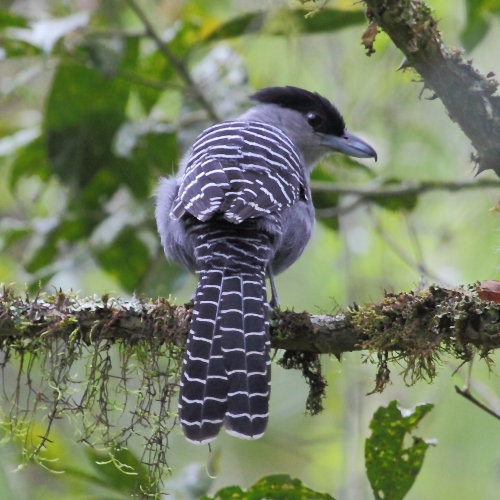
Ferruginous Antbird
Drymophila ferruginea
Order: Passeriformes / Family: Thamnophilidae

Wikimedia Commons
About the Ferruginous Antbird
The Ferruginous Antbird (Drymophila ferruginea) is an enchanting resident of the Atlantic Forest, a biodiversity hotspot located primarily in southeastern Brazil. This bird plays a significant ecological role in the forest's understory, contributing to the ecosystem's health by managing insect populations. As a member of the Thamnophilidae family, it shares the company's dynamic and vocal antbirds, known for their intricate calls and territorial behaviors. The Ferruginous Antbird's presence signifies the health of its habitat, as it prefers undisturbed, dense forests with rich leaf litter, where it can forage and nest.
This bird is significant not only for its contributions to the ecosystem but also for its indicator status. It thrives in regions with high levels of biodiversity, such as the Serra do Mar mountain range and areas near Rio de Janeiro and São Paulo. Its presence-or absence-can signal changes in forest health due to deforestation and habitat fragmentation. The Atlantic Forest, once vast, has been reduced significantly, making the conservation of species like the Ferruginous Antbird crucial.
Throughout the year, the Ferruginous Antbird remains largely sedentary, moving only within a limited range to meet its ecological needs. During the wet season, it becomes more visible as it engages in breeding activities and territorial displays. In contrast, the dry season sees it relying heavily on the resources of the dense forest floor, where it hunts for insects and other invertebrates. This seasonal behavior underscores its adaptability and the importance of conserving its habitat.
The Ferruginous Antbird belongs to the family Thamnophilidae, within the order Passeriformes. These birds typically live average 4-5 years, with some living up to 7 years..
How to Identify a Ferruginous Antbird
Identifying the Ferruginous Antbird involves observing its distinctive rusty-brown plumage that covers most of its body, save for a striking white throat and belly. The adult male features a more intense coloration, with the rust hues extending across its back and wings, making it stand out among the forest's greenery. In contrast, females and juveniles show a slightly duller tone, with more subdued browns and grays that blend seamlessly into the underbrush.
One might confuse the Ferruginous Antbird with other antbirds, such as the Rufous-capped Antthrush or the White-shouldered Fire-eye, but the Ferruginous Antbird can be distinguished by its unique coloring and the absence of prominent wing bars. Its flight silhouette is compact and low-flying, often hugging the contours of the forest floor. It exhibits a skulking posture when perched, often keeping close to the ground or hidden among dense foliage.
The Ferruginous Antbird's behavior is another key identification factor. Known for its territorial vocalizations, it often reveals itself through its calls rather than visual sightings. Observers should listen for its characteristic song when attempting to distinguish it from other species sharing its habitat.
Having trouble telling birds apart? Upload a photo to our bird identification tool for an instant species match.
Ferruginous Antbird Habitat and Range
Preferred Habitat
The Ferruginous Antbird is intimately associated with the Atlantic Forest's dense, humid undergrowth. This habitat type is characterized by heavy leaf litter, providing ample foraging opportunities. Its preferred elevation ranges from sea level to approximately 1,200 meters, often in areas with a complex vertical structure that supports a variety of plant and animal life.
While predominantly a forest dweller, it occasionally ventures into secondary forests and regenerating areas, though its density decreases in these less optimal habitats. Unlike some other avian species, the Ferruginous Antbird does not typically inhabit urban environments, preferring the quiet and shelter of undisturbed forest areas. Seasonal changes have little effect on its habitat preference, as it remains a year-round resident of these lush areas.
Geographic Range
The range of the Ferruginous Antbird is largely confined to Brazil, particularly within the Atlantic Forest, which extends along the eastern coast from Bahia to Rio Grande do Sul. Within this range, the bird inhabits regions that include the Serra do Mar and Serra da Mantiqueira, known for their rich biodiversity and abundance of endemic species.
Due to its reliance on specific forest conditions, the Ferruginous Antbird does not migrate long distances, maintaining a consistent presence throughout its range. Populations are densest in well-preserved tracts of the Atlantic Forest, where human impact is minimal. These areas serve as vital strongholds for the species, supporting its survival amid deforestation and habitat fragmentation.
Want to know which birds visit your area? Browse our backyard birds by location guides for region-specific species lists.
What Does the Ferruginous Antbird Eat?
The Ferruginous Antbird primarily feeds on insects and other small invertebrates found within the leaf litter of the forest floor. Its diet includes ants, beetles, spiders, and occasionally small vertebrates such as lizards. The bird employs a methodical foraging technique, using its bill to probe and flick through leaves, uncovering hidden prey.
During the wet season, when insect activity peaks, the Ferruginous Antbird's diet becomes more varied, incorporating different invertebrates that emerge with the rains. In contrast, the dry season demands more selective foraging, with the bird relying heavily on its ability to locate prey within the limited available moisture. This dietary adaptability ensures its survival through various seasonal changes, maintaining its role as a critical insect predator within its ecosystem.
Ferruginous Antbird Behavior and Social Structure
The Ferruginous Antbird exhibits a complex set of behaviors, driven largely by its territorial nature. It often pairs monogamously, with both mates fiercely defending their territory through vocalizations and displays. Territorial disputes may involve aggressive posturing and vocal duels with rivals, reinforcing boundaries within the dense forest.
Socially, the Ferruginous Antbird tends to be solitary or found in pairs, rarely forming flocks. Its daily activities revolve around foraging and maintaining its territory, with peak activity during the early morning and late afternoon. The bird remains vigilant against predators, employing alarm calls and evasive maneuvers when threatened.
During the breeding season, courtship displays become prominent as males showcase their plumage and vocal prowess to attract mates. These displays involve a combination of song and physical posturing, often performed within the nesting territory.
Ferruginous Antbird Nesting and Reproduction
The Ferruginous Antbird builds its nest close to the ground, often in dense vegetation. The nest is a cup-shaped structure made of twigs, leaves, and fibers, carefully concealed to protect against predators. It typically chooses sites with ample cover, such as thickets or shrubs, providing a safe environment for raising young.
Clutch sizes usually consist of two to three eggs, which both parents incubate over a period of approximately 14 to 16 days. Post-hatching, both male and female share in feeding and caring for the chicks, which fledge after about 10 to 12 days. The species may produce multiple broods in a single breeding season, depending on conditions.
Parental roles are well-defined, with both adults sharing the duties of feeding and defending the nest. This cooperative breeding strategy enhances the chances of offspring survival in their complex forest environment.
Ferruginous Antbird Sounds and Vocalizations
The Ferruginous Antbird's primary song is a rapid series of clear whistles, often described as musical yet monotonous, usually lasting several seconds. These notes, delivered in a steady rhythm, serve both to establish territory and attract mates. In addition to its song, the bird produces a variety of call notes, including sharp, aggressive chips used in territorial disputes or to ward off intruders.
Alarm calls are harsh and abrupt, signaling threats and helping to alert nearby individuals of potential danger. During the dawn chorus, the Ferruginous Antbird's song contributes to the vibrant acoustic landscape of the forest, although its calls are distinct enough to be identified among the cacophony.
Interesting Facts About the Ferruginous Antbird
- 1The Ferruginous Antbird's name 'ferruginea' comes from its rusty plumage, which is reminiscent of iron oxide.
- 2This bird spends most of its time in the understory, rarely venturing more than a few meters above the forest floor.
- 3Both male and female Ferruginous Antbirds participate equally in incubating eggs and feeding their young.
- 4Unlike many birds, the Ferruginous Antbird does not engage in long-distance migrations, remaining in the Atlantic Forest year-round.
- 5The Atlantic Forest, home to the Ferruginous Antbird, contains over 20,000 plant species, many of which are endemic.
- 6The Ferruginous Antbird's territory is often less than a hectare, demonstrating its need for dense and specific habitat.
- 7Despite its striking plumage, the Ferruginous Antbird relies heavily on vocalizations for communication and territory defense.
Ferruginous Antbird Conservation Status
Currently, the Ferruginous Antbird is classified as Least Concern by the IUCN. However, its population is declining due to ongoing habitat loss from deforestation and fragmentation of the Atlantic Forest. The primary threat to its survival is the destruction of its habitat for agriculture, logging, and urban development. Conservation efforts focus on preserving and restoring habitats within the Atlantic Forest, with particular emphasis on creating protected areas and wildlife corridors. Historical records indicate the species was once more widespread, but habitat degradation has confined it to isolated forest patches. Continued conservation actions are essential to prevent further declines and ensure the long-term viability of this species.