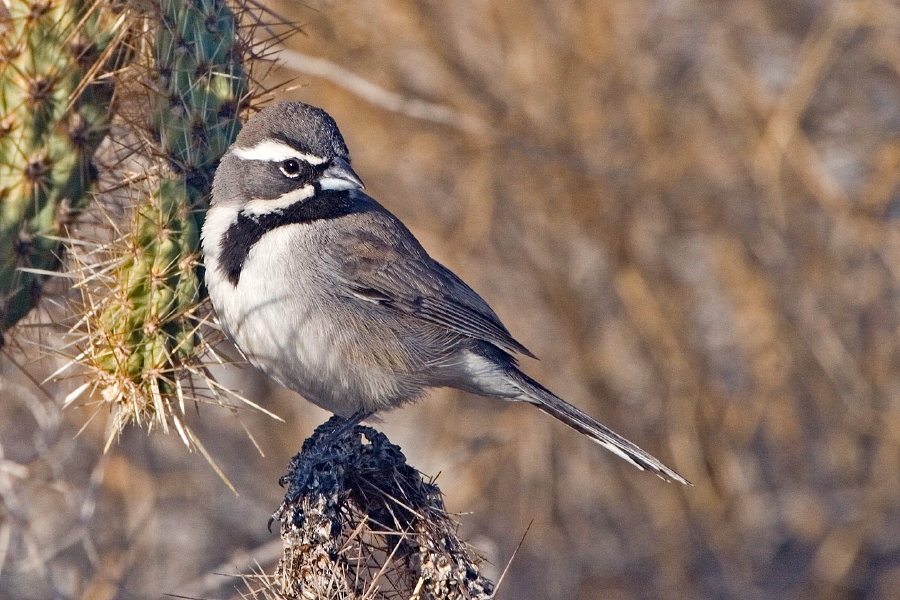
Five-striped Sparrow
Amphispiza quinquestriata
Order: Passeriformes / Family: Passerellidae

Wikimedia Commons
About the Five-striped Sparrow
The Five-striped Sparrow, known scientifically as Amphispiza quinquestriata, is a captivating bird native to the arid landscapes of the southwestern United States and northwestern Mexico. This medium-sized songbird belongs to the family Passerellidae, a group that encompasses a variety of sparrows with diverse ecological roles. The Five-striped Sparrow is particularly notable for its restricted range and unique habitat preferences, making it a species of interest among ornithologists and bird enthusiasts alike.
Amphispiza quinquestriata thrives in thorn-scrub and semi-desert environments, often found in rugged canyons and rocky slopes. These sparrows are most commonly associated with dense stands of thorny shrubs and cacti, where they can find both shelter and food. In the United States, their presence is largely confined to southeastern Arizona, with occasional sightings in extreme southwestern New Mexico. In Mexico, their range extends southward into the states of Sonora and Sinaloa.
The ecological significance of the Five-striped Sparrow lies in its role as both a seed disperser and an insect predator. By consuming a diet rich in seeds and insects, these sparrows help maintain the delicate balance of their ecosystem. Their seasonal behaviors are closely tied to the climate of their arid habitats. During the breeding season, which coincides with the summer monsoon rains, these birds become more vocal and visible as they establish territories and seek mates. Outside the breeding season, they may become more elusive, blending into the arid landscape as they forage quietly among the vegetation.
The Five-striped Sparrow is an important indicator species for the health of arid ecosystems. Its presence in a given area can signal a well-balanced environment, while its absence may indicate ecological disturbances. Conservation efforts aimed at preserving its habitat are crucial for maintaining the biodiversity of these unique desert regions.
The Five-striped Sparrow belongs to the family Passerellidae, within the order Passeriformes. These birds typically live average lifespan is 3-4 years with a maximum recorded lifespan of 8 years..
How to Identify a Five-striped Sparrow
The Five-striped Sparrow is easily recognized by its striking facial pattern. Adults exhibit a series of five distinct black stripes on a white face, which are complemented by a black throat and upper breast. The rest of the underparts are grayish, with the belly showing a lighter hue. The upperparts are predominantly brown, blending well with their arid surroundings. In terms of size, these sparrows measure approximately 14-15 centimeters in length with a wingspan of 21-23 centimeters.
Juvenile Five-striped Sparrows resemble adults but have a more muted coloration, with less pronounced facial striping and more of a brownish tone overall. The differences between males and females are subtle, with males typically displaying slightly bolder striping. When compared to similar species, the Five-striped Sparrow can be confused with the Black-throated Sparrow. However, the latter lacks the five-stripe pattern and possesses a white belly, which helps in differentiation.
In flight, the Five-striped Sparrow exhibits a characteristic silhouette with short, rounded wings and a slightly rounded tail, which it often flicks while perching. Their flight is typically short and direct, reflecting their preference for remaining close to dense cover. While perching, they frequently adopt an upright stance, making them easier to spot when singing or surveying their territory.
Having trouble telling birds apart? Upload a photo to our bird identification tool for an instant species match.
Five-striped Sparrow Habitat and Range
Preferred Habitat
The Five-striped Sparrow predominantly inhabits arid regions characterized by thorn-scrub and semi-desert vegetation. These birds favor landscapes with dense stands of thorny shrubs, such as acacia, and clusters of cacti. They are often found in rugged canyons and rocky slopes, where they can find both shelter and food resources.
In terms of elevation, the Five-striped Sparrow generally occupies areas ranging from 300 to 1500 meters above sea level. Seasonal habitat shifts are minimal, as these sparrows are non-migratory and remain within their range year-round. However, they may move to slightly different areas within their habitat depending on the availability of food and water.
The Five-striped Sparrow is not typically found in urban areas, as it requires the specific vegetation structure of its native arid environments to thrive. Instead, it is more commonly encountered in remote and rugged landscapes, where human presence is minimal and the natural habitat remains largely undisturbed.
Geographic Range
The breeding range of the Five-striped Sparrow is primarily concentrated in the southwestern United States and northwestern Mexico. In the United States, southeastern Arizona serves as the northernmost extent of their range, with occasional records in extreme southwestern New Mexico. These birds are more commonly found in Mexico, particularly in the states of Sonora and Sinaloa, where their population density is higher.
The Five-striped Sparrow is considered a non-migratory species, meaning it does not undertake long-distance migrations like some other sparrows. Instead, it remains within its breeding range throughout the year, making use of the same arid habitats. However, local movements may occur in response to seasonal changes in food availability and environmental conditions.
Despite its limited range, the Five-striped Sparrow is known to occur in specific population density hotspots, particularly in areas with optimal habitat conditions. These include regions with abundant thorn-scrub vegetation and sufficient cover from predators. The sparrow's presence in such areas is an indicator of suitable habitat quality, highlighting the importance of conservation efforts in these regions.
Want to know which birds visit your area? Browse our backyard birds by location guides for region-specific species lists.
What Does the Five-striped Sparrow Eat?
The diet of the Five-striped Sparrow primarily consists of seeds and insects, reflecting its role as both a seed disperser and insect predator. During the breeding season, which coincides with the summer monsoon rains, these sparrows consume a higher proportion of insects. This dietary shift provides the necessary protein for raising their young.
The Five-striped Sparrow employs a variety of foraging techniques to capture its prey. It often searches for insects among the leaves and branches of shrubs, using a combination of visual cues and quick movements to catch its target. Seeds are typically gathered from the ground, with the sparrow using its bill to sift through debris and locate edible items.
Prey size varies depending on availability, but the sparrows generally target small to medium-sized insects such as beetles, grasshoppers, and caterpillars. Their feeding schedule is influenced by environmental conditions, with peak activity occurring in the cooler hours of the morning and late afternoon, when temperatures are more favorable for foraging.
Five-striped Sparrow Behavior and Social Structure
The Five-striped Sparrow exhibits a range of interesting behaviors that reflect its adaptation to arid environments. Socially, these sparrows are typically solitary or found in pairs, particularly during the breeding season when they establish and defend territories. This territorial behavior involves vocal displays, where males sing from prominent perches to assert dominance and attract mates.
Courtship displays are subtle but involve both visual and vocal components. Males often engage in song duets with females, strengthening pair bonds and facilitating coordination in nesting activities. These sparrows do not typically form large flocks, although they may be seen in small family groups outside of the breeding season.
In response to predators, the Five-striped Sparrow relies on its cryptic plumage and the dense cover of its habitat for protection. When threatened, it often remains motionless or retreats into thick vegetation. Daily activity patterns involve foraging during cooler periods and seeking shade during the hottest parts of the day, a behavior common among desert-adapted species.
Five-striped Sparrow Nesting and Reproduction
The nesting habits of the Five-striped Sparrow are well-suited to their arid habitat. They construct cup-shaped nests using a variety of materials, including grasses, twigs, and plant fibers. These nests are typically placed low in dense shrubs or cacti, providing both concealment from predators and protection from the harsh desert sun.
Clutch size generally consists of 2 to 4 eggs, which are incubated primarily by the female for about 12 to 14 days. During this period, the male plays a supportive role by defending the territory and providing food for the incubating female. Once the eggs hatch, both parents participate in feeding the chicks.
The fledging timeline for Five-striped Sparrows is relatively short, with young birds leaving the nest approximately 9 to 11 days after hatching. This rapid development is an adaptation to the unpredictable conditions of their environment. Typically, the sparrows raise one or two broods per year, depending on food availability and environmental conditions.
Five-striped Sparrow Sounds and Vocalizations
The Five-striped Sparrow is known for its distinctive song, which consists of a series of clear, melodious whistles and trills. The rhythm is steady, with each phrase lasting a few seconds and repeated in quick succession. The pitch is relatively consistent, creating a pleasant and recognizable tune that resonates across its arid habitat.
In addition to its primary song, the Five-striped Sparrow produces a variety of call notes, including sharp 'chip' sounds used for communication between mates and to signal alarm. These alarm calls become particularly prevalent when potential predators are nearby, serving as a warning to both the sparrow's mate and any nearby offspring.
During the dawn chorus, males are especially vocal, taking advantage of the calm morning air to broadcast their song over longer distances. This behavior is crucial for establishing and maintaining territories, as well as attracting potential mates. The sparrow's melodic song, combined with its distinctive call notes, makes it a standout presence in the quiet desert landscape.
Interesting Facts About the Five-striped Sparrow
- 1Despite its limited range, the Five-striped Sparrow exhibits remarkable adaptability to arid environments, thriving in areas with less than 300 mm of annual rainfall.
- 2The Five-striped Sparrow's song, often compared to that of a canary, is a delightful and surprising sound echoing through the desert canyons.
- 3These sparrows are known to form long-term monogamous pair bonds, with pairs often remaining together across multiple breeding seasons.
- 4Unlike many sparrows, the Five-striped Sparrow does not migrate, instead remaining in its arid habitat year-round, adapting to seasonal changes in food availability.
- 5The Five-striped Sparrow's distinctive five-stripe facial pattern serves as an effective camouflage among the shadows and vegetation of its rugged habitat.
- 6While primarily insectivorous during the breeding season, the Five-striped Sparrow's diet shifts to a more seed-based focus during the drier months.
- 7The species' preference for singing from elevated perches makes it easier to spot during the breeding season, despite its otherwise elusive nature.
Five-striped Sparrow Conservation Status
The Five-striped Sparrow is currently assessed as a species of Least Concern by the IUCN, indicating a relatively stable population trend. However, it faces several threats that could impact its long-term survival. Habitat loss due to agricultural expansion and urban development poses a significant risk, as these activities reduce the availability of suitable nesting and foraging areas. Conservation efforts for the Five-striped Sparrow focus on habitat preservation and management. Protecting the arid regions where these sparrows thrive is crucial, ensuring that key habitats remain intact and free from human disturbance. Additionally, research into the sparrow's ecological needs and population dynamics helps guide conservation strategies. Historically, the Five-striped Sparrow's population has experienced fluctuations, likely related to changes in climate and habitat conditions. Monitoring these trends is vital for anticipating potential declines and implementing timely conservation measures. By prioritizing habitat protection and addressing the impacts of human activities, conservationists aim to safeguard the future of this unique species.
Other Passerellidae Species


Birds Similar to the Five-striped Sparrow
These species are often confused with the Five-striped Sparrow due to similar appearance or overlapping range.