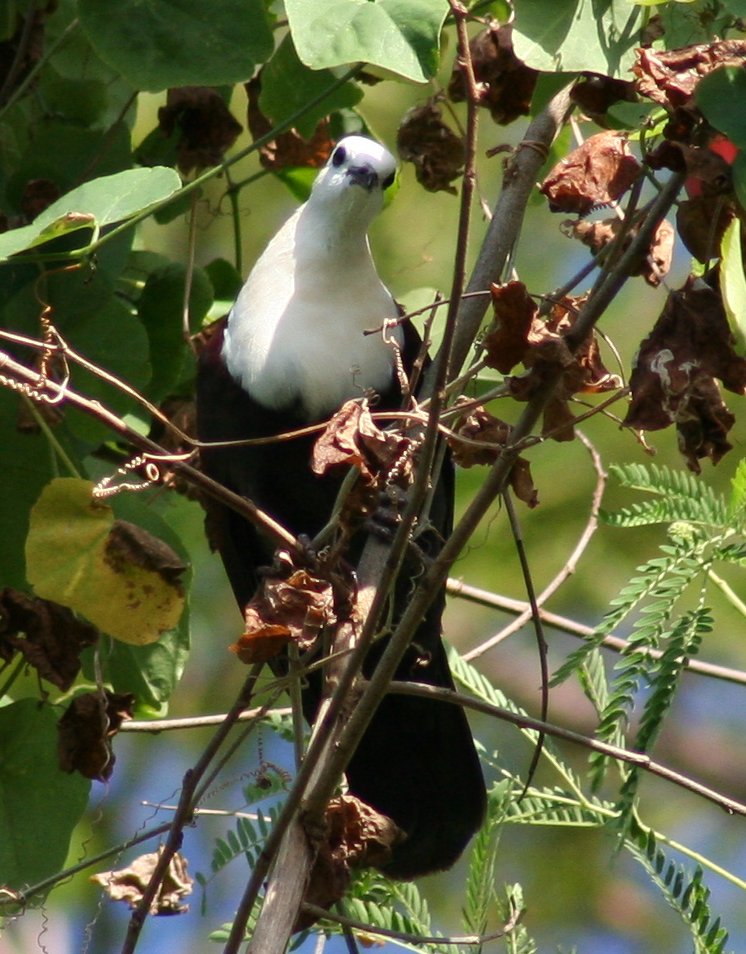
Friendly Ground-Dove
Pampusana stairi
Order: Columbiformes / Family: Columbidae

Wikimedia Commons
About the Friendly Ground-Dove
The Friendly Ground-Dove, scientifically named Pampusana stairi, is a small bird belonging to the Columbidae family. This species is endemic to the diverse island ecosystems of the South Pacific, including Fiji and Samoa. As its name suggests, the Friendly Ground-Dove is often seen foraging on the forest floor, exhibiting a demeanor that matches its gentle moniker. This dove plays a crucial ecological role as a seed disperser, contributing to the health and regeneration of its native forest environments. With a preference for subtropical and tropical moist lowland forests, the Friendly Ground-Dove thrives in areas that offer dense underbrush and ample cover. Seasonal behaviors include subtle shifts in habitat use, particularly during the breeding season when they seek out secluded areas for nesting. The Friendly Ground-Dove not only occupies a significant niche within its ecosystem but also serves as an indicator of forest health. As such, its presence or absence can provide valuable insights into the state of its habitat. Conservation efforts focus on habitat protection and restoration, critical for the survival of this species. The Friendly Ground-Dove's gentle cooing can often be heard in the early morning and late afternoon, a melodic reminder of the rich biodiversity these islands harbor. Observing this bird in its natural setting offers a glimpse into the intricate web of life that sustains island ecosystems.
The Friendly Ground-Dove belongs to the family Columbidae, within the order Columbiformes. These birds typically live 4-6 years with a maximum recorded of 9 years.
How to Identify a Friendly Ground-Dove
The Friendly Ground-Dove is characterized by its small, compact size and soft plumage. Adults display a predominantly brown coloration with subtle gray overtones, particularly on the head and nape. The wings exhibit a slight iridescence, providing a gentle contrast to the otherwise muted tones. Unlike many avian species, there is little sexual dimorphism in the Friendly Ground-Dove, with males and females appearing quite similar. Juveniles, however, can be identified by their slightly duller plumage and less pronounced iridescence. In flight, the Friendly Ground-Dove presents a swift, direct pattern with rapid wing beats, maintaining a low trajectory close to the ground. When perched, it often adopts a horizontal posture, blending seamlessly into its forest surroundings. While it may be confused with other ground-doves, such as the Pacific Ground-Dove, careful observation of its size and the specific iridescent wing markings can aid in accurate identification. The Friendly Ground-Dove's quiet demeanor and preference for ground foraging further distinguish it from other more arboreal doves.
Having trouble telling birds apart? Upload a photo to our bird identification tool for an instant species match.
Friendly Ground-Dove Habitat and Range
Preferred Habitat
The Friendly Ground-Dove inhabits subtropical and tropical moist lowland forests, favoring areas with dense understory vegetation. These habitats provide the necessary cover for foraging and nesting. Typically found at elevations from sea level up to 800 meters, this species shows adaptability within its preferred range. While primarily a denizen of rural forested areas, it occasionally ventures into more open spaces near forest edges. Seasonal habitat shifts are minimal, given the relatively stable climate of its island territories. Despite its adaptability, the Friendly Ground-Dove is less commonly found in urban environments, preferring the undisturbed tranquility of more secluded locales.
Geographic Range
The Friendly Ground-Dove is endemic to the islands of the South Pacific, with significant populations concentrated in Fiji and Samoa. Within these regions, it occupies both primary and secondary forests, demonstrating a degree of flexibility in habitat preference. The species is non-migratory, maintaining a year-round presence within its established range. Despite its restricted distribution, localized population densities can vary, with certain areas hosting higher concentrations, particularly where forest conditions remain optimal. Conservation efforts aim to preserve these hotspots, which are vital for the species' continued survival.
Want to know which birds visit your area? Browse our backyard birds by location guides for region-specific species lists.
What Does the Friendly Ground-Dove Eat?
The primary diet of the Friendly Ground-Dove consists of seeds and small fruits, which it forages from the forest floor. This diet is complemented by the occasional insect, particularly during the breeding season when protein needs increase. The dove employs a methodical foraging technique, using its keen eyesight to locate food items amidst the leaf litter. Its feeding schedule is largely diurnal, with peak activity occurring during the cooler hours of early morning and late afternoon. The size of its prey typically includes seeds up to 5 mm in diameter and various small invertebrates. Seasonal diet variations are minor, though shifts in fruit availability can influence foraging patterns.
Friendly Ground-Dove Behavior and Social Structure
The Friendly Ground-Dove exhibits a solitary or loosely social structure, often seen alone or in pairs rather than large flocks. Territoriality is evident during the breeding season, with males engaging in soft cooing calls to establish and defend nesting areas. Courtship displays are subtle, involving gentle bowing and slight wing flicking. Flocking patterns are most noticeable outside of the breeding season when small groups may gather in particularly fruitful areas. In response to predators, the Friendly Ground-Dove relies on its cryptic plumage and swift, low flight to evade capture. Daily activity patterns include periods of active foraging interspersed with restful intervals spent perched in the underbrush.
Friendly Ground-Dove Nesting and Reproduction
The nesting behavior of the Friendly Ground-Dove involves constructing simple nests made from twigs and grasses, typically located low in shrubs or small trees. Nest sites are chosen with care, favoring areas that offer concealment from predators. The typical clutch size consists of one to two eggs, which are incubated by both parents over a period of approximately 12 to 14 days. After hatching, the fledging period lasts an additional two to three weeks, during which both parents actively feed and protect the young. The species may produce one to two broods per year, depending on environmental conditions and food availability. Parental roles are shared, with both male and female doves participating in all aspects of raising the brood.
Friendly Ground-Dove Sounds and Vocalizations
The primary vocalization of the Friendly Ground-Dove is a soft, repetitive cooing that carries a soothing rhythm. This song typically consists of a series of low-pitched notes, often described as a gentle 'coo-coo-coo.' Call notes are similarly soft, used to maintain contact between pairs or signal alarm. During the dawn chorus, the dove's calls blend harmoniously with those of other forest birds, creating a rich tapestry of sound. Alarm calls, while infrequent, tend to be sharper and more insistent, serving to alert nearby individuals to potential threats.
Interesting Facts About the Friendly Ground-Dove
- 1The Friendly Ground-Dove is one of the few dove species that prefer walking over flying during foraging.
- 2Its gentle cooing is often one of the first bird calls heard at dawn in its forest habitats.
- 3Despite its name, the Friendly Ground-Dove can be quite elusive, adept at blending into the forest floor.
- 4The species plays a vital role in seed dispersal, aiding in the regeneration of native plant species.
- 5Studies have shown that the Friendly Ground-Dove can adapt to secondary forests, highlighting its ecological resilience.
- 6Its population is less impacted by urbanization compared to many other island bird species due to its forest preferences.
- 7The Friendly Ground-Dove's iridescent wing feathers can appear almost metallic in certain lighting conditions.
Friendly Ground-Dove Conservation Status
The IUCN currently lists the Friendly Ground-Dove as Near Threatened, with a stable population trend in some areas but declining in others due to habitat loss and degradation. Primary threats include deforestation and the introduction of invasive species, which compete for resources and increase predation risks. Conservation efforts focus on habitat preservation and restoration, alongside initiatives to control invasive species. Historically, population levels have fluctuated with changes in land use and forest cover. Continued conservation action is essential to ensure the long-term survival of this island species.
Other Columbidae Species


Birds Similar to the Friendly Ground-Dove
These species are often confused with the Friendly Ground-Dove due to similar appearance or overlapping range.