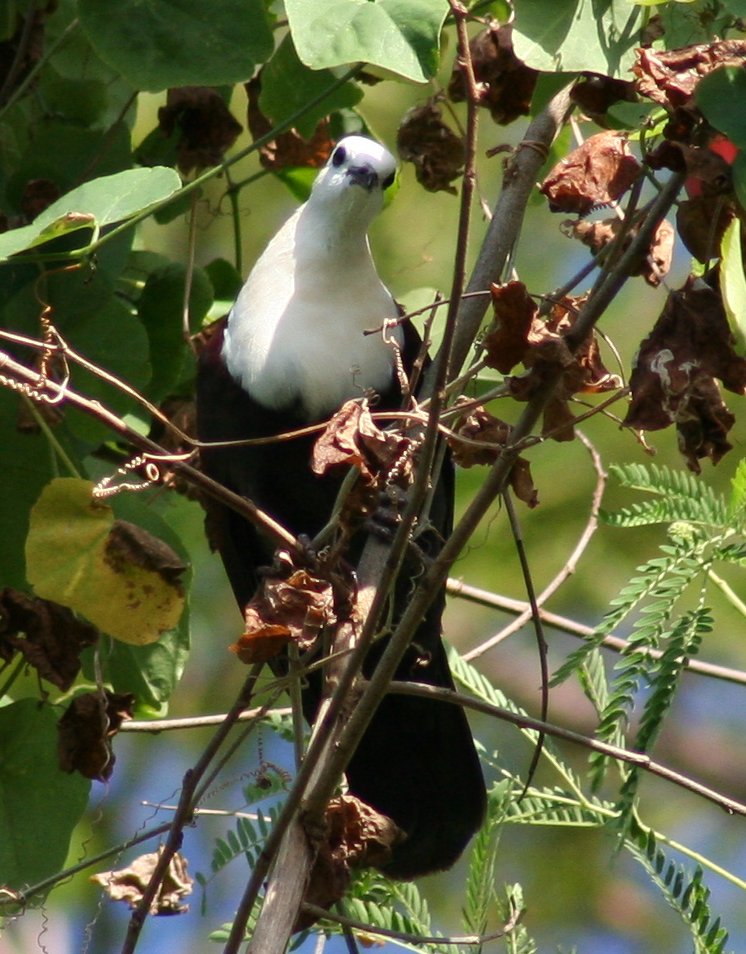
Santa Cruz Ground Dove
Pampusana sanctaecrucis
Order: Columbiformes / Family: Columbidae

Wikimedia Commons
About the Santa Cruz Ground Dove
The Santa Cruz Ground Dove, scientifically known as Pampusana sanctaecrucis, is a little-known member of the Columbidae family. It inhabits a limited range within the Santa Cruz Islands, part of the Solomon Islands archipelago in the South Pacific Ocean. This elusive dove plays a crucial role in its ecosystem, primarily through seed dispersal, contributing to the maintenance of forest biodiversity. The bird's presence is often an indicator of the health of its habitat, which consists primarily of secondary lowland forests and coastal woodlands. Despite its significance, the Santa Cruz Ground Dove faces challenges due to habitat loss and the introduction of invasive species.
The dove's ecological role extends beyond seed dispersal, as it also forms part of the prey base for local predators, thus contributing to the food web's balance. Its population is sparse and patchy, reflecting the fragmented nature of its habitat. The dove's preference for dense understory vegetation makes it particularly susceptible to habitat alteration. Seasonal variations in behavior are influenced by food availability, breeding cycles, and weather conditions. During the wet season, the Santa Cruz Ground Dove may venture into more open areas to forage, taking advantage of the abundance of food resources.
The conservation of the Santa Cruz Ground Dove is of paramount importance, as it is classified as Vulnerable on the IUCN Red List. Conservation efforts focus on habitat protection and restoration, along with controlling invasive species that threaten its survival. The dove's plight highlights the broader environmental challenges facing island ecosystems, where limited land area and unique biodiversity make conservation efforts both critical and challenging. As such, the Santa Cruz Ground Dove serves as a flagship species, drawing attention to the need for sustainable environmental practices in the Solomon Islands.
The Santa Cruz Ground Dove belongs to the family Columbidae, within the order Columbiformes. These birds typically live 5-7 years with a maximum recorded of 10 years.
How to Identify a Santa Cruz Ground Dove
The Santa Cruz Ground Dove is a medium-sized bird, measuring around 22-24 cm in length. Its plumage features a subtle blend of gray and brown tones, which help it blend into the forest floor, a crucial adaptation for a ground-dwelling species. The adult plumage is characterized by a predominantly brown back and wings, with a slightly lighter grayish-brown underbelly. The head and neck are a soft gray, with a delicate iridescence that may catch the light, particularly during the dawn and dusk hours when the dove is most active.
Juvenile Santa Cruz Ground Doves resemble adults but tend to have duller, less distinct coloration. The differences between males and females are minimal, making visual sex differentiation challenging. Both sexes share a rounded body shape and a short, square tail, contributing to their somewhat plump appearance. In flight, their wings appear broad and rounded, with a rapid, fluttering style typical of ground doves, contrasting with the stronger, more direct flight of larger doves and pigeons.
Identification can be complicated by potential confusion with other ground doves, particularly those within the same geographic region. However, the Santa Cruz Ground Dove can be distinguished by its unique combination of size, coloration, and habitat preference. When perched, it maintains a low, compact posture, often huddled close to the ground or on low branches, a behavior that aids in camouflage and predator evasion.
Having trouble telling birds apart? Upload a photo to our bird identification tool for an instant species match.
Santa Cruz Ground Dove Habitat and Range
Preferred Habitat
The Santa Cruz Ground Dove primarily inhabits the dense undergrowth of secondary lowland forests and coastal woodlands. These habitats provide the cover and food resources essential for its survival. The bird is typically found at elevations ranging from sea level to about 300 meters, though it may occasionally venture higher in search of food or nesting sites. Seasonal habitat shifts are minimal, but the dove may move to slightly more open areas during the wetter months, when food becomes more plentiful.
While the Santa Cruz Ground Dove is not typically associated with urban areas, its proximity to human settlements can lead to occasional sightings in gardens or small agricultural plots where forest remnants persist. The dove's reliance on forested environments makes it particularly vulnerable to deforestation and land conversion, underscoring the importance of habitat conservation efforts in the Solomon Islands.
Geographic Range
The Santa Cruz Ground Dove is endemic to the Santa Cruz Islands, a group within the Solomon Islands in the southwestern Pacific Ocean. Its primary range includes the larger islands such as Nendo, also known as Santa Cruz Island, where the bird inhabits the lowland forest areas. The dove's distribution is highly localized, with population densities varying across its range due to habitat availability and quality.
There is no evidence of long-distance migration in this species, although some seasonal movements within the islands may occur, driven by changes in food availability. The Santa Cruz Ground Dove's restricted range, combined with its specialized habitat requirements, contributes to its Vulnerable status. Conservation efforts must focus on safeguarding its existing habitats to ensure the survival of this unique species.
Want to know which birds visit your area? Browse our backyard birds by location guides for region-specific species lists.
What Does the Santa Cruz Ground Dove Eat?
The Santa Cruz Ground Dove's diet primarily consists of seeds, which it forages from the forest floor. These seeds come from a variety of native plants, indicating the dove's role in natural seed dispersal. During the wet season, when fruits and seeds are more abundant, the dove's diet becomes more diverse, including small fruits and occasionally insects, which provide essential proteins and nutrients.
Foraging behavior is typically solitary or in pairs, although small family groups may form during the breeding season. The dove uses its robust bill to sift through leaf litter and soil, effectively extracting seeds and insects. Feeding occurs primarily during the cooler parts of the day, such as early morning and late afternoon, reducing exposure to predators and harsh midday temperatures.
The size of the prey and seeds consumed by the Santa Cruz Ground Dove reflects its medium body size, with most items being small enough to be swallowed whole. This dietary flexibility allows the dove to exploit different food resources as they become available, highlighting its adaptability within its limited range.
Santa Cruz Ground Dove Behavior and Social Structure
The Santa Cruz Ground Dove exhibits a range of behaviors that reflect its adaptations to a ground-dwelling lifestyle. Social structure is relatively loose, with individuals often seen alone or in pairs, especially outside the breeding season. Territorial behavior is most pronounced during the breeding season, when males may engage in displays and vocalizations to defend their nesting area from rivals.
Courtship displays involve a series of coos and soft calls, accompanied by a gentle bowing motion and the presentation of twigs or small leaves, which are subsequently used in nest building. The Santa Cruz Ground Dove is generally non-aggressive, relying on its camouflage and stealth to avoid predators. When threatened, it prefers to walk or run away rather than fly, reserving flight as a last resort.
Flocking behavior is uncommon, but small groups may form during times of abundant food availability, providing increased vigilance against predators. Daily activity patterns revolve around feeding and resting, with peak activity occurring in the morning and late afternoon, aligning with the cooler temperatures and reduced predator activity.
Santa Cruz Ground Dove Nesting and Reproduction
The nesting habits of the Santa Cruz Ground Dove involve constructing a simple platform nest of twigs and leaves, often situated in low shrubs or small trees. Nest location is typically chosen for its dense cover, providing concealment from predators. The clutch size usually consists of one or two eggs, with both parents sharing incubation duties. The incubation period lasts approximately 14-16 days, after which the chicks hatch and are fed by regurgitation.
Fledging occurs around 18-20 days post-hatching, with the young becoming increasingly independent as they master foraging skills. Parental roles are shared, with both males and females participating in feeding and protecting the young. The Santa Cruz Ground Dove typically raises one brood per year, although conditions such as food availability and weather may influence this.
The dove's reproductive success is closely tied to habitat quality, highlighting the importance of preserving undisturbed areas for nesting. The presence of invasive species, such as rats and cats, poses significant threats to eggs and chicks, necessitating active management to protect nesting sites.
Santa Cruz Ground Dove Sounds and Vocalizations
The vocalizations of the Santa Cruz Ground Dove are characterized by a series of gentle, low-pitched coos that serve multiple functions, from attracting mates to establishing territory. These coos are rhythmically repetitive, often described as a 'coo-coo-coo' sequence, which carries well through the dense foliage of its habitat.
In addition to its primary song, the dove emits soft grunts and murmurs that are used in contact calls between mates or family members. Alarm calls are sharper and more abrupt, intended to alert others of potential danger. During the dawn chorus, the Santa Cruz Ground Dove's calls can be heard mingling with the songs of other forest inhabitants, creating a symphony of sound that defines the waking forest.
The dove's vocalizations are less complex than those of more vocal bird species, but their subtlety underscores the bird's reliance on camouflage and quietness as primary survival strategies.
Interesting Facts About the Santa Cruz Ground Dove
- 1The Santa Cruz Ground Dove is one of the few dove species endemic to the Solomon Islands, highlighting its unique evolutionary adaptation to island life.
- 2Despite its elusive nature, the Santa Cruz Ground Dove can occasionally be spotted in small agricultural areas, suggesting some adaptability to human-altered landscapes.
- 3The dove's diet includes a variety of seeds and small fruits, making it an important seed disperser for several native plant species.
- 4The Santa Cruz Ground Dove relies on its brown and gray plumage as camouflage, helping it avoid detection by both predators and human observers.
- 5Unlike many other dove species, the Santa Cruz Ground Dove tends to walk or run away from threats, only taking flight as a last resort.
- 6The dove's breeding season coincides with the wet season, taking advantage of increased food availability for raising chicks.
- 7Conservationists consider the Santa Cruz Ground Dove a flagship species for highlighting the importance of preserving island biodiversity.
Santa Cruz Ground Dove Conservation Status
The Santa Cruz Ground Dove is currently classified as Vulnerable by the IUCN, with its population trend showing a decline. Primary threats include habitat loss due to logging and agricultural expansion, as well as predation from invasive species like rats and cats. Conservation efforts focus on habitat protection and the control of invasive species to mitigate these threats. Efforts to safeguard remaining forest areas are critical, as these provide the essential resources needed for the dove's survival. Community engagement and education programs aim to raise awareness of the bird's plight and promote sustainable land use practices. Historical population changes have shown fluctuations in response to habitat alterations, making ongoing monitoring a priority to ensure effective conservation strategies. The Santa Cruz Ground Dove serves as an important indicator species, with its health reflecting the broader state of the island ecosystems. Addressing the challenges it faces requires a coordinated approach, balancing human needs with the preservation of biodiversity.
Other Columbidae Species


Birds Similar to the Santa Cruz Ground Dove
These species are often confused with the Santa Cruz Ground Dove due to similar appearance or overlapping range.