
Fujian Niltava
Niltava davidi
Order: Passeriformes / Family: Muscicapidae

Wikimedia Commons
About the Fujian Niltava
The Fujian Niltava (Niltava davidi), a member of the Muscicapidae family, is a captivating songbird native to the dense, subtropical forests of Southeast Asia. This small passerine is particularly noted for its vibrant plumage and melodic song, making it a favorite among birdwatchers and ornithologists alike. Primarily found in the provinces of Fujian and Zhejiang in China, the Fujian Niltava thrives in humid, densely forested environments, where it plays a crucial ecological role as both a predator of insects and a disperser of seeds. The ecological significance of the Fujian Niltava cannot be overstated, as it helps maintain the delicate balance of its forest ecosystem by managing insect populations and aiding in plant propagation. The bird's presence in these forests also serves as an indicator of environmental health, as it is sensitive to habitat degradation. As a resident or short-distance migrant, the Fujian Niltava exhibits some seasonal movement within its range, often descending to lower elevations during the winter months. This altitudinal migration allows the bird to exploit different food resources and habitats throughout the year, ensuring its survival in a changing environment. During the breeding season, which typically spans from April to July, the Fujian Niltava becomes more territorial, with males displaying increased vocal activity to establish and defend breeding territories. Outside of the breeding season, these birds may become more solitary or form small, loose flocks with other insectivorous birds, demonstrating a flexible social structure that adapts to seasonal resource availability. The Fujian Niltava's ability to adjust its behavior and habitat use seasonally highlights its adaptability, yet also underscores the importance of preserving diverse habitats to support its life cycle needs.
The Fujian Niltava belongs to the family Muscicapidae, within the order Passeriformes. These birds typically live typically 5-7 years, with some individuals living longer in the wild..
How to Identify a Fujian Niltava
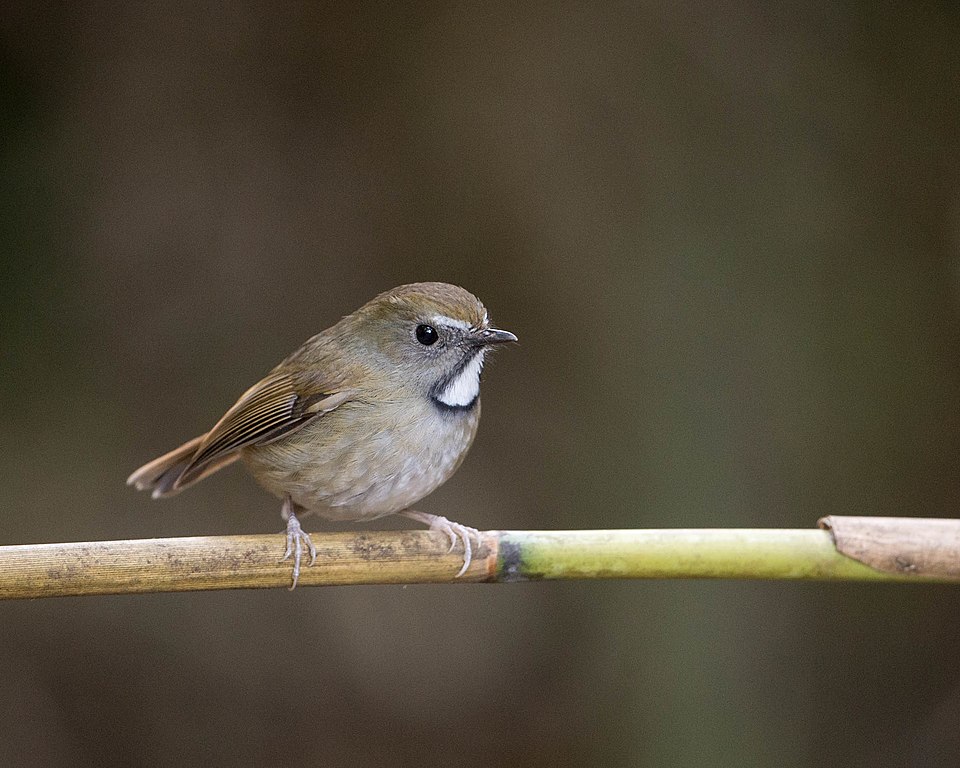
The Fujian Niltava is a strikingly beautiful bird, easily identified by its vibrant blue plumage, especially in males. The male sports a deep cobalt blue on its back and wings, with a contrasting black face mask that adds to its distinctive appearance. Its underparts are lighter, with a subtle gradient from blue to white near the belly. Females, on the other hand, are more subdued in coloration, featuring an olive-brown plumage with hints of blue on the wings and tail, providing camouflage in dense foliage. Juvenile Fujian Niltavas resemble females but are even duller, with more pronounced streaking and mottling that offer better protection from predators. In the field, the bird's silhouette is compact, with a relatively short tail and rounded wings, which makes it well-suited for swift maneuvering through forest canopies. When perched, the Fujian Niltava often adopts an upright posture, using its strong legs and feet to cling to branches as it scans for prey. While the Fujian Niltava's blue coloration is striking, it can occasionally be confused with other blue flycatchers in its range, such as the Large Niltava. However, the Fujian Niltava is smaller and has a more restricted range, aiding in accurate identification. Observers should pay close attention to the bird's vocalizations and habitat preferences, which can further assist in distinguishing it from similar species.
Having trouble telling birds apart? Upload a photo to our bird identification tool for an instant species match.
Fujian Niltava Habitat and Range
Preferred Habitat
The Fujian Niltava inhabits subtropical and tropical moist lowland forests, often favoring areas with dense canopy cover and abundant undergrowth. These forests provide an ideal environment for foraging and nesting, offering ample insect prey and protection from predators. Typically found at elevations ranging from 200 to 1,500 meters, the Fujian Niltava may adjust its habitat preferences seasonally, descending to lower elevations during colder months. This altitudinal shift ensures access to food resources and more favorable climatic conditions. While primarily a forest-dwelling species, the Fujian Niltava occasionally ventures into adjacent secondary growth and shrublands, demonstrating some adaptability to habitat disturbance. However, it is notably absent from urban areas, as its reliance on undisturbed forest environments limits its presence in more developed regions.
Geographic Range
The Fujian Niltava's range is relatively restricted, primarily confined to the southeastern provinces of China, including Fujian, Zhejiang, and parts of Jiangxi. Within this range, it occupies suitable forest habitats that provide the resources necessary for its survival. During the breeding season, which occurs from April to July, the Fujian Niltava establishes territories in these regions, taking advantage of the abundant food supply and nesting opportunities. In the winter months, some populations undertake short-distance migrations to lower elevations within their range, where milder conditions and available food sources support their survival. The Fujian Niltava's distribution is not as widespread as some other species in the genus, making it of particular interest to birdwatchers visiting these specific regions. Despite its limited range, local population densities can be relatively high in suitable habitats, with certain forested areas acting as hotspots for observing this striking bird.
Want to know which birds visit your area? Browse our backyard birds by location guides for region-specific species lists.
What Does the Fujian Niltava Eat?
The Fujian Niltava's diet primarily consists of insects and other small invertebrates, which it forages skillfully in the forest understory and canopy. The bird employs a sit-and-wait hunting strategy, perching quietly before darting out to capture prey with precision. Commonly consumed insects include beetles, caterpillars, and ants, which are abundant in its forested habitat. During the breeding season, the Fujian Niltava's dietary needs increase, prompting it to hunt more frequently to meet the demands of feeding its young. In addition to insects, the Fujian Niltava occasionally consumes small fruits and berries, particularly in the non-breeding season when insect availability declines. This opportunistic feeding behavior allows the bird to exploit a wider range of food resources, ensuring its survival throughout the year. The Fujian Niltava typically feeds during the early morning and late afternoon, taking advantage of peak insect activity times while avoiding the midday heat.
Fujian Niltava Behavior and Social Structure
The Fujian Niltava exhibits a range of intriguing behaviors, particularly during the breeding season when males become highly vocal and territorial. Male Fujian Niltavas engage in elaborate courtship displays, often singing from prominent perches to attract females and assert dominance over their territories. These displays involve a combination of song, flight, and posturing, showcasing the male's vibrant plumage and physical prowess. Outside the breeding season, the Fujian Niltava may become more solitary or form loose associations with other insectivorous birds, such as mixed-species foraging flocks, which provide mutual benefits in locating food and avoiding predators. The Fujian Niltava is generally diurnal, engaging in most of its foraging and social activities during daylight hours. Its daily routine includes periods of active hunting interspersed with rest and preening. When faced with potential threats, the Fujian Niltava employs a variety of anti-predator behaviors, such as remaining motionless to avoid detection or emitting alarm calls to alert nearby birds of danger. These behaviors are crucial for survival in the densely vegetated habitats where it resides.
Fujian Niltava Nesting and Reproduction
The Fujian Niltava constructs its nest in secluded locations within the dense foliage of its forest habitat, often choosing sites well-concealed from predators. Nests are typically situated in tree forks or on ledges, using a combination of moss, leaves, and fine twigs to create a compact, cup-shaped structure. The female primarily undertakes nest-building, while the male may assist by gathering materials. A typical clutch consists of 3-5 eggs, which the female incubates for approximately 14-16 days. During this period, the male plays a vital role in defending the territory and providing food for the incubating female. Once hatched, the chicks are altricial, requiring extensive parental care and feeding. Both parents participate in feeding and protecting the young, ensuring they receive a steady supply of insects and other small prey. Fledging occurs around 12-14 days after hatching, although the young may remain dependent on their parents for several weeks post-fledging. The Fujian Niltava typically raises one brood per year, although favorable conditions may occasionally permit a second brood.
Fujian Niltava Sounds and Vocalizations
The Fujian Niltava is known for its melodious and varied song, which plays a significant role in territory establishment and mate attraction. The primary song consists of a series of clear, flute-like notes delivered in a steady rhythm, often interspersed with trills and warbles that demonstrate the bird's vocal versatility. These songs can carry over long distances in the forest, helping to establish the singer's presence to rivals and potential mates. In addition to its song, the Fujian Niltava produces a range of call notes, including sharp 'chip' sounds used for communication between mates or to signal alarm. Alarm calls are typically more rapid and harsh, serving as a warning to nearby individuals of potential threats. The Fujian Niltava is most vocally active during the early morning and late afternoon, with a particularly pronounced dawn chorus where males compete in song to assert dominance and attract females.
Interesting Facts About the Fujian Niltava
- 1The Fujian Niltava's scientific name, Niltava davidi, honors a 19th-century French missionary and naturalist, Armand David.
- 2Males of the Fujian Niltava use their vibrant plumage to impressive effect during courtship displays, often in conjunction with their melodious song.
- 3The Fujian Niltava can adapt its diet seasonally, consuming more fruits and berries when insect prey is scarce.
- 4Despite its limited range, the Fujian Niltava is a vital indicator of forest health, as it is sensitive to environmental changes.
- 5The Fujian Niltava often participates in mixed-species foraging flocks, benefiting from the collective vigilance and foraging success of the group.
- 6The bird's striking blue coloration is due to structural coloration rather than pigments, a feature shared by many other blue-feathered birds.
- 7Although primarily insectivorous, the Fujian Niltava occasionally assists in seed dispersal through its fruit consumption.
Fujian Niltava Conservation Status
The Fujian Niltava currently holds a conservation status of Least Concern on the IUCN Red List, reflecting its relatively stable population trend within its limited range. However, habitat loss due to deforestation and land-use changes poses a significant threat to its long-term survival. Conservation efforts aimed at preserving and restoring forest habitats are essential to ensure the continued stability of Fujian Niltava populations. Protected areas and nature reserves in the bird's range, such as Wuyi Mountains National Park, provide vital refuges where it can thrive. Maintaining these habitats and mitigating the impacts of human activities, such as logging and agriculture, are crucial steps in safeguarding the future of the Fujian Niltava. Monitoring population trends and habitat quality will also contribute to informed conservation planning and action.
Other Muscicapidae Species


Birds Similar to the Fujian Niltava
These species are often confused with the Fujian Niltava due to similar appearance or overlapping range.

