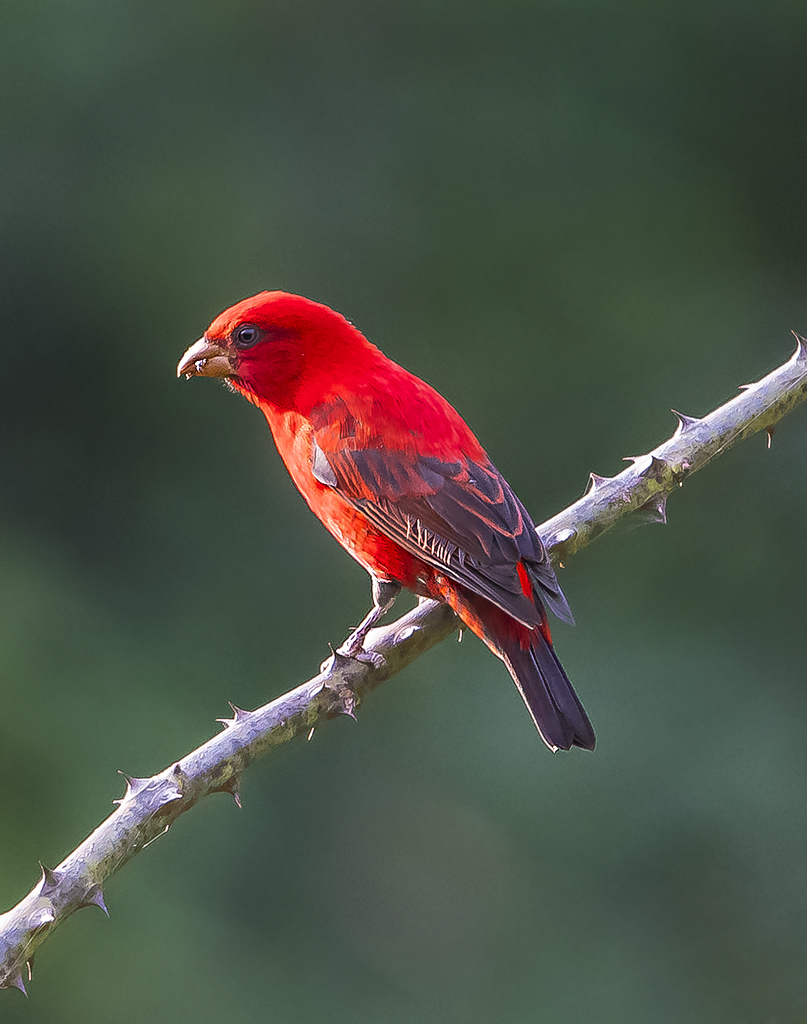
Gold-naped Finch
Pyrrhoplectes epauletta
Order: Passeriformes / Family: Fringillidae

Wikimedia Commons
About the Gold-naped Finch
The Gold-naped Finch (Pyrrhoplectes epauletta), a member of the Fringillidae family, is an intriguing bird notable for its vibrant plumage and adaptation to the montane ecosystems of the Himalayas and southeastern Asia. These birds are well-adapted to forested habitats, thriving in the dense cover provided by mixed oak and rhododendron forests. They can be found at elevations ranging from 1,500 to 3,400 meters, making them a quintessential resident of high-altitude environments. The Gold-naped Finch plays a vital ecological role as both a seed disperser and an insect predator, contributing to the balance and health of its ecosystem. Its presence is particularly significant in maintaining the plant diversity of its habitat through seed dispersal. During the breeding season, which typically spans from April to July, these finches exhibit behaviors that underscore their adaptability and resourcefulness. They construct nests using locally available materials, ensuring that their young have the best possible start in life. Outside of the breeding season, the Gold-naped Finch often joins mixed-species foraging flocks, which can include other finches and small passerines. This behavior enhances feeding efficiency and provides additional protection against predators. The bird's ecological significance extends beyond its role in seed dispersal, as it serves as an indicator of environmental health in its mountainous habitats. Changes in its population numbers can signal alterations in the ecosystem, making it a valuable species for monitoring ecological integrity.
The Gold-naped Finch belongs to the family Fringillidae, within the order Passeriformes. These birds typically live average 5 years, with a maximum recorded of 8 years.
How to Identify a Gold-naped Finch
Adult Gold-naped Finches display a striking combination of colors that make them relatively easy to identify. The males are particularly eye-catching, with a yellow patch on the nape that gives the species its name. Their plumage is predominantly black with a glossy sheen that may appear blue or green in certain lights. The wings and tail are marked with white, providing a stark contrast to the darker body colors. Females, although less vibrant, are equally distinctive with a more muted coloration, featuring olive-brown tones with hints of yellow on the nape and less pronounced wing markings. Juveniles resemble females but with even duller tones, lacking the distinct nape patch. When observing these birds, note the robust, conical bill adapted for seed consumption, and the stout body which contributes to their characteristic silhouette when perched. The flight of the Gold-naped Finch is strong and direct, often characterized by rapid wing beats interspersed with short glides. In comparison to similar species like the Yellow-bellied Flowerpecker, the Gold-naped Finch's larger size and distinctive coloration help in distinguishing it. Careful observation of their perching posture, often upright and alert, can also aid in their identification in the field.
Having trouble telling birds apart? Upload a photo to our bird identification tool for an instant species match.
Gold-naped Finch Habitat and Range
Preferred Habitat
The Gold-naped Finch thrives in montane forests, predominantly those that feature a mix of oak and rhododendron trees. These birds are typically found at elevations between 1,500 and 3,400 meters, where the dense foliage provides ample cover and foraging opportunities. In addition to mixed forests, they inhabit areas with bamboo thickets and open forest edges, adapting to the availability of food resources. Seasonal shifts in habitat use are not significant, as the species tends to remain in high-altitude regions year-round. However, minor altitudinal movements may occur in response to severe weather conditions, with finches descending to slightly lower elevations during particularly harsh winters. While primarily associated with rural and remote forested areas, the Gold-naped Finch can occasionally be found in less densely populated urban fringes that offer suitable habitat. The bird's reliance on forested environments underscores the importance of preserving these habitats to maintain its populations.
Geographic Range
The Gold-naped Finch's range is primarily restricted to the Himalayan region, extending into parts of southeastern Asia. They are resident breeders in countries such as Nepal, Bhutan, northern India, and parts of southern China, particularly in the Yunnan province. These birds do not undertake long-distance migrations, but may engage in altitudinal movements based on seasonal weather patterns. In terms of population density, these finches are more commonly observed in regions with abundant forest cover and less human disturbance. The eastern Himalayas serve as a population hotspot, providing ideal habitat conditions for breeding and feeding. During the breeding season, their distribution becomes more localized as they establish territories within suitable forested areas. While they are not considered migratory, the finches may move to lower altitudes during times of extreme cold, ensuring their survival in the challenging montane climate.
Want to know which birds visit your area? Browse our backyard birds by location guides for region-specific species lists.
What Does the Gold-naped Finch Eat?
Gold-naped Finches have a diverse diet that primarily consists of seeds, supplemented by insects, particularly during the breeding season when protein is crucial for chick development. Their strong, conical bills are adept at cracking open seeds, allowing them to access the nutritious kernels inside. They show a preference for seeds from various forest trees, including oak and rhododendron, as well as seeds from grasses and shrubs found within their habitat. Insects such as caterpillars and beetles become a significant part of their diet during the warmer months, providing essential nutrients for both adults and their offspring. The finches engage in an active foraging technique, often seen hopping along branches and the forest floor in search of food. They exhibit a flexible feeding schedule, adjusting their activity based on food availability and environmental conditions. The ability to exploit a variety of food sources underscores their adaptability in the dynamic montane ecosystem.
Gold-naped Finch Behavior and Social Structure
The Gold-naped Finch exhibits a range of behaviors that reflect its adaptability and social nature. During the breeding season, these finches become territorial, with males often engaging in vocal displays to establish and defend their territories. Courtship displays involve both vocalizations and physical displays, where the male puffs up his plumage to appear larger and more attractive to potential mates. Outside of the breeding season, the Gold-naped Finch often participates in mixed-species flocks, which can include other finches and small passerines. This flocking behavior enhances feeding efficiency and provides increased protection against predators. These finches are diurnal, with peak activity occurring during the early morning and late afternoon. Their response to predators is typically a combination of alarm calls and evasive flight, seeking cover in dense foliage. The social structure of the flocks is relatively loose, with individuals maintaining some degree of independence within the group. Despite their social tendencies, Gold-naped Finches exhibit a strong pair bond during the breeding season, indicating a level of monogamy that aids in successful reproduction.
Gold-naped Finch Nesting and Reproduction
Gold-naped Finches build cup-shaped nests using a variety of natural materials, including grass, twigs, and moss, often lined with softer materials such as feathers or plant down. These nests are typically constructed in the fork of a tree or shrub, providing both support and concealment. Preferred nesting sites are often located at mid-canopy level, offering a balance between accessibility and protection from predators. The clutch size usually ranges from two to four eggs, which are pale blue with fine markings. The incubation period lasts about 12 to 14 days, with both parents sharing the responsibility of keeping the eggs warm. After hatching, the young are altricial, requiring extensive parental care. The fledging period occurs approximately two to three weeks post-hatching, during which both parents continue to feed and protect the young. Gold-naped Finches typically have one brood per year, although in favorable conditions, a second brood may occur. Parental roles are well-defined, with both male and female participating actively in all aspects of raising the young.
Gold-naped Finch Sounds and Vocalizations
The Gold-naped Finch's primary song is a melodious sequence of clear, high-pitched notes that carry well through the dense forest. This song serves both as a territorial marker and as part of courtship displays. The rhythm is generally consistent, with slight variations that can indicate individual identity or mood. Their call notes are sharp and metallic, often used to maintain contact with flock members or as an alarm signal. During the dawn chorus, their songs contribute to the overall symphony of forest sounds, often starting before first light and continuing into the early morning. The alarm call is a harsh, repeated 'chip' sound, distinct from their more musical song, providing an effective warning of potential threats. This vocal repertoire is crucial for communication among individuals, particularly in the dense habitats they occupy.
Interesting Facts About the Gold-naped Finch
- 1The Gold-naped Finch's vivid plumage can appear to change color slightly depending on how light hits it, creating a shimmering effect.
- 2Although primarily seed eaters, Gold-naped Finches play a crucial role in controlling insect populations during their breeding season.
- 3They are known to join mixed-species flocks, which can include up to 30 different bird species, enhancing their foraging success.
- 4The Gold-naped Finch has a relatively small range compared to some other finch species, emphasizing the importance of its specific habitat.
- 5This bird's strong bill is not only adapted for seed cracking but also provides a vital tool for nest construction and maintenance.
Gold-naped Finch Conservation Status
Currently, the Gold-naped Finch is listed as Least Concern by the IUCN, with populations considered stable across its range. However, habitat destruction due to deforestation and land conversion poses a significant threat to their habitats. Conservation efforts are focused on preserving the montane forests that are critical to their survival. Protected areas within the Himalayas and southeastern Asia play a crucial role in maintaining suitable environments for these finches. Despite historical fluctuations in population due to habitat changes, recent trends indicate a stable population, benefiting from increased awareness and conservation actions targeting forest conservation. Continued monitoring and habitat protection will be essential to ensure the ongoing survival of the Gold-naped Finch.
Other Fringillidae Species


Birds Similar to the Gold-naped Finch
These species are often confused with the Gold-naped Finch due to similar appearance or overlapping range.