
Scarlet Finch
Carpodacus sipahi
Order: Passeriformes / Family: Fringillidae
Wikimedia Commons
About the Scarlet Finch
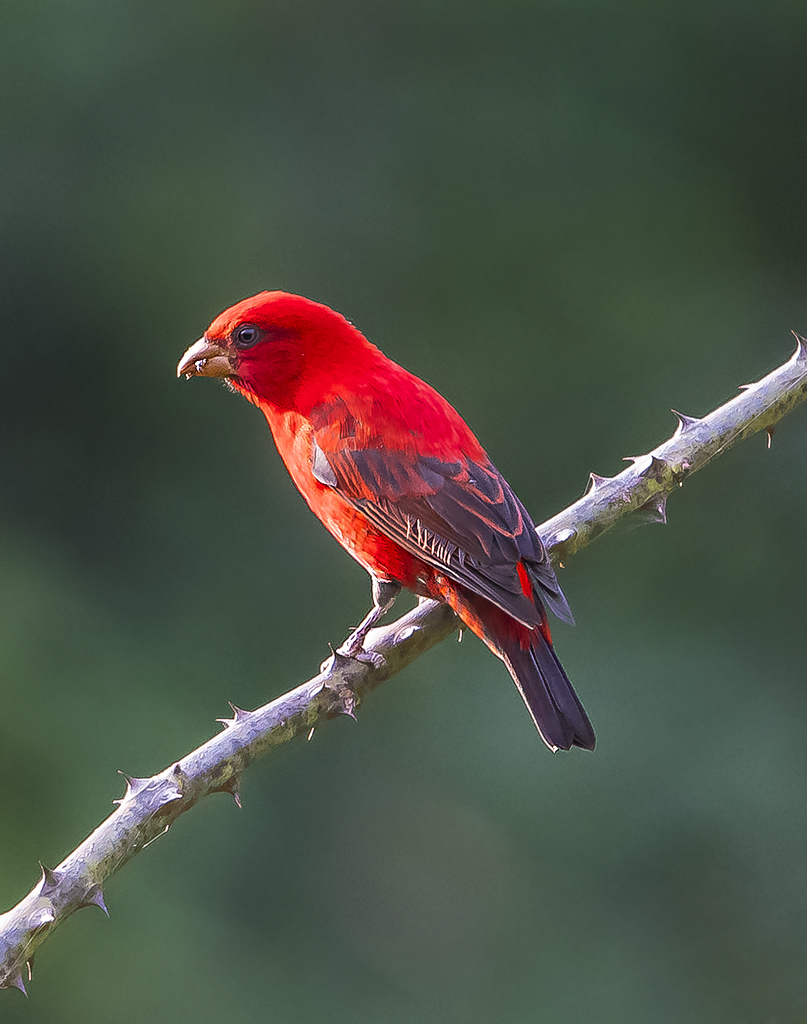
The Scarlet Finch (Carpodacus sipahi) is an enchanting bird that inhabits the temperate and subtropical forests of the Himalayas and surrounding regions. This species is significant not only for its vibrant plumage but also for its role in the ecosystem as a seed disperser and insect controller. Males exhibit a stunning scarlet color that is nearly impossible to miss, while females and juveniles possess a more subdued olive-brown hue, which provides excellent camouflage against the forest backdrop.
Typically found at elevations ranging from 1,500 to 3,600 meters, the Scarlet Finch thrives in the rich biodiversity of Himalayan forests, where it can forage efficiently among thick foliage. It is found across a range of countries including Nepal, Bhutan, and parts of India and Myanmar. These regions offer an array of mixed woodlands and rhododendron forests that this finch prefers.
Scarlet Finches are not just visually striking; they play a crucial ecological role, particularly during the breeding season when their foraging habits help control insect populations, benefiting plant communities. During the winter months, they descend to lower elevations, adapting to the seasonal food availability and climate. Their ability to shift habitats seasonally highlights their adaptability and resilience in the face of environmental changes.
The Scarlet Finch belongs to the family Fringillidae, within the order Passeriformes. These birds typically live average 5-7 years, with a maximum recorded of 9 years..
How to Identify a Scarlet Finch
Adult male Scarlet Finches are distinguished by their vibrant scarlet plumage covering most of their body, contrasted by darker wings and tail. The beak is stout and conical, characteristic of the Fringillidae family, well-suited for seed consumption. Females and juveniles, however, display an olive-brown coloration with streaked underparts, which serves as an excellent camouflage against predators.
When identifying Scarlet Finches, one should note the subtle differences in plumage between the sexes and age groups. The males' vivid red hue is unmistakable and often serves as the primary field mark. In contrast, females can be confused with similar finch species like the Brown Bullfinch, but the Scarlet Finch generally has a more robust beak and a distinctive posture.
In flight, the Scarlet Finch shows a characteristic undulating pattern, typical of finches, with rapid wing beats followed by gliding. Perched, they maintain an upright posture, often seen in the upper canopy, making their red plumage visible against the green foliage. These traits, combined with their unique coloration, make them relatively easy to identify once their behavior and habitat are known.
Having trouble telling birds apart? Upload a photo to our bird identification tool for an instant species match.
Scarlet Finch Habitat and Range
Preferred Habitat
Scarlet Finches predominantly inhabit the temperate and subtropical montane forests of the Himalayas. They prefer dense forests, particularly those with a rich mix of coniferous and broadleaf trees, such as rhododendron and oak. These environments provide ample food resources and nesting sites.
Typically found at elevations between 1,500 to 3,600 meters, they may move to slightly lower elevations during the winter months to escape the harsher conditions of higher altitudes. This altitudinal migration ensures they remain within forested areas where food and shelter are available year-round.
While primarily forest dwellers, Scarlet Finches occasionally venture into shrubby clearings and forest edges, especially during feeding. Despite their adaptability, they are rarely found in urban or heavily agricultural areas, indicating a preference for more undisturbed habitats.
Geographic Range
The Scarlet Finch's range spans several countries in Asia, particularly within the Himalayas. They are predominantly found in Nepal, Bhutan, and northern India, extending into parts of Myanmar and Tibet. These regions provide the dense forests and temperate conditions that the Scarlet Finch requires.
During the breeding season, they are typically found at higher elevations, around 2,400 to 3,600 meters, taking advantage of the cooler temperatures and abundant resources. As winter approaches, they may migrate to lower elevations, around 1,500 to 2,000 meters, where conditions are milder and food remains accessible.
Population density hotspots include the forested areas of eastern Nepal and Bhutan, where they are relatively common. However, their presence becomes sparser as one moves towards the western and southern edges of their range, where suitable habitats become less frequent.
Want to know which birds visit your area? Browse our backyard birds by location guides for region-specific species lists.
What Does the Scarlet Finch Eat?
Scarlet Finches primarily feed on seeds, which they deftly extract with their strong, conical bills. Their diet shifts seasonally, with insects also forming a significant part during the breeding season. Caterpillars and beetles are among their preferred insect prey, providing essential protein for growing chicks.
Foraging primarily occurs in the upper canopy, where they pluck seeds and insects from foliage. They exhibit a dexterous feeding technique, using their bill to manipulate and crack open seeds with precision. During winter, their diet becomes more seed-heavy, taking advantage of the abundant conifer seeds.
These finches typically feed in small groups, which can sometimes include other finch species. Their feeding schedule is dictated by daylight, with peak activity occurring in the early morning and late afternoon, coinciding with cooler temperatures and reduced predation risk.
Scarlet Finch Behavior and Social Structure
Scarlet Finches exhibit a mix of social and territorial behaviors. Outside the breeding season, they often form small flocks, which can include other finch species. This gregariousness aids in predator vigilance and foraging efficiency.
During the breeding season, these finches become more territorial. Males engage in display flights and vocalizations to establish dominance and attract mates. Their courtship displays involve fluttering flights and vocal duets with potential partners.
Daily activities include foraging, preening, and social interactions. They are most active during the cooler parts of the day, particularly at dawn and dusk. When threatened, Scarlet Finches typically flee to the dense canopy, relying on their cryptic behavior and speed to evade predators.
Scarlet Finch Nesting and Reproduction
Scarlet Finches construct cup-shaped nests using twigs, grasses, and moss. These nests are typically located in dense foliage, often in conifer trees, which offer protection from predators and harsh weather.
A typical clutch consists of 2 to 4 eggs, which are incubated by the female for approximately 12 to 14 days. During this period, the male provides food to the female. Once hatched, both parents participate in feeding the chicks, which fledge at about 14 to 16 days after hatching.
This species generally raises one brood per year, although in favorable conditions, a second brood may occur. Their nesting strategy reflects a balance between maximizing reproductive success and ensuring chick survival in their variable montane environment.
Scarlet Finch Sounds and Vocalizations
The Scarlet Finch's song is a melodious series of warbling notes, often delivered in a rapid succession. The pitch is moderately high, and the quality is clear and sweet, reminiscent of many finch songs.
Apart from their primary song, Scarlet Finches emit short 'chip' calls, which serve as contact calls within flocks. Alarm calls are more strident, serving to alert other birds of potential threats.
During the dawn chorus, males are particularly vocal, showcasing their songs to establish territory and attract mates. Their vocalizations, while not as complex as some other songbirds, are distinctive and an essential part of their behavioral repertoire.
Interesting Facts About the Scarlet Finch
- 1The Scarlet Finch's scientific name, Carpodacus sipahi, refers to the Hindi word 'Sipahi,' meaning soldier, likely due to its bright red plumage.
- 2Males and females of the Scarlet Finch exhibit marked sexual dimorphism, with males being bright red and females olive-brown.
- 3Scarlet Finches can be seen in mixed-species flocks, particularly during non-breeding seasons, enhancing their vigilance against predators.
- 4These birds engage in altitudinal migration, moving to lower elevations in winter, which is a common strategy among Himalayan bird species.
- 5Scarlet Finches have a strong affinity for rhododendron forests, which provide both food and nesting sites.
Scarlet Finch Conservation Status
The Scarlet Finch is currently listed as Least Concern by the IUCN, with stable population trends. However, habitat destruction, particularly deforestation, poses a significant threat to their long-term survival. Conservation efforts focus on preserving their forest habitats, which are increasingly threatened by logging and agricultural expansion. Protected areas within their range, such as national parks, play a crucial role in safeguarding their populations. Historically, the Scarlet Finch has maintained a stable population due to its adaptability and wide range. Continued conservation efforts are essential to mitigate habitat loss and ensure this vibrant species remains a fixture of Asian montane forests.
Other Fringillidae Species


Birds Similar to the Scarlet Finch
These species are often confused with the Scarlet Finch due to similar appearance or overlapping range.

