
Golden Bush-Robin
Tarsiger chrysaeus
Order: Passeriformes / Family: Muscicapidae

Wikimedia Commons
About the Golden Bush-Robin
The Golden Bush-Robin (Tarsiger chrysaeus) is a captivating songbird belonging to the family Muscicapidae. Renowned for its vivid golden-yellow plumage, this bird inhabits the dense, coniferous and broadleaf forests of the Himalayas, extending into regions of Southeast Asia. Found at elevations between 2,400 to 4,000 meters, the Golden Bush-Robin thrives in high-altitude environments rich with rhododendrons, bamboo, and mixed woodland. Its presence is most notable in countries like India, Nepal, Bhutan, and northern Myanmar.
This species plays a significant role in its ecosystem, contributing to seed dispersal and insect population control. Seasonal behaviors of the Golden Bush-Robin include vertical migrations, wherein it descends to lower altitudes during harsh winters. These movements are essential for its survival, allowing it access to food resources and more temperate climates.
The ecological role of the Golden Bush-Robin extends beyond its immediate environment, as it serves as an indicator of forest health. The species' reliance on pristine forest habitats underscores the importance of conserving these environments not only for the robins but also for the myriad other species sharing its habitat. As climate change and deforestation threaten these regions, the Golden Bush-Robin's adaptive behaviors and resilience become crucial to its continued existence.
The Golden Bush-Robin belongs to the family Muscicapidae, within the order Passeriformes. These birds typically live typically 5-9 years, with some individuals living up to 12 years..
How to Identify a Golden Bush-Robin
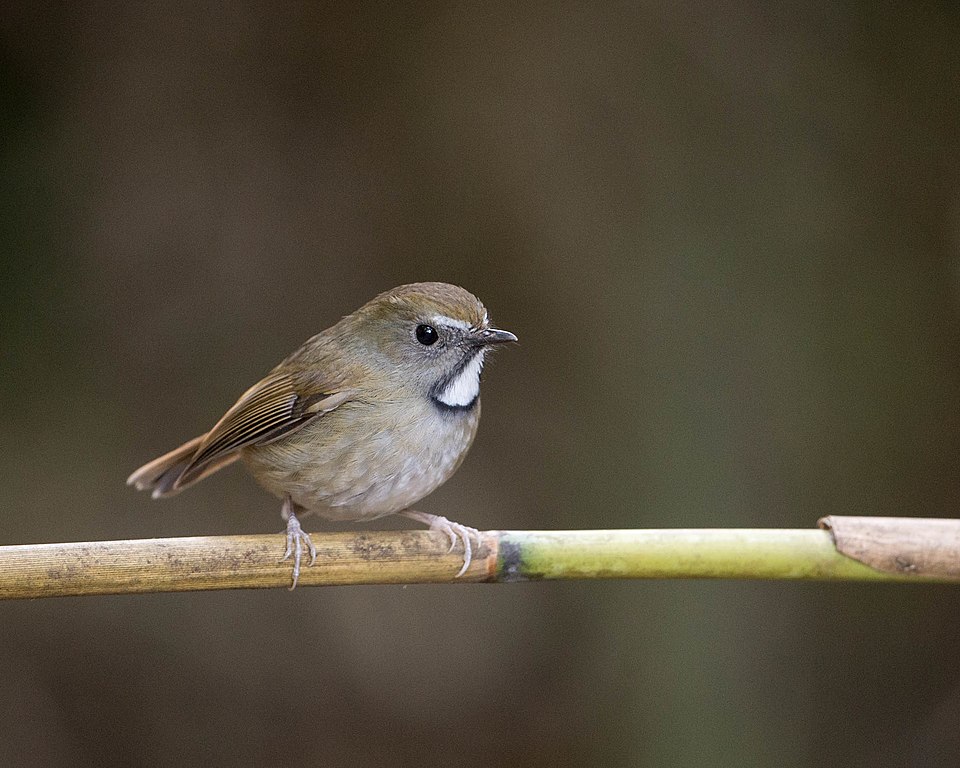
The Golden Bush-Robin is easily recognizable by its bright golden-yellow plumage and contrasting olive-brown upperparts. Adult males exhibit a more intense coloration compared to females, whose plumage tends toward a duller yellow. Juveniles, on the other hand, display a mottled brown appearance, gradually attaining their vibrant adult colors as they mature.
In terms of structure, the Golden Bush-Robin is a small bird, measuring approximately 14 to 15 centimeters in length with a wingspan of about 20 centimeters. Its compact body, rounded wings, and slightly forked tail are distinctive. The bird's flight is characterized by quick, agile movements, while its perching posture is upright, often with the tail slightly cocked.
Although there are similar species within the same range, such as the Rufous-breasted Bush-Robin, the Golden Bush-Robin's unique coloration minimizes confusion. Observers may, however, mistake it for the similar but less vibrant Yellow-bellied Flowerpecker in overlapping habitats, though the latter lacks the same olive-brown upperparts.
Having trouble telling birds apart? Upload a photo to our bird identification tool for an instant species match.
Golden Bush-Robin Habitat and Range
Preferred Habitat
The Golden Bush-Robin inhabits temperate and subtropical montane forests, particularly favoring areas with dense undergrowth and ample cover. Found primarily within the Himalayan region, it thrives in mixed forests of oak, rhododendron, and bamboo, which provide both food resources and nesting sites.
The species occupies elevations typically ranging from 2,400 to 4,000 meters. During the winter months, the Golden Bush-Robin descends to slightly lower elevations in search of milder conditions and food availability. While primarily a denizen of rural and less disturbed habitats, its presence in more fragmented landscapes is noted, indicating some level of adaptability.
In terms of urban versus rural presence, the Golden Bush-Robin is rarely observed in urban settings due to its preference for secluded forest habitats. However, it can occasionally be found near human settlements where suitable forest patches exist.
Geographic Range
The breeding range of the Golden Bush-Robin extends across the eastern Himalayas, with notable populations in northern India, Bhutan, and Nepal. During the breeding season, these birds can be found at higher elevations, making use of the dense montane forests.
In winter, the species undertakes altitudinal migrations, moving slightly downslope to avoid the harshest weather conditions. Wintering areas include lower montane zones within the same regions, as well as parts of northern Myanmar and Vietnam, where they find milder climates and food resources.
While the Golden Bush-Robin is generally considered non-migratory in the traditional sense, its altitudinal shifts are crucial for its survival. Population density hotspots include the forests of Sikkim and Arunachal Pradesh in India, which offer ideal conditions for both breeding and wintering.
Want to know which birds visit your area? Browse our backyard birds by location guides for region-specific species lists.
What Does the Golden Bush-Robin Eat?
The Golden Bush-Robin primarily feeds on insects, making it an integral player in controlling insect populations within its habitat. Its diet consists of beetles, caterpillars, and other arthropods, which it actively seeks among leaf litter and undergrowth.
During the breeding season, the demand for protein-rich food increases, prompting the bird to focus on larger prey items and sometimes supplementing its diet with berries and other small fruits. This dietary flexibility aids survival during periods when insect abundance fluctuates.
The Golden Bush-Robin employs a foraging technique known as 'gleaning,' where it meticulously picks prey from foliage and branches. Feeding typically occurs during daylight hours, with peak activity in the early morning and late afternoon when insect activity is heightened.
Golden Bush-Robin Behavior and Social Structure
Golden Bush-Robins exhibit a solitary or paired social structure, particularly during the breeding season when they become highly territorial. Males actively defend their territory through song and displays to deter rivals and attract mates.
Courtship involves elaborate displays, including wing and tail movements that highlight the male's vibrant plumage. Once paired, both the male and female engage in nest building and feeding of the young, though the division of labor sees females more involved in incubation.
Outside the breeding season, these robins may form loose associations but generally maintain a degree of independence. When faced with predators, such as raptors or snakes, they rely on alarm calls and swift, evasive flight to escape. Daily activities center around feeding and territory maintenance, with periods of increased vocalization during dawn and dusk.
Golden Bush-Robin Nesting and Reproduction
The Golden Bush-Robin constructs cup-shaped nests, often placed low in dense undergrowth or among the tangled roots of trees, providing concealment from predators. Nests are crafted from moss, leaves, and fine grasses, bound together with spider silk for added strength.
Clutch size typically ranges from two to four eggs, with incubation lasting about 14 days. The female primarily incubates the eggs, while the male provides food and occasionally assists in nest defense. Fledging occurs approximately 12 to 15 days after hatching, with the young remaining dependent on the parents for several weeks.
Golden Bush-Robins usually produce one brood per year, though favorable conditions may allow for a second. Successful nesting relies heavily on the availability of suitable habitats, emphasizing the importance of forest conservation.
Golden Bush-Robin Sounds and Vocalizations
The Golden Bush-Robin's song is a melodious series of clear whistles and trills, often delivered from a concealed perch. The rhythm is steady, with each phrase consisting of two to three syllables repeated in succession. Its calls include sharp 'chip' notes, used primarily for communication between mates or signaling alarm.
During the dawn chorus, the robin's song contributes to the cacophony, its sweet tones distinguishable amidst the forest symphony. Alarm calls are harsher and more abrupt, serving as a warning to nearby birds of potential threats.
The robin's vocalizations bear resemblance to those of other forest songbirds, yet its distinct tonal quality and patterning provide a reliable means of identification for experienced birders.
Interesting Facts About the Golden Bush-Robin
- 1Golden Bush-Robins can tolerate temperatures as low as -10°C, thanks to their dense plumage.
- 2These robins are known to travel over 1,000 meters vertically between summer and winter habitats.
- 3A Golden Bush-Robin's song can be heard over 100 meters away in dense forest, aiding territorial defense.
- 4Some populations exhibit partial migratory behavior, differing from the species' largely sedentary reputation.
- 5The Golden Bush-Robin is sometimes called the 'Himalayan Nightingale' due to its rich, melodious song.
- 6In some local cultures, the bird is believed to bring good luck, especially during the breeding season.
- 7Their nests are often lined with animal fur, providing insulation against cold mountain nights.
Golden Bush-Robin Conservation Status
The Golden Bush-Robin holds a status of Least Concern on the IUCN Red List, with populations considered stable across most of its range. However, primary threats include habitat loss due to deforestation and land conversion for agriculture and development. Conservation efforts focus on protecting and restoring forest habitats, with several regions implementing protected areas and national parks. These initiatives aim to safeguard not only the Golden Bush-Robin but also the diverse ecosystems it inhabits. Historically, population changes have mirrored the extent of habitat availability, with fluctuations occurring in response to environmental pressures. Continued vigilance and conservation action remain essential to ensure the species' long-term survival.
Other Muscicapidae Species


Birds Similar to the Golden Bush-Robin
These species are often confused with the Golden Bush-Robin due to similar appearance or overlapping range.

