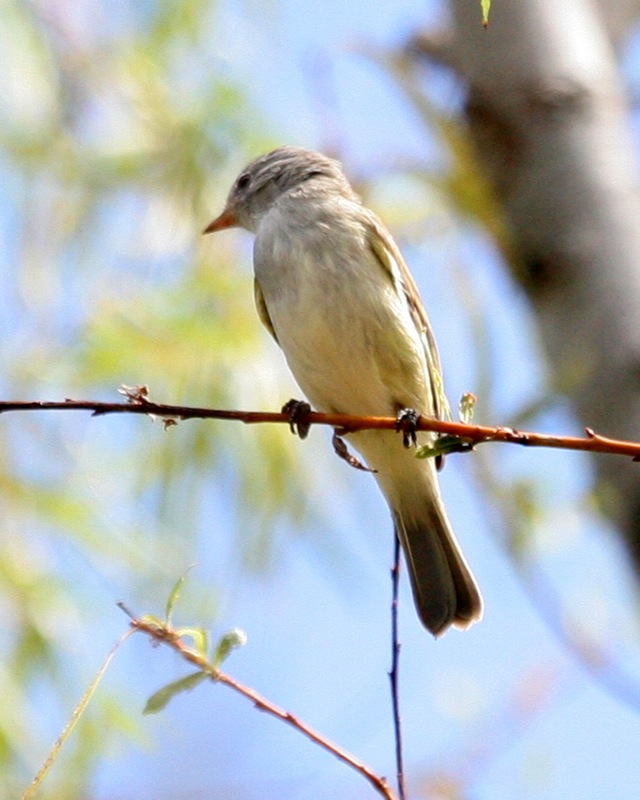
Gray-and-white Tyrannulet
Pseudelaenia leucospodia
Order: Passeriformes / Family: Tyrannidae

Wikimedia Commons
About the Gray-and-white Tyrannulet
The Gray-and-white Tyrannulet, Pseudelaenia leucospodia, belongs to the family Tyrannidae, which encompasses a diverse array of flycatchers. This small passerine bird is predominantly found in South American regions, specifically in arid and semi-arid areas. Its presence is most notable in countries such as Peru, Ecuador, and northern Chile, where it plays a crucial role in insect population control. Its preferred habitats include bushy areas with sparse tree coverage, commonly characterized by xerophytic vegetation. In the ecosystem, the Gray-and-white Tyrannulet serves both as a predator of insects and as prey for larger avian species, thereby maintaining ecological balance. The Gray-and-white Tyrannulet is active year-round, but it exhibits seasonal behavior changes, particularly during the breeding season. Its agile movements and acrobatic foraging techniques make it a dynamic participant in its habitat. The bird exhibits a clear preference for specific types of vegetation, often selecting areas with dense shrubs for nesting and roosting. During the breeding season, which typically occurs in the Southern Hemisphere's spring months, the Gray-and-white Tyrannulet becomes more vocal and territorial. Its calls are more frequent, serving both as a mating call and a territorial warning to other birds. Outside the breeding period, these birds may form loose flocks with other small insectivorous birds. Their constant activity and distinctive calls make them a noticeable presence in their native regions. As a species with a relatively stable population, the Gray-and-white Tyrannulet's conservation status is not currently of significant concern. However, habitat destruction and climate change pose potential future threats. Understanding their habitat preferences and behaviors is essential for any conservation efforts aimed at preserving these birds and their ecological niche.
The Gray-and-white Tyrannulet belongs to the family Tyrannidae, within the order Passeriformes. These birds typically live typically 4-6 years, with some individuals living up to 8 years..
How to Identify a Gray-and-white Tyrannulet
The Gray-and-white Tyrannulet is a small bird, measuring approximately 11 cm in length. Its plumage is primarily gray, with conspicuous white underparts that create a stark contrast. The wings and tail exhibit darker gray tones, with subtle white edging on the wing feathers. This bird's small size and active demeanor often make it challenging to spot, but its distinct coloration and quick, erratic movements provide helpful identification clues. In both male and female Gray-and-white Tyrannulets, the plumage is similar, making gender differentiation in the field difficult. Juveniles resemble adults but may display slightly duller plumage. When comparing against similar species, such as other tyrannulets, the Gray-and-white Tyrannulet's unique gray and white color pattern is a key distinguishing feature. In flight, this bird presents a compact silhouette with rapid wing beats, typical of small passerines. Perched, it often adopts an upright posture, which, combined with its color pattern, aids in quick identification.
Having trouble telling birds apart? Upload a photo to our bird identification tool for an instant species match.
Gray-and-white Tyrannulet Habitat and Range
Preferred Habitat
The Gray-and-white Tyrannulet thrives in arid and semi-arid habitats, often found in bushy areas with sparse tree coverage. In Peru and Ecuador, it is commonly associated with dry forests and scrublands, where cacti and acacia species dominate the landscape. This species prefers elevations ranging from sea level up to 2,500 meters, though it is most frequently observed at mid-level elevations. Its adaptability to these environments allows it to exploit a range of microhabitats, from low-lying shrubs to taller bushes. During wetter seasons, the Gray-and-white Tyrannulet may shift slightly into more verdant areas, though it generally avoids dense forests and urban environments. Its preference for arid and semi-arid habitats makes it less common in highly urbanized or heavily forested regions.
Geographic Range
The Gray-and-white Tyrannulet's range is confined to the western regions of South America. It is a resident bird in Peru, Ecuador, and the northern parts of Chile. Its breeding range is predominantly within these countries, where it remains year-round due to the stable climatic conditions. The bird does not exhibit significant migratory behavior, although minor local movements may occur in response to food availability and habitat conditions. Population density tends to be higher in areas where suitable arid scrubland habitats are abundant, such as the coastal regions of Peru. In contrast, its presence is less frequent in the Andean highlands and other densely forested areas. Despite being a non-migratory species, its range is relatively stable, with no significant expansion or contraction observed in recent years.
Want to know which birds visit your area? Browse our backyard birds by location guides for region-specific species lists.
What Does the Gray-and-white Tyrannulet Eat?
The Gray-and-white Tyrannulet primarily feeds on insects, which it captures through a variety of foraging techniques. It is an adept aerial insectivore, often seen executing quick sallies from perches to snatch flying insects mid-air. Its diet includes beetles, flies, and moths, with the occasional consumption of spiders and small arthropods. Seasonal diet variations occur, with a higher intake of flying insects during the warmer months when these prey are more abundant. The bird's feeding schedule shows peaks in activity during the early morning and late afternoon. While it predominantly hunts alone or in pairs, it occasionally joins mixed-species foraging flocks, enhancing its foraging efficiency.
Gray-and-white Tyrannulet Behavior and Social Structure
The Gray-and-white Tyrannulet is a solitary bird, though it forms pair bonds during the breeding season. Territorial behavior intensifies during this period, with males engaging in vocal displays to establish dominance and attract mates. Courtship involves both vocalizations and subtle displays of plumage. Outside of breeding, this species is generally non-aggressive, coexisting peacefully with other small insectivores. While not particularly social, the Gray-and-white Tyrannulet sometimes participates in mixed-species flocks, benefiting from increased foraging success and predator awareness. Its daily routine is diurnal, with periods of high activity during morning and late afternoon. The bird remains vigilant for predators, employing quick, erratic flight patterns to evade threats such as raptors.
Gray-and-white Tyrannulet Nesting and Reproduction
The Gray-and-white Tyrannulet constructs a cup-shaped nest using fine grasses and plant fibers. Nests are often strategically placed in the forks of shrubs or low trees, offering both concealment and a clear field of view. The typical clutch size ranges from 2 to 3 eggs, which are incubated by the female for about 14 days. Both parents partake in feeding the hatchlings, which fledge approximately 15-18 days post-hatching. Parental roles are clearly defined, with the male primarily guarding the territory while the female focuses on incubation and direct care of the young. This species typically raises one brood per year, though favorable conditions may lead to a second brood.
Gray-and-white Tyrannulet Sounds and Vocalizations
The Gray-and-white Tyrannulet's primary song is a series of sharp, high-pitched notes delivered in rapid succession. It is often described as a 'tsee-tsee-tsee' sequence, which is repeated incessantly during the breeding season. Call notes are shorter and used for communication between mates or signaling alarm. When disturbed, the tyrannulet emits a harsher, more urgent call. The dawn chorus features prominently in its vocal repertoire, with songs starting just before sunrise and serving both territorial and mating purposes.
Interesting Facts About the Gray-and-white Tyrannulet
- 1The Gray-and-white Tyrannulet is one of the few passerines that can be found at elevations up to 2,500 meters in arid regions.
- 2Despite its small size, measuring only around 11 cm, it has a significant predation impact on local insect populations.
- 3The species' vocalizations can be heard over 100 meters away, making it easier to locate despite its elusive nature.
- 4This tyrannulet often participates in mixed-species flocks, gaining safety and increased foraging opportunities.
- 5The Gray-and-white Tyrannulet exhibits a rare trait among tyrannulets: both parents actively participate in feeding the young.
- 6Its nesting strategy involves selecting forks of shrubs, providing both concealment and strategic vantage points.
- 7It can consume a wide range of insect sizes, from small flies to larger moths, showcasing its versatile foraging skills.
Gray-and-white Tyrannulet Conservation Status
Currently, the Gray-and-white Tyrannulet is listed as Least Concern on the IUCN Red List. Its population trend appears stable, albeit with localized fluctuations due to habitat changes. The primary threats include habitat destruction from agricultural expansion and climate change, which may alter the arid regions it inhabits. Conservation efforts focus on habitat protection and sustainable land-use practices. Historically, the bird's population has remained relatively constant, owing to its adaptability to arid environments and low human interference.
Other Tyrannidae Species


Birds Similar to the Gray-and-white Tyrannulet
These species are often confused with the Gray-and-white Tyrannulet due to similar appearance or overlapping range.