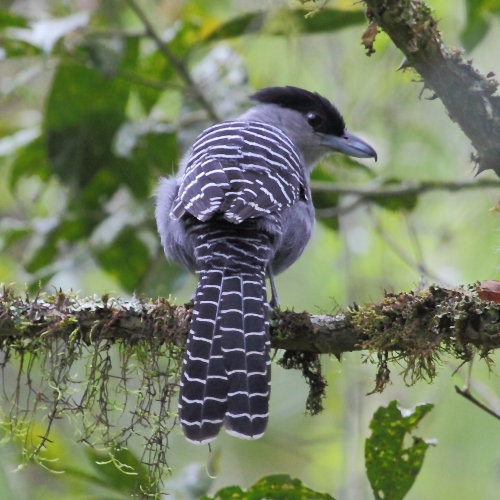
Gray Antwren
Myrmotherula menetriesii
Order: Passeriformes / Family: Thamnophilidae

Wikimedia Commons
About the Gray Antwren
The Gray Antwren, known scientifically as Myrmotherula menetriesii, is a small but intriguing bird that inhabits the dense undergrowth of tropical forests in South America. This species plays a vital role in the ecosystem as both a predator of small insects and a prey item for larger birds and mammals. With its widespread presence across the Amazon Basin, the Gray Antwren is an essential component of the biodiversity in regions such as northern Brazil, eastern Ecuador, and the lowland rainforests of Colombia and Peru. Adapted to the warm, humid environments of these areas, the Gray Antwren contributes to the complex food web by controlling insect populations, which in turn supports the health of the forest ecosystem.
This bird is particularly significant for its adaptability and resilience in its native habitat. The Gray Antwren's presence indicates a healthy, functioning forest ecosystem, as it thrives in environments that offer a rich diversity of insect life. Moreover, the Gray Antwren's reliance on continuous forest cover makes it a valuable indicator species for conservationists monitoring the health of tropical forests. Its subtle plumage and elusive behavior require keen observation skills from birders and researchers alike, adding an extra layer of intrigue to those studying the species.
Ecologically, the Gray Antwren serves as a link between various trophic levels, consuming insects and arthropods while providing sustenance for raptors and other predatory animals. During the breeding season, which typically coincides with the rainy season, the Gray Antwren becomes more vocally active as pairs establish territories and engage in courtship behaviors. Outside of the breeding season, these birds maintain their territory year-round, often foraging in mixed-species flocks to maximize feeding opportunities and reduce predation risk. This behavior highlights their role in the broader avian community, contributing to the dynamic interactions within the forest understory.
The Gray Antwren belongs to the family Thamnophilidae, within the order Passeriformes. These birds typically live average 3-4 years, with a maximum recorded of 6 years..
How to Identify a Gray Antwren
The Gray Antwren presents a modest but distinctive appearance, easily recognized once one becomes familiar with its key characteristics. Adult Gray Antwrens exhibit a mostly gray plumage, which serves as excellent camouflage in the dense foliage of their forest habitats. The males typically display slightly darker upperparts compared to females, who often have a paler and more uniform gray tone. Both sexes have a faint white wing bar, which can be a useful field mark when observing them in the wild.
Juvenile Gray Antwrens resemble the females but may exhibit a slightly more brownish tinge overall, which fades as they mature. This subtle coloration helps them blend into the forest understory, protecting them from potential predators. When observing these birds, it is crucial to note their small size, as they measure approximately 10 centimeters in length and weigh around 8 grams, placing them in the small size category among passerines.
In flight, the Gray Antwren displays rapid and agile movements, often flitting between branches and foliage in search of food. Their perching posture is typically horizontal, with a slightly cocked tail, a characteristic feature to watch for when identifying these birds in the field. While similar in size and behavior to other antwrens, the Gray Antwren's specific shade of gray and its forest habitat help distinguish it from related species like the White-flanked Antwren.
Having trouble telling birds apart? Upload a photo to our bird identification tool for an instant species match.
Gray Antwren Habitat and Range
Preferred Habitat
The Gray Antwren thrives in the dense, humid understory of tropical lowland forests. It prefers areas with thick vegetation, where it can forage for insects and remain relatively concealed from predators. These birds are common in the Amazon Basin, which provides the ideal conditions of warmth and moisture essential for their survival.
Typically, the Gray Antwren resides at elevations up to about 500 meters, rarely venturing higher. They are often found in regions that include northeastern Peru, the Amazonian lowlands of Brazil, and parts of Colombia. Unlike some other bird species, the Gray Antwren does not typically move to urban areas, favoring the continuous forest cover that offers the necessary resources for its lifestyle.
Seasonally, the Gray Antwren does not exhibit significant habitat shifts, maintaining its presence in the same areas year-round. This consistency in habitat preference underscores the importance of conserving tropical forests to ensure the survival of this species and the myriad other organisms that depend on these environments.
Geographic Range
The Gray Antwren's range is primarily concentrated in the lush expanses of the Amazon Basin. It can be found throughout the lowland rainforests of Brazil, extending into the eastern regions of Ecuador and Peru, as well as in parts of southern Colombia. This distribution makes it a staple resident of these biodiverse areas, where it contributes to the ecological balance.
The species does not migrate, instead maintaining a sedentary lifestyle within its established range. This non-migratory behavior allows the Gray Antwren to fully exploit the resources available in its tropical forest home throughout the year. Population density tends to be higher in regions where forest cover is most intact, particularly in protected areas and reserves where human disturbance is minimal.
Despite its relatively stable presence in these regions, the Gray Antwren is susceptible to threats such as deforestation and habitat fragmentation, which can impact its range and population dynamics. Conservation efforts in key areas of its range are crucial for ensuring the long-term survival of this and other forest-dependent species.
Want to know which birds visit your area? Browse our backyard birds by location guides for region-specific species lists.
What Does the Gray Antwren Eat?
The Gray Antwren primarily feeds on a diet of small insects and arthropods, which it skillfully gleans from the foliage in the forest understory. Common prey items include ants, beetles, and spiders, making it an effective insectivore within its habitat. During different seasons, the availability of specific prey can vary, which may influence their foraging behavior and diet composition.
This species employs a methodical foraging technique, often seen picking insects from leaves and branches while making agile movements through dense vegetation. The Gray Antwren's ability to navigate the complexities of the forest understory allows it to exploit a wide range of feeding opportunities. Prey size typically ranges from small to medium-sized insects, with a preference for those that are abundant and easily accessible.
Feeding occurs throughout the day, with peaks in activity during the cooler morning and late afternoon hours when insect activity is heightened. This schedule helps optimize their energy intake while minimizing exposure to the midday heat. By maintaining a diverse diet, the Gray Antwren contributes to controlling insect populations, thereby playing an integral role in the ecological balance of its habitat.
Gray Antwren Behavior and Social Structure
Gray Antwrens exhibit a fascinating array of behaviors that reflect their adaptation to the dense forest environments they inhabit. Socially, these birds are often observed in pairs or small family groups, maintaining close bonds throughout the year. While they are not highly territorial, they do defend their chosen feeding areas, particularly during the breeding season when resources are vital for raising young.
Courtship displays among Gray Antwrens are subtle but charming, involving mutual preening and soft vocal exchanges between pairs. These displays help reinforce pair bonds and ensure successful mating. During the non-breeding season, the Gray Antwren often joins mixed-species flocks, a behavior that enhances foraging efficiency and provides safety in numbers against predators.
In response to potential threats, Gray Antwrens employ a variety of strategies to avoid predation. They remain vigilant while foraging, using the dense foliage as cover and utilizing their gray plumage for camouflage. Their daily activity patterns are characterized by periods of active foraging interspersed with rest, typically taking place in the cooler parts of the day. This activity rhythm ensures they conserve energy while maximizing feeding opportunities in their resource-rich environment.
Gray Antwren Nesting and Reproduction
The Gray Antwren constructs its nest using a variety of plant materials, creating a small, cup-shaped structure that is well-hidden within the dense foliage. Preferred nesting sites are typically situated in low shrubs or small trees, ensuring both concealment and accessibility. The nest is intricately woven with fine fibers, leaves, and spider silk, providing both stability and protection for the eggs.
A typical clutch consists of two to three eggs, which are incubated primarily by the female for about 14 to 16 days. During this period, the male plays a crucial role in providing food for the incubating female, ensuring she remains nourished and capable of maintaining the necessary warmth for the developing embryos.
After hatching, both parents share the responsibility of feeding and caring for the chicks. The fledging timeline for the young Gray Antwrens is approximately 10 to 12 days post-hatching, during which time they remain under the watchful eye of their parents. The species generally produces one to two broods per year, depending on environmental conditions and resource availability. This reproductive strategy allows the Gray Antwren to maintain stable population numbers despite potential challenges in its habitat.
Gray Antwren Sounds and Vocalizations
The vocalizations of the Gray Antwren are modest yet distinctive, featuring a primary song that consists of a series of soft, high-pitched notes delivered in rapid succession. This song serves as both a territorial call and a communication tool between mates. It can be likened to a gentle trill, blending seamlessly into the background of the forest soundscape.
In addition to their main song, Gray Antwrens emit various call notes that serve different purposes. These calls include short, sharp chips used to alert others of nearby predators or to maintain contact within a pair or group. Alarm calls are typically more urgent and louder, effectively conveying the presence of a threat.
During the dawn chorus, the Gray Antwren's song adds a subtle but important layer to the symphony of sounds that define the rainforest at first light. Their vocalizations, while not as prominent as those of some other songbirds, are nevertheless integral to their communication and social interaction.
Interesting Facts About the Gray Antwren
- 1The Gray Antwren's small size, about 10 cm in length, makes it one of the smaller members of the Thamnophilidae family.
- 2Unlike many bird species, the Gray Antwren does not migrate, instead residing year-round in its tropical forest habitat.
- 3The Gray Antwren often participates in mixed-species flocks, which can include up to 20 different bird species.
- 4This bird's diet primarily consists of small insects, making it a crucial player in controlling pest populations within its habitat.
- 5Gray Antwrens have a relatively short fledging period, with young leaving the nest just 10 to 12 days after hatching.
- 6The species was named after Menetries, a 19th-century Russian entomologist, reflecting its insectivorous diet.
- 7Their subtle gray plumage provides excellent camouflage, helping them evade predators in the dense forest understory.
Gray Antwren Conservation Status
The Gray Antwren is currently listed as a species of Least Concern by the IUCN, indicating that it is not immediately threatened with extinction. However, like many forest-dependent species, it faces challenges related to habitat loss and degradation due to deforestation and land-use changes in the Amazon Basin. Population trends for the Gray Antwren appear stable, but ongoing monitoring is essential to detect any shifts that may occur as a result of environmental pressures. Conservation efforts that focus on preserving large tracts of intact forest are vital for maintaining the species' habitat and ensuring its continued survival. Historically, the Gray Antwren has maintained a stable presence within its range, benefiting from its adaptability to varying forest conditions. Nevertheless, proactive conservation measures are necessary to protect this species from potential future threats, ensuring that it remains a thriving component of the tropical forest ecosystem.