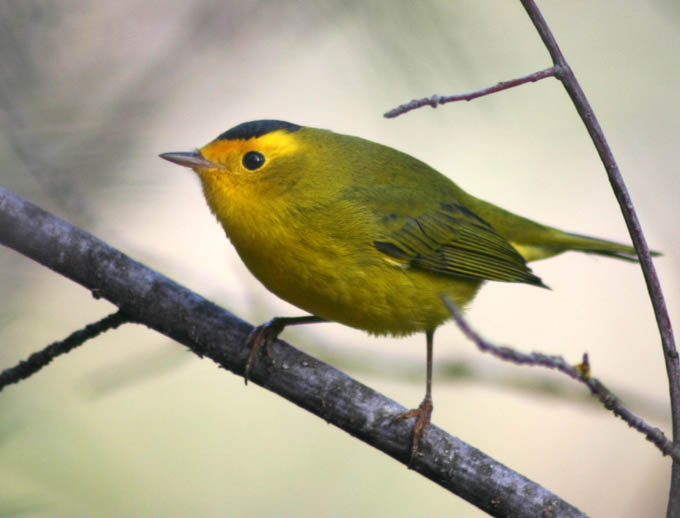
Hooded Warbler
Setophaga citrina
Order: Passeriformes / Family: Parulidae

Wikimedia Commons
About the Hooded Warbler
The Hooded Warbler (Setophaga citrina) is a small songbird belonging to the family Parulidae. This species is notable for its stunning appearance and dynamic behavior, both of which make it a favorite among birdwatchers and ornithologists alike. The Hooded Warbler primarily inhabits the understory of deciduous forests across the eastern United States, displaying a strong preference for areas with dense shrubbery and a mix of young and mature trees. This habitat selection offers ample cover and food resources, which are vital for its survival and reproduction.
During the breeding season, which spans from late spring to early summer, Hooded Warblers establish territories in the northeastern United States, extending from southern Ontario down through parts of the Midwest and into the southeastern states. Their presence in these regions contributes significantly to the ecological balance, as they play a crucial role in insect population control. By consuming large quantities of insects, they help maintain the delicate equilibrium within these forest ecosystems.
In addition to their ecological significance, Hooded Warblers serve as important indicators of forest health. Their reliance on dense understory vegetation makes them particularly sensitive to habitat degradation and fragmentation. As a result, changes in their population numbers can provide valuable insights into the broader health of the forest ecosystems they inhabit. Despite these challenges, the Hooded Warbler exhibits adaptability, often expanding its range northward in response to changing climate conditions.
Seasonal behavior shifts are evident as Hooded Warblers migrate to Central America for the winter months. During this time, they occupy a range of habitats, including tropical forests and coffee plantations, which offer a different set of resources compared to their breeding grounds. This migration underscores the Hooded Warbler's adaptability and resilience, as it navigates a variety of ecological contexts throughout the year.
The Hooded Warbler belongs to the family Parulidae, within the order Passeriformes. These birds typically live average lifespan of 6 years with a maximum recorded of 8 years.
How to Identify a Hooded Warbler
The Hooded Warbler is easily recognized by its distinctive plumage. Adult males exhibit a brilliant yellow face and underparts, sharply contrasted by a striking black hood and throat. This black hood extends down to form a bib-like pattern on the upper chest. In contrast, adult females share the same yellow face and underparts but possess a less pronounced hood, often appearing more olive or grayish. Juvenile Hooded Warblers resemble females but may display even duller coloration.
In the field, distinguishing the Hooded Warbler from similar species is facilitated by its unique color pattern. Unlike the Wilson's Warbler, which also has a black cap, the Hooded Warbler's hood extends further down the chest, providing a more pronounced contrast. Additionally, the Hooded Warbler's bright yellow undertail coverts and white tail spots become visible when it flits through foliage, aiding identification.
While perched, the Hooded Warbler adopts an alert posture, frequently flicking its tail to reveal the white spots, a behavior characteristic of this species. In flight, the bird's compact size and rapid wingbeats are apparent, with the contrasting tail pattern providing a key identification cue. Observers often note the warbler's agile movements as it navigates the dense understory, a testament to its adaptation to forest habitats.
Having trouble telling birds apart? Upload a photo to our bird identification tool for an instant species match.
Hooded Warbler Habitat and Range
Preferred Habitat
Hooded Warblers prefer the understory of deciduous and mixed forests, thriving in areas with dense shrubbery. They are frequently found in habitats characterized by a combination of mature trees and younger, regenerating growth. This preference ensures a plentiful supply of insects and offers protective cover for nesting and foraging.
The species typically inhabits low to mid-elevations, generally below 2,000 feet, although they can be found in higher elevations along the Appalachian Mountains. During migration and wintering periods, Hooded Warblers expand their habitat range to include tropical forests and shaded coffee plantations in Central America.
While primarily associated with natural forest habitats, Hooded Warblers can occasionally be found in suburban areas with sufficient tree cover and understory vegetation. However, urban presence is limited, as the species generally avoids open or heavily modified landscapes.
Geographic Range
The breeding range of the Hooded Warbler extends across the eastern United States, from southern Ontario and southern New England, westward to the Great Lakes region, and southward through the Midwest to the Gulf Coast states. The species occupies a wide range of forested habitats within this area, with population densities peaking in the southeastern United States.
During the non-breeding season, Hooded Warblers migrate to Central America, with significant wintering populations in Mexico, Belize, Guatemala, and Honduras. Migration corridors typically follow eastern flyways, with birds traveling through the southeastern United States before crossing the Gulf of Mexico.
While the Hooded Warbler is a common sight within its breeding and wintering ranges, certain locales, such as the Appalachian Mountains, offer particularly high concentrations. These population hotspots are often characterized by the presence of extensive, unfragmented forest tracts, which provide ideal breeding conditions.
Want to know which birds visit your area? Browse our backyard birds by location guides for region-specific species lists.
What Does the Hooded Warbler Eat?
The diet of the Hooded Warbler primarily consists of insects and other arthropods, which it actively forages for in the understory of forests. Common prey items include caterpillars, beetles, spiders, and ants, although the warbler is known for its opportunistic feeding habits, often adapting to the most readily available food sources.
During the breeding season, the Hooded Warbler increases its insect consumption to support the energy demands of raising young. This period aligns with the peak abundance of insects in deciduous forests, facilitating efficient foraging. As the seasons change, the warbler's diet may include small quantities of fruit, particularly during migration when energy-rich foods are crucial for sustaining long flights.
Foraging behavior involves a combination of gleaning insects from leaves and bark, as well as flycatching from perches. The warbler's agility and quick movements enable it to capture prey with precision, ensuring a consistent food supply throughout the year.
Want to attract Hooded Warblers to your yard? See our recommended feeders and seed types for the best results.
Hooded Warbler Behavior and Social Structure
Hooded Warblers exhibit a range of interesting behaviors, particularly during the breeding season when males establish and defend territories through song and display. Males sing from prominent perches to advertise their presence and ward off rivals, while also engaging in aerial chases to assert dominance over their territory.
Courtship involves the male performing a series of displays, including wing and tail fanning, to attract a mate. These displays highlight the male's plumage and physical fitness, playing a crucial role in mate selection. Once paired, Hooded Warblers maintain a strong bond, with both the male and female participating in nest building and chick rearing.
Outside of the breeding season, Hooded Warblers exhibit different social behaviors, often joining mixed-species foraging flocks during migration. This behavior increases foraging efficiency and provides protection against predators, as numerous eyes can detect threats more effectively than a single bird. Despite their gregarious nature during migration, Hooded Warblers typically maintain solitary habits during the breeding season, emphasizing their territorial nature.
Hooded Warbler Nesting and Reproduction
The Hooded Warbler constructs an open cup nest, typically situated in dense shrubs or saplings within the forest understory. Preferred nest sites are 2 to 6 feet above the ground, offering concealment from predators. The nest is constructed of leaves, grasses, and bark, bound together with spider silk and lined with finer materials for added insulation.
A typical clutch consists of 3 to 5 eggs, which the female incubates for approximately 12 days. During this period, the male plays a supportive role, defending the territory and occasionally feeding the incubating female. Once the eggs hatch, both parents actively participate in feeding the nestlings, which fledge around 8 to 10 days after hatching.
In optimal conditions, Hooded Warblers may raise two broods per year, although single broods are more common in northern parts of their range. This reproductive strategy ensures that the species can maximize its breeding output in favorable environments while adapting to seasonal constraints.
Hooded Warbler Sounds and Vocalizations
The Hooded Warbler's primary song is a series of clear, whistled notes often transcribed as 'weeta-weeta-weeteeo.' This melodious tune, delivered from elevated perches, serves both to establish territory and attract mates. The song's rhythm and pitch are distinctive, making it a reliable identification tool for birders.
In addition to its song, the Hooded Warbler produces a variety of call notes, including sharp 'chip' sounds used for communication between mates and to signal alarm. These calls become more frequent in the presence of potential threats, such as predators or rival males.
During the dawn chorus, male Hooded Warblers are particularly vocal, engaging in song bouts that contribute to the rich soundscape of the forest. This behavior highlights the importance of vocal communication in establishing dominance and reproductive success within the species.
Interesting Facts About the Hooded Warbler
- 1Hooded Warblers can be identified by the distinctive white spots on their tails, visible even during quick movements.
- 2The Hooded Warbler's song has been likened to the sound of a bouncing ball due to its rhythmic pattern.
- 3Female Hooded Warblers, unlike many other bird species, may sing during territorial disputes or when their nest is threatened.
- 4During migration, Hooded Warblers can travel up to 3,000 miles to reach their wintering grounds in Central America.
- 5Hooded Warblers play a significant role in controlling insect populations, consuming large numbers of caterpillars and beetles.
- 6The species' adaptability to different habitats has allowed it to expand its range northward in response to climate change.
- 7Hooded Warblers often participate in mixed-species flocks during migration, benefiting from communal foraging and predator avoidance.
Hooded Warbler Conservation Status
The Hooded Warbler is currently listed as Least Concern by the IUCN, with stable population trends across much of its range. However, habitat loss due to deforestation and fragmentation poses a significant threat, particularly in breeding areas where continuous forest cover is essential. Conservation efforts focus on preserving and restoring forest habitats, particularly those that support diverse understory vegetation. Initiatives such as the establishment of protected areas and sustainable forestry practices contribute to the preservation of essential breeding and migratory habitats. Historical population trends have seen fluctuations, with declines in certain regions attributed to habitat degradation. Nevertheless, the Hooded Warbler's adaptability to changing conditions offers hope for continued stability, provided that proactive conservation measures remain in place.
Attracting Hooded Warblers to Your Feeder
The Hooded Warbler is a regular visitor to backyard bird feeders across its range. At the Eye On The Fly feeding station, we observe Hooded Warblers regularly and capture footage with our feeder cameras.
Other Parulidae Species


Birds Similar to the Hooded Warbler
These species are often confused with the Hooded Warbler due to similar appearance or overlapping range.