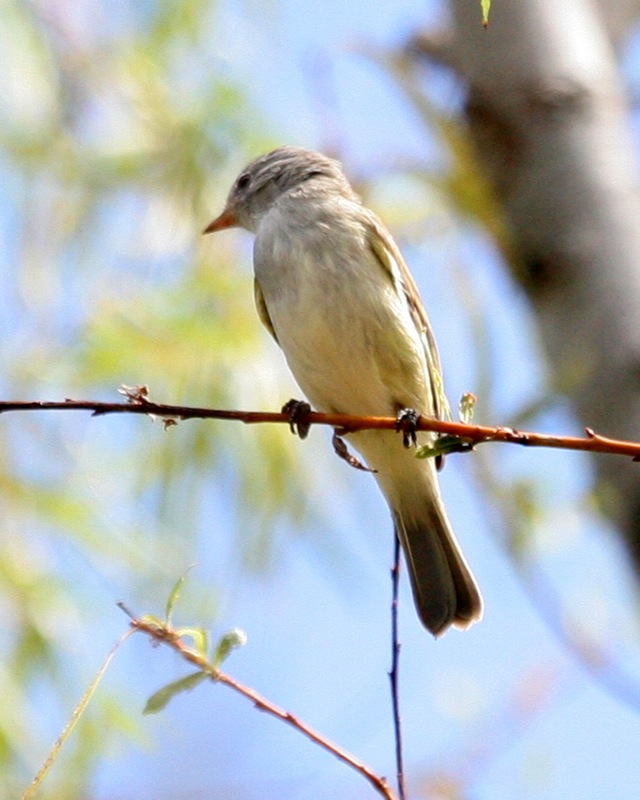
Inezia caudata
Inezia caudata
Order: Passeriformes / Family: Tyrannidae

Wikimedia Commons
About the Inezia caudata
The Inezia caudata, commonly known as the Pale-tipped Tyrannulet, is a diminutive member of the Tyrannidae family. This bird inhabits the northern regions of South America, specifically found in countries like Venezuela, Colombia, and parts of northern Brazil. The Pale-tipped Tyrannulet is often seen flitting through the subtropical and tropical dry forests, as well as moist lowland forests, where its presence serves as a critical component of the local ecosystem. As an insectivorous species, the Inezia caudata plays a significant role in controlling insect populations, which contributes to the ecological balance within its habitat.
This bird is particularly active during the day, engaging in constant foraging and exhibiting behaviors that are intriguingly synchronized with the seasonal changes of its environment. During the wetter months, the Pale-tipped Tyrannulet takes advantage of the abundance of insects, while its activities and movements may become more constrained during drier periods when food becomes scarce. Despite its small size, the Inezia caudata is an important indicator of environmental health. Its presence or absence can provide valuable insights into the state of the habitat it occupies.
The Inezia caudata is not just a mere component of its environment but also an indicator of the health of the ecosystems. Its adaptability to varying conditions demonstrates its resilience, yet it remains sensitive to significant habitat disturbances. Conservation efforts in the regions it occupies are crucial in maintaining the delicate balance of these ecosystems. The bird's adaptability allows it to occupy a range of habitats, yet the loss of forested areas poses a threat to its continued survival. Studies have shown that the Pale-tipped Tyrannulet can sometimes be found in degraded habitats, but its sustainability in such areas remains uncertain. Large-scale habitat protection remains a priority to ensure the viability of the Inezia caudata populations.
The Inezia caudata belongs to the family Tyrannidae, within the order Passeriformes. These birds typically live average 4 years with a maximum recorded of 6 years..
How to Identify a Inezia caudata
The Pale-tipped Tyrannulet is a small bird, measuring approximately 10 cm in length. It possesses a slender body with a predominately olive-green plumage, which aids in its camouflage among the foliage. The most distinctive feature of the Inezia caudata is its pale-tipped tail feathers, giving it a characteristic appearance that sets it apart from other small tyrant flycatchers. Adults have a subtle, pale yellow underbelly and a faint, indistinct supercilium (eyebrow line) that adds to their delicate appearance.
Juvenile Pale-tipped Tyrannulets resemble adults but tend to have duller coloration and less defined pale tips on their tail feathers. Both males and females look similar, which can make sex differentiation challenging in the field. However, during the breeding season, more attentive behavior in males might provide a clue for identification.
When comparing the Pale-tipped Tyrannulet to similar species, birders should note its smaller size and the unique pale tips on its tail feathers. In flight, the bird exhibits a fluttering pattern, often punctuated by short, quick bursts of movement. When perched, it maintains an alert and upright posture, commonly seen scanning its surroundings for insects.
Having trouble telling birds apart? Upload a photo to our bird identification tool for an instant species match.
Inezia caudata Habitat and Range
Preferred Habitat
The Inezia caudata predominantly inhabits subtropical and tropical dry forests, moist lowland forests, and occasionally edges of more humid forests. It thrives at elevations ranging from sea level up to about 1,000 meters, though it is most commonly found at lower elevations where dense vegetation provides ample cover and foraging opportunities. Seasonal shifts can influence its habitat selection, with some individuals potentially moving to slightly different areas within its range in response to food availability and climatic conditions.
While the Pale-tipped Tyrannulet is primarily associated with forested environments, it is occasionally observed in disturbed habitats such as secondary forests or edges of plantations. Its adaptability to these environments demonstrates its resilience, though the long-term suitability of such habitats remains uncertain. Urban areas and heavily developed regions seldom host this species, as it prefers the seclusion and resources provided by more natural settings.
Geographic Range
The Pale-tipped Tyrannulet's range extends across northern South America, primarily within countries like Venezuela, Colombia, and northern Brazil. It occupies a somewhat fragmented distribution, with populations often concentrated in suitable forested habitats within these regions. In Venezuela, this species is found along the Caribbean coast and extends into parts of the Llanos.
In Colombia, it is typically encountered in the northern and central areas, thriving in the varied forested landscapes that the country offers. As a resident species, the Inezia caudata does not engage in long-distance migration but may exhibit minor local movements in response to environmental conditions and resource availability. While not a migratory bird, seasonal changes may prompt some shifts in its range, particularly during periods of food scarcity. However, the core range remains relatively consistent year-round, underscoring the bird's reliance on specific habitat types.
Want to know which birds visit your area? Browse our backyard birds by location guides for region-specific species lists.
What Does the Inezia caudata Eat?
The Pale-tipped Tyrannulet primarily feeds on insects, utilizing its agile flight to capture small arthropods in mid-air or glean them from foliage. Its diet consists of a variety of insects, including ants, beetles, and caterpillars, which it skillfully extracts from the leaves and branches of trees. During the wet season, when insect populations are at their peak, the Inezia caudata takes full advantage, often seen flitting energetically through the forest canopy in search of food.
As the dry season sets in, the availability of prey may decrease, prompting the bird to expand its foraging range or adjust its feeding times to take advantage of peak insect activity. The Pale-tipped Tyrannulet may also occasionally supplement its diet with small fruits or seeds, although insects remain its primary food source. This diet not only sustains the bird but also plays a role in controlling insect populations within its habitat, contributing to the ecological balance of its environment.
Want to attract Inezia caudatas to your yard? See our recommended feeders and seed types for the best results.
Inezia caudata Behavior and Social Structure
The Inezia caudata exhibits a range of behaviors that are both fascinating and vital to its survival. Socially, the Pale-tipped Tyrannulet typically maintains a solitary or paired lifestyle, except during the breeding season when family groups may form. Territoriality is evident, especially during breeding, with both males and females actively defending their chosen area from intruders. Courtship displays are subtle, often involving synchronized movements and vocalizations to establish pair bonds.
Daily activity patterns of the Pale-tipped Tyrannulet involve frequent foraging bouts interspersed with periods of rest. This bird is diurnal, with peak activities occurring in the early morning and late afternoon when temperatures are cooler and insect activity is high. In response to predators, the Inezia caudata relies on its agile flight and cryptic plumage as primary defense mechanisms, often retreating to dense foliage for cover.
The Pale-tipped Tyrannulet may occasionally join mixed-species flocks, particularly outside of the breeding season, as these flocks can offer increased protection from predators and access to a wider range of foraging opportunities. Despite its small size, this bird demonstrates remarkable resilience and adaptability in the face of environmental challenges.
Inezia caudata Nesting and Reproduction
The Pale-tipped Tyrannulet constructs its nest in a well-concealed location, typically within dense foliage or on slender branches of trees. The nest itself is a small, cup-shaped structure made of fine plant fibers, moss, and spider silk, providing a secure and camouflaged setting for raising young. Clutch size generally consists of 2 to 3 eggs, which are incubated primarily by the female over a period of approximately 14-16 days.
Following hatching, both parents participate in feeding the chicks, bringing a steady supply of insects to support rapid growth. The fledging period lasts between 15-18 days, during which time the young birds develop the necessary skills for independent survival. The Inezia caudata typically raises one to two broods per year, depending on environmental conditions and food availability. Parental care extends beyond fledging, with adults continuing to guide and protect their offspring until they can fully fend for themselves.
Inezia caudata Sounds and Vocalizations
The vocalizations of the Pale-tipped Tyrannulet are distinctive yet subtle, characterized by a series of high-pitched, squeaky notes that often resemble a soft chattering. The primary song consists of quick, rhythmic phrases that can be heard during territorial and courtship displays. These calls serve as both an advertisement of presence and a means of communication between mates.
Aside from its primary song, the Inezia caudata also produces a variety of call notes used in different contexts, such as warning calls when predators are near or contact calls to maintain cohesion with a partner. During the dawn chorus, the Pale-tipped Tyrannulet's song contributes to the symphony of sounds that typify its habitat, although its relatively quiet voice may be easily overshadowed by louder species.
Interesting Facts About the Inezia caudata
- 1The Pale-tipped Tyrannulet is one of the smallest members of the Tyrannidae family, measuring just 10 centimeters in length.
- 2Despite its small size, the Inezia caudata plays a crucial role in controlling insect populations within its habitat.
- 3The species is known for its distinctive pale-tipped tail feathers, which give it its common name and aid in identification.
- 4Pale-tipped Tyrannulets are often found in mixed-species flocks outside the breeding season for added protection.
- 5The bird's habitat range includes countries such as Venezuela, Colombia, and northern Brazil, indicating a preference for tropical environments.
- 6The Inezia caudata primarily feeds on insects but may occasionally consume small fruits, showcasing its adaptable diet.
- 7Both male and female Pale-tipped Tyrannulets participate in raising their young, highlighting their shared parental roles.
Inezia caudata Conservation Status
The Inezia caudata is currently classified as a species of Least Concern by the IUCN, with populations considered stable across its range. However, habitat loss due to deforestation and land conversion for agriculture poses a significant threat to its long-term survival. Conservation efforts focused on protecting forest habitats are essential to maintain healthy populations of this species. Historical population changes have been relatively stable, but ongoing monitoring is necessary to ensure that any negative trends are identified early. Protecting key habitats and implementing sustainable land-use practices are critical for the continued preservation of the Pale-tipped Tyrannulet. Collaboration between conservation organizations and local communities can further enhance efforts to safeguard this bird's future.
Attracting Inezia caudatas to Your Feeder
The Inezia caudata is a regular visitor to backyard bird feeders across its range. At the Eye On The Fly feeding station, we observe Inezia caudatas regularly and capture footage with our feeder cameras.
Other Tyrannidae Species


Birds Similar to the Inezia caudata
These species are often confused with the Inezia caudata due to similar appearance or overlapping range.