Little Bustard
Tetrax tetrax
Order: Otidiformes / Family: Otididae

Wikimedia Commons
About the Little Bustard
The Little Bustard (Tetrax tetrax) is a medium-sized bird in the family Otididae, renowned for its elusive nature and preference for open, expansive habitats. This species primarily inhabits the grasslands and steppes of southern Europe and central Asia, with populations extending into North Africa. Its presence in these areas underscores the bird's ecological significance as an indicator of healthy grassland ecosystems. The Little Bustard plays a vital role in its environment by contributing to seed dispersion and invertebrate population control. Unlike some of its larger relatives in the bustard family, the Little Bustard is less conspicuous, often blending seamlessly into its surroundings due to its cryptic plumage. This camouflage is particularly effective in the dry, grassy habitats it favors.
Seasonally, the Little Bustard exhibits fascinating behavioral adaptations. During the breeding season, males perform elaborate courtship displays, which include leaping into the air and emitting distinctive calls to attract females. These displays are not only a spectacular natural phenomenon but also serve as a crucial component of the bird's reproductive strategy. Outside the breeding season, the Little Bustard becomes more elusive, forming small flocks that can number up to 30 individuals. These groups navigate their territories with caution, relying on their keen eyesight to detect predators and other threats.
The species is notable for its long-distance migrations, particularly the populations breeding in Europe that winter in the Mediterranean basin and North Africa. This migratory behavior illustrates the bird's adaptability to varying environmental conditions across a broad geographic range. However, shifts in land use, particularly the conversion of natural grasslands to agriculture, pose significant threats to the Little Bustard's habitat. Understanding the ecological role and behavior of the Little Bustard is essential for conservation efforts, aimed at preserving both the species and the unique landscapes it inhabits.
The Little Bustard belongs to the family Otididae, within the order Otidiformes. These birds typically live average 10-15 years, with some recorded up to 20 years..
How to Identify a Little Bustard
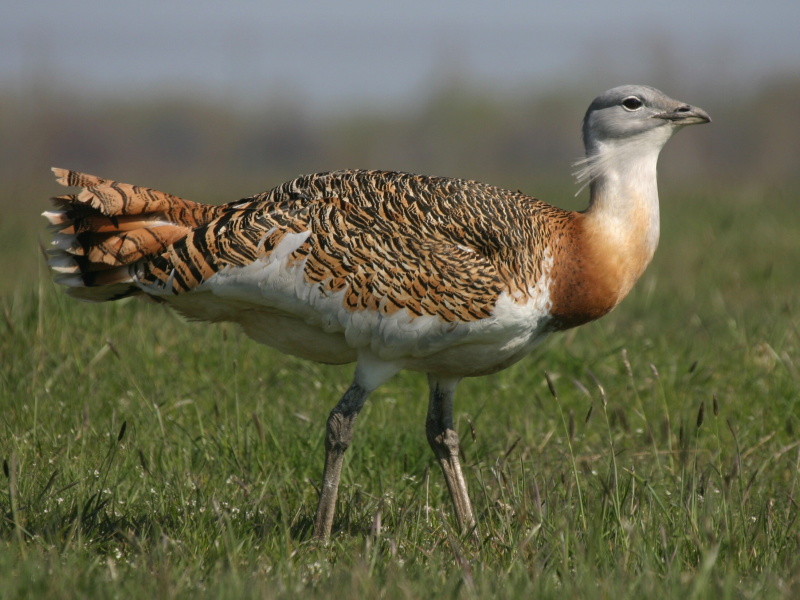
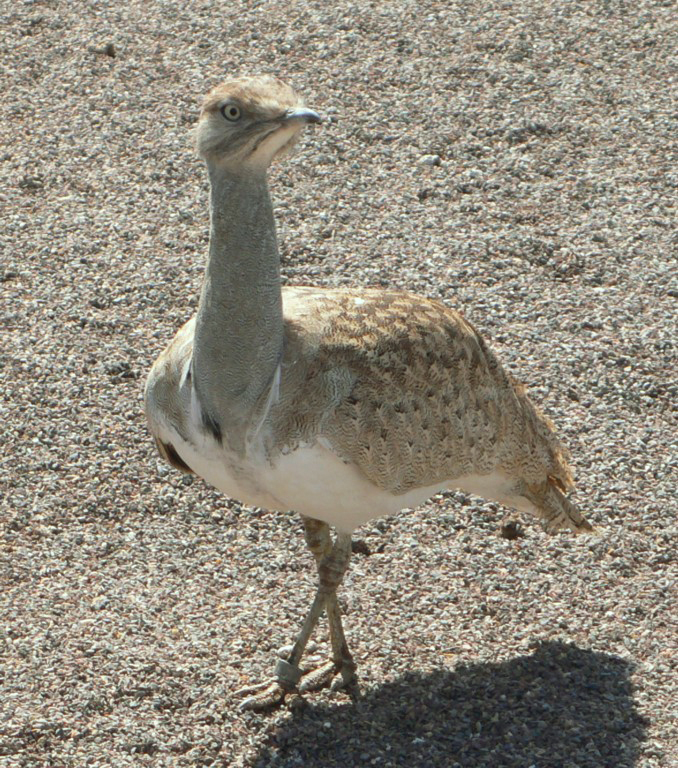
The Little Bustard is a medium-sized bird characterized by a robust body and relatively short legs. Adult males are particularly distinctive during the breeding season, displaying a striking black neck collar with white bands, which contrasts sharply against their otherwise brown and gray plumage. The rest of the male's body is predominantly mottled brown, providing excellent camouflage in their grassland habitats. Females and juveniles lack the prominent neck markings, instead exhibiting a more uniform brown coloration with subtle barring, making them even more cryptic.
In flight, the Little Bustard reveals white wing patches on the secondary feathers, which are visible against the darker wing coverts and primaries. The bird's flight is strong and direct, with rapid wingbeats followed by glides. When perched or on the ground, the Little Bustard often adopts a crouched posture, further enhancing its ability to blend into the environment.
Differences between the sexes are most noticeable during the breeding season, when males flaunt their ornate neck patterns as part of their courtship rituals. Juveniles resemble females but are generally duller with less distinct markings. The Little Bustard can be confused with other small bustards or similarly sized ground birds, but its unique wing pattern in flight and the male's distinctive breeding plumage are key distinguishing features.
Having trouble telling birds apart? Upload a photo to our bird identification tool for an instant species match.
Little Bustard Habitat and Range
Preferred Habitat
Little Bustards primarily occupy open grasslands, steppes, and agricultural fields, thriving in habitats that offer expansive views and minimal tree cover. These environments provide the necessary resources for foraging and breeding, including a diversity of invertebrates and seeds. Elevation-wise, they are typically found in lowland areas, though some populations may venture into moderately hilly terrains.
Seasonal habitat shifts occur as the bird migrates between breeding and wintering grounds, moving from the temperate grasslands of Europe and Asia to the milder, often semi-arid regions of the Mediterranean basin and North Africa during winter. This seasonal movement reflects the bird's reliance on open landscapes that remain unfrozen and accessible throughout the year.
Urbanization poses a challenge for the Little Bustard, as they tend to avoid densely populated areas, preferring rural landscapes that offer the solitude and resources they require. Conservation efforts focus on protecting and restoring these natural habitats, emphasizing the importance of maintaining traditional agricultural practices that support the bird's ecological needs.
Geographic Range
The Little Bustard's breeding range spans across southern Europe, including countries like Spain, Portugal, and France, extending eastward through central Europe to Russia, Kazakhstan, and parts of western Asia. These areas provide the necessary grassland ecosystems for their breeding activities.
During the winter months, the Little Bustard migrates to more temperate regions, with significant populations wintering in the Mediterranean basin, including southern Spain, southern France, and parts of North Africa. Their wintering grounds reflect a preference for areas that remain relatively warm and food-rich throughout the colder months.
Migration corridors for the Little Bustard are broad and not as tightly defined as those of more specialized migratory birds. They often follow traditional routes that offer suitable stopover sites, allowing them to rest and refuel during their journey. Population density hotspots are found in regions where agricultural practices still favor extensive, low-intensity farming, which provides an ideal habitat for this grassland-dependent species.
Want to know which birds visit your area? Browse our backyard birds by location guides for region-specific species lists.
What Does the Little Bustard Eat?
The Little Bustard is an omnivorous bird, with a diet that varies seasonally based on availability. During the spring and summer, they primarily consume invertebrates, including grasshoppers, beetles, and other insects, which provide essential protein for breeding and raising young. The abundance of these prey items in grassland habitats makes them a crucial component of the diet during these months.
As the seasons change and insect availability decreases, Little Bustards shift their diet towards plant material, consuming seeds, leaves, and buds. This dietary flexibility allows them to adapt to changing environmental conditions and food availability, ensuring their survival across a range of habitats and seasons.
Foraging techniques involve walking slowly and deliberately through their habitat, using their keen eyesight to spot and capture prey. They typically feed during the early morning and late afternoon, aligning their activity with the times when insect activity is highest and the temperature is cooler. The Little Bustard's diet reflects its adaptability and resilience in the face of fluctuating resources.
Little Bustard Behavior and Social Structure
Little Bustards exhibit fascinating behavioral traits, particularly during the breeding season. Males engage in elaborate courtship displays, which are a highlight of their social behavior. These displays involve leaping into the air, puffing out their chests, and emitting a series of calls to attract females. Such behavior not only establishes dominance among competing males but also plays a crucial role in mate selection.
Outside the breeding season, Little Bustards are more social, forming small flocks that provide safety in numbers. These flocks are often seen navigating the open landscapes they inhabit, maintaining a level of vigilance against predators. The species exhibits a distinct daily activity pattern, with peak activity occurring during the cooler parts of the day, such as early morning and late afternoon.
In response to predators, Little Bustards rely on their excellent camouflage and flight capabilities. They are generally wary birds, taking flight at the first sign of danger. This cautious behavior is an effective survival strategy, minimizing the risk of predation in their open habitats. The social and territorial behaviors of the Little Bustard highlight the complexities of its interactions within its environment.
Little Bustard Nesting and Reproduction
The Little Bustard nests on the ground, often in open grasslands or agricultural fields where vegetation provides adequate cover from predators. The nest itself is a simple scrape in the ground, sometimes lined with bits of grass and leaves to offer a minimal level of insulation.
Clutch size typically ranges from 3 to 5 eggs, with incubation carried out solely by the female. The incubation period lasts about 20 to 25 days, during which the female remains highly attentive, leaving the nest only for brief periods to feed. Once the eggs hatch, the chicks are precocial and leave the nest shortly after hatching, relying on their mother for guidance and protection as they learn to forage.
Fledging occurs approximately 30 to 40 days after hatching, with the young birds reaching full independence shortly thereafter. The Little Bustard typically raises one brood per year, although in particularly favorable conditions, a second brood can occasionally occur. Parental roles focus on ensuring the young are well-hidden and less vulnerable to predation, reflecting the species' adaptation to its open and exposed environment.
Little Bustard Sounds and Vocalizations
The vocalizations of the Little Bustard are an essential aspect of its breeding behavior. Males produce a series of distinctive, low-pitched calls during courtship displays, which can be described as a repetitive 'prrt' or 'trr' sound. These calls are not melodious but serve an important role in attracting females and establishing territory.
Call notes outside the breeding season are less frequent, as the Little Bustard tends to be more secretive. Alarm calls are sharp and abrupt, designed to alert others of potential threats. During the dawn chorus, the Little Bustard's calls are typically interspersed with the sounds of other grassland birds, creating a rich tapestry of avian communication.
The calls of the Little Bustard, while not as complex or varied as those of some other species, are nonetheless effective in fulfilling their ecological role. The simplicity and function-driven nature of their vocalizations are indicative of their adaptations to open habitats where sound can travel long distances.
Interesting Facts About the Little Bustard
- 1The Little Bustard can weigh between 500 to 950 grams, making it one of the smaller members of the bustard family.
- 2During the breeding season, male Little Bustards engage in display flights that can reach heights of several meters.
- 3Despite their size, Little Bustards are capable of flying long distances during migration, traveling from Europe to North Africa.
- 4Little Bustards have a lifespan that can exceed 10 years in the wild, depending on environmental conditions.
- 5The Little Bustard's plumage provides exceptional camouflage, allowing it to remain unseen even in open landscapes.
- 6In some regions, the Little Bustard is known to winter in agricultural fields, where they can find an abundance of seeds and insects.
- 7The Little Bustard's courtship display is an energetic affair, involving jumps, wing flapping, and distinct calls.
Little Bustard Conservation Status
The Little Bustard is currently classified as Near Threatened by the IUCN, with populations showing a declining trend. The primary threats to the species include habitat loss due to agricultural intensification, urbanization, and changes in land use that reduce suitable breeding and foraging areas. Conservation efforts focus on habitat restoration and the promotion of traditional, low-intensity farming practices that maintain the grassland environments critical for the Little Bustard's survival. Legal protection of key breeding and wintering sites is also essential to ensure the species' continued existence. Historically, the Little Bustard was more widespread across its range, but modern agricultural practices have significantly altered its habitat. Population changes reflect these environmental pressures, highlighting the need for targeted conservation strategies that address both habitat preservation and sustainable land use.
Other Otididae Species


Birds Similar to the Little Bustard
These species are often confused with the Little Bustard due to similar appearance or overlapping range.