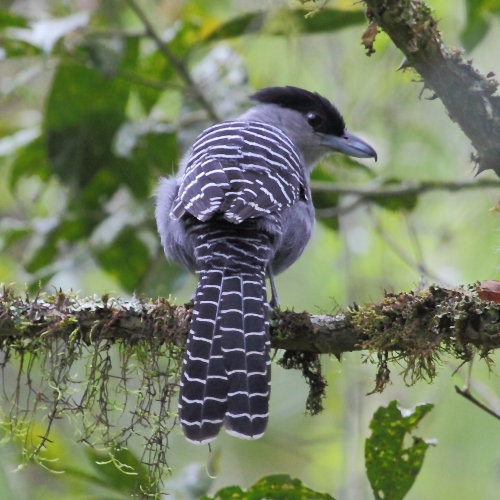
Lunulated Antbird
Gymnopithys lunulatus
Order: Passeriformes / Family: Thamnophilidae

Wikimedia Commons
About the Lunulated Antbird
The Lunulated Antbird, Gymnopithys lunulatus, is a captivating species within the Thamnophilidae family, renowned for its association with army ant swarms. As a member of the suboscine passerines, this bird plays a crucial role in the dynamic ecosystems of the Amazon Basin and neighboring tropical regions. The Lunulated Antbird is particularly adept at taking advantage of the activity generated by marauding ant swarms, feeding on insects and arthropods flushed out from the leaf litter. This behavior not only highlights the bird's adaptability but also its importance in maintaining the ecological balance of the forest floor.
In terms of distribution, the Lunulated Antbird primarily inhabits the lowland forests of western Amazonia, stretching across countries such as Peru, Ecuador, Colombia, and Brazil. Within these regions, the bird is often found in terra firme forests, characterized by their non-flooded, high-canopy environment. This habitat preference ensures that the Lunulated Antbird thrives where dense foliage provides ample cover and food resources.
The ecological significance of the Lunulated Antbird extends beyond its feeding habits. By participating in the intricate web of interactions surrounding army ant swarms, the bird contributes to the dispersal of insects and seeds, facilitating nutrient cycling and forest regeneration. Seasonal behaviors of the Lunulated Antbird often involve shifts in foraging patterns in response to food availability or breeding requirements. During the breeding season, pairs of Lunulated Antbirds exhibit increased territoriality, defending their chosen nesting sites with vigor and determination.
The Lunulated Antbird belongs to the family Thamnophilidae, within the order Passeriformes. These birds typically live average 3-5 years, with a max recorded at 6 years..
How to Identify a Lunulated Antbird
Adult Lunulated Antbirds are easily recognized by their striking plumage pattern. They predominantly display a glossy black coloration, contrasted by a distinctive white crescent or 'lunule' on their throat, which gives the species its name. This key field mark allows birders to identify the species at a glance, even in the dim light of the forest understory.
Sexual dimorphism in the Lunulated Antbird is subtle, with males and females appearing quite similar. However, experienced observers may note that males generally have a slightly more pronounced black plumage, whereas females may exhibit a duller shade. Juveniles, on the other hand, lack the full intensity of adult coloration and may display a more mottled appearance with hints of brown in their plumage.
When observing the Lunulated Antbird in flight, one might notice its rapid, direct flight pattern, although the bird typically remains within the lower strata of the forest. Its perching posture is characterized by a slightly hunched back, with the tail often cocked upwards. This, combined with its methodical movements, makes it a distinctive presence in the dense, shadowy environment it calls home.
Having trouble telling birds apart? Upload a photo to our bird identification tool for an instant species match.
Lunulated Antbird Habitat and Range
Preferred Habitat
The Lunulated Antbird primarily inhabits the lowland rainforests of the western Amazon Basin. It favors terra firme forests, which provide a stable environment away from seasonal flooding. These forests are rich in biodiversity, offering the dense canopy and understory vegetation that the Lunulated Antbird requires for foraging and nesting.
The species thrives in areas with thick leaf litter and abundant undergrowth, where it can follow ant swarms and take advantage of the insects they disturb. While the Lunulated Antbird typically avoids heavily disturbed areas, it can occasionally be found in secondary growth forests if sufficient cover is available.
This bird's preferred elevation range extends from sea level to around 900 meters. Unlike some other tropical birds, the Lunulated Antbird does not exhibit significant seasonal habitat shifts, maintaining its presence in its preferred forest types year-round. The species is rarely found in urban environments, as its specialized ant-following behavior ties it closely to intact forest ecosystems.
Geographic Range
The Lunulated Antbird's range is largely confined to the tropical lowland forests of western Amazonia. Its distribution stretches across several South American countries, including Peru, Ecuador, Colombia, and Brazil. Within these regions, the bird is most commonly observed in areas where army ant swarms are prevalent, providing the antbird with its primary foraging opportunity.
In Peru, the Lunulated Antbird is frequently found in the Loreto and Ucayali regions, while in Ecuador, it inhabits the eastern slopes of the Andes and adjacent lowland areas. Colombian populations are primarily located in the Amazonian departments of Putumayo and Caquetá. In Brazil, the bird's range includes parts of the western Amazon Basin, particularly in the state of Amazonas.
The Lunulated Antbird does not undertake long-distance migrations, remaining within its tropical range throughout the year. However, it may exhibit localized movements in response to the availability of its primary food source, the army ant swarms. Population density hotspots often coincide with regions of high ant activity, underscoring the bird's reliance on this unique ecological relationship.
Want to know which birds visit your area? Browse our backyard birds by location guides for region-specific species lists.
What Does the Lunulated Antbird Eat?
The diet of the Lunulated Antbird primarily consists of insects and arthropods, which it gleans from the forest floor. This species is a quintessential ant-follower, relying on the swarming behavior of army ants to flush out prey from the leaf litter. The bird exhibits a keen ability to detect and track these ant swarms, positioning itself strategically to capture fleeing insects such as beetles, spiders, and other small invertebrates.
While army ants provide the primary foraging opportunity, the Lunulated Antbird may also consume other small prey items independently sourced from the forest understory. These could include caterpillars and small orthopterans when ant swarms are not present.
Feeding activity for the Lunulated Antbird peaks during the morning hours when ant swarms are most active. The bird demonstrates remarkable agility and precision as it seizes prey disturbed by the ants. Its foraging technique relies on quick, darting movements, often accompanied by brief flights to snatch prey from the air or ground. This behavior allows the Lunulated Antbird to capitalize on the chaotic scenes created by army ants, making it an integral part of its survival strategy.
Lunulated Antbird Behavior and Social Structure
Lunulated Antbirds exhibit a complex social structure, often seen foraging in pairs or small family groups. These birds are highly territorial, particularly during the breeding season, when pairs vigorously defend their chosen area from intruders. This territoriality ensures access to prime foraging sites around ant swarms, which are crucial for feeding.
Courtship displays in Lunulated Antbirds involve subtle behaviors such as mutual preening and soft vocal exchanges. These displays reinforce pair bonds and are essential for successful breeding. The birds maintain a close-knit unit, with both parents participating in rearing the young.
Lunulated Antbirds are diurnal, with activity patterns closely tied to the availability of army ants. They typically begin their day with vocalizations that help establish territory boundaries. As the day progresses, they follow ant swarms, displaying remarkable agility and coordination.
When faced with predators, Lunulated Antbirds rely on their cryptic plumage and the cover of dense foliage to evade detection. They may also emit alarm calls to alert conspecifics of danger. Despite their bold foraging strategy, these birds remain alert and cautious, balancing the pursuit of food with the need for safety in the complex jungle environment they inhabit.
Lunulated Antbird Nesting and Reproduction
Lunulated Antbirds construct their nests in the dense understory of tropical forests. The nests are typically cup-shaped and composed of fine plant materials such as leaves, twigs, and rootlets. These materials provide both camouflage and structural integrity, ensuring the safety of the eggs and chicks.
Preferred nest locations are usually low to the ground, often concealed within the thick foliage that characterizes their habitat. This positioning offers protection from predators and environmental factors.
The typical clutch size for the Lunulated Antbird is two eggs, although occasionally three may be laid. Both parents share responsibilities during the incubation period, which lasts approximately 14 to 16 days. After hatching, the young are altricial, requiring constant care and feeding by both parents.
Fledging occurs about 12 to 14 days after hatching, with the fledglings remaining under parental supervision for several weeks. During this time, the young learn essential survival skills, including foraging techniques and predator avoidance. The Lunulated Antbird generally raises one brood per year, although favorable conditions may sometimes allow for a second.
Lunulated Antbird Sounds and Vocalizations
The primary song of the Lunulated Antbird consists of a series of rapid, melodious whistles, often described as a cascading series of notes that rise and fall in pitch. This vocalization serves both territorial and mate attraction functions. The song is delivered with precision, echoing through the dense forest understory.
In addition to its song, the Lunulated Antbird produces a variety of call notes. These include sharp, short 'chip' notes used for communication between mates and to maintain contact with fledglings. Alarm calls, on the other hand, are harsher and repeated in quick succession, signaling potential threats to conspecifics.
The Lunulated Antbird participates in the dawn chorus, a common feature of tropical forests, where birds vocalize most actively at the break of day. This behavior is particularly pronounced during the breeding season, reinforcing territory boundaries and pair bonds.
Interesting Facts About the Lunulated Antbird
- 1The Lunulated Antbird's specialized diet largely depends on the presence of army ant swarms, making it a prime example of symbiotic relationships in nature.
- 2Unlike many birds, the Lunulated Antbird does not migrate, remaining in its tropical forest habitat year-round to follow the ant swarms.
- 3Despite its reliance on ants, the Lunulated Antbird does not consume the ants themselves, instead preying on the insects they flush out.
- 4The bird’s distinct vocalizations are a key tool for maintaining territory and attracting mates in the dense Amazonian forests.
- 5Lunulated Antbirds are often seen in pairs or small family groups, emphasizing their social structure and cooperative breeding behavior.
- 6With a preference for terra firme forests, the Lunulated Antbird avoids flood-prone areas, showcasing its adaptation to specific environmental conditions.
- 7This species' role in forest ecosystems extends beyond its feeding habits, as it aids in the dispersal of insects and contributes to nutrient cycling.
Lunulated Antbird Conservation Status
The Lunulated Antbird is currently listed as Least Concern by the IUCN, reflecting a relatively stable population trend. However, habitat destruction due to deforestation poses a significant threat to its continued well-being. As the Amazon Basin faces ongoing deforestation for agriculture and development, the natural habitats of the Lunulated Antbird and many other species are at risk. Conservation efforts for the Lunulated Antbird focus on habitat preservation and the establishment of protected areas. These efforts aim to mitigate the impact of human activities by ensuring that large tracts of intact forest remain available for wildlife. Historical population changes for the Lunulated Antbird have been relatively stable, but continuous monitoring is essential to detect any shifts that may result from environmental pressures. Collaborative efforts between governments, NGOs, and local communities are crucial to safeguarding the future of this and other Amazonian species.