Madagascar Flufftail
Sarothrura insularis
Order: Gruiformes / Family: Rallidae

Wikimedia Commons
About the Madagascar Flufftail
The Madagascar Flufftail (Sarothrura insularis) is a captivating species endemic to the island of Madagascar. This small bird, belonging to the family Rallidae, thrives in the dense undergrowth of tropical forests and wetlands. Its presence is often betrayed by its vocalizations rather than by sight, making it a challenging species to observe in the wild. The Madagascar Flufftail plays a crucial role in its ecosystem as both predator and prey. By consuming a variety of insects and small invertebrates, it helps control pest populations, contributing to the ecological balance of its habitat. This bird is predominantly found in lowland and montane forests, particularly favoring areas with dense underbrush and proximity to water sources. It is a resident species, with no significant migratory movements, although there may be some altitudinal shifts in response to seasonal changes in food availability. The Madagascar Flufftail's secretive nature and specialized habitat requirements make it an important indicator of forest health. Conservation efforts are crucial, as habitat loss poses a significant threat to its population. Understanding the Madagascar Flufftail's role in its environment can aid in the development of effective conservation strategies and highlight the importance of preserving Madagascar's unique biodiversity.
The Madagascar Flufftail belongs to the family Rallidae, within the order Gruiformes. These birds typically live average 3-5 years with a maximum recorded of 7 years..
How to Identify a Madagascar Flufftail
The Madagascar Flufftail is a small bird, approximately 14-16 cm in length, with a compact body and short tail. Its plumage is predominantly reddish-brown, with distinctive black and white barring on the flanks and underparts. The male and female Madagascar Flufftail exhibit slight sexual dimorphism; males typically have brighter and more contrasting coloration compared to females. Juveniles resemble adults but with duller, less distinct patterns. In flight, the Madagascar Flufftail has a rapid, fluttering flight pattern, rarely venturing far from cover. It usually stays low to the ground, making use of dense vegetation for protection. When perched, this species often appears crouched and compact, blending seamlessly with the forest floor. Confusion with other rallids is possible, but the Madagascar Flufftail's unique coloration and habitat preferences help distinguish it from similar species.
Having trouble telling birds apart? Upload a photo to our bird identification tool for an instant species match.
Madagascar Flufftail Habitat and Range
Preferred Habitat
The Madagascar Flufftail inhabits a range of habitats within Madagascar, primarily focusing on tropical and subtropical moist lowland forests. It is also found in montane forests and dense thickets, often near water bodies such as marshes and streams. This bird prefers areas with thick underbrush, providing ample cover for its secretive lifestyle. The Madagascar Flufftail can be found from sea level to elevations of around 2,000 meters. Seasonal habitat shifts are minimal, though some altitudinal movement may occur in search of food. Unlike many other birds, it is not commonly found in urban areas, instead favoring undisturbed natural habitats.
Geographic Range
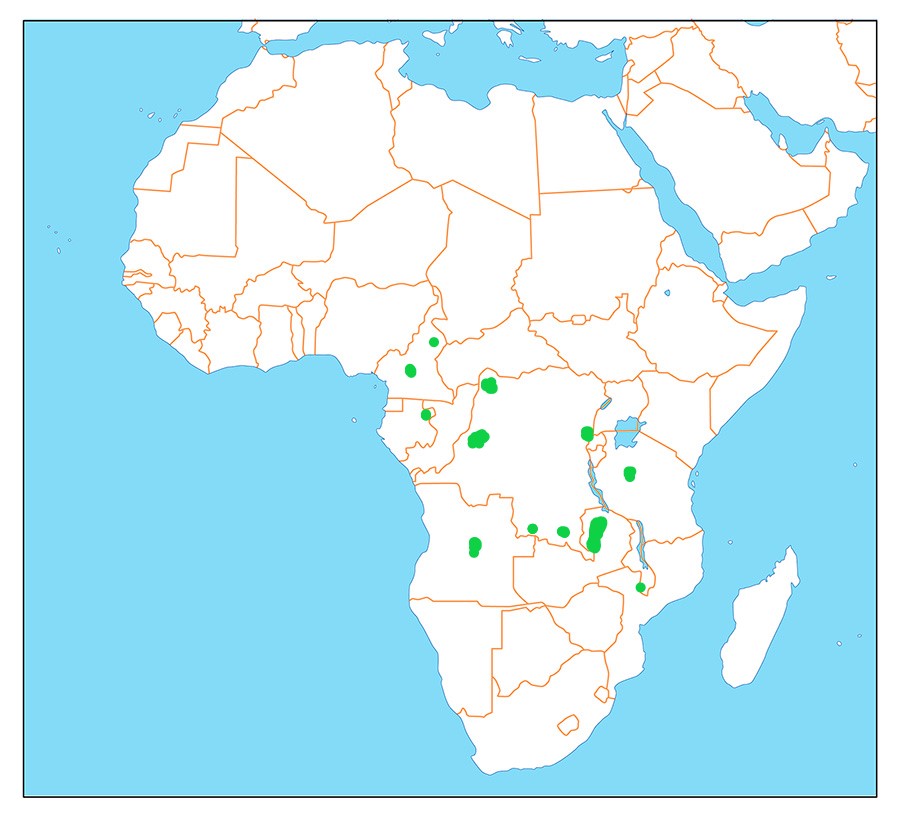
As an endemic species, the Madagascar Flufftail is restricted to the island of Madagascar. It is widespread across the island, with a range that includes both the eastern rainforests and the western deciduous forests. The bird's range does not extend beyond Madagascar, and it is not known to undertake long-distance migrations. Within its range, the Madagascar Flufftail is more commonly found in areas of dense forest and wetland habitats, where it can find food and shelter. Population density is higher in regions with abundant undergrowth and water sources.
Want to know which birds visit your area? Browse our backyard birds by location guides for region-specific species lists.
What Does the Madagascar Flufftail Eat?
The diet of the Madagascar Flufftail primarily consists of insects and other small invertebrates. It forages on the forest floor, using its short beak to probe the leaf litter and soil for prey. Common food items include beetles, ants, and spiders, as well as small snails and worms. The bird's diet may vary slightly with the seasons, depending on the availability of prey. During the rainy season, when insect activity is high, it has access to a wider variety of food sources. The Madagascar Flufftail typically forages alone or in pairs, often during the early morning or late afternoon when temperatures are cooler.
Madagascar Flufftail Behavior and Social Structure
The Madagascar Flufftail is a solitary and secretive bird, often concealed within the dense underbrush of its forest habitat. It is highly territorial, with males known to engage in vocal displays to establish dominance and defend their territory from rivals. During the breeding season, the Madagascar Flufftail exhibits a range of courtship behaviors, including vocalizations and subtle display movements to attract a mate. These displays often occur in secluded areas, away from potential predators. Though primarily solitary, pairs may form during the breeding season. The bird's response to predators involves remaining motionless or quickly retreating into thick vegetation, making it difficult to detect. Daily activity patterns are crepuscular, with peak activity occurring during dawn and dusk, capitalizing on the cooler temperatures and reduced light.
Madagascar Flufftail Nesting and Reproduction
The Madagascar Flufftail constructs its nest on or near the ground, often hidden among dense vegetation. The nest is a simple structure, made from leaves and grasses, and provides camouflage against predators. Clutch size typically ranges from 2 to 4 eggs, with both parents involved in incubation. The incubation period lasts approximately 18 to 21 days. Once hatched, the chicks remain in the nest for a short period before fledging. Parental care continues after fledging, as adults protect and feed their young until they become more independent. The Madagascar Flufftail usually raises one to two broods per year, depending on food availability and environmental conditions.
Madagascar Flufftail Sounds and Vocalizations
The primary song of the Madagascar Flufftail is a series of low-pitched, repetitive whistles, which can carry through dense foliage. These notes create a rhythmic, haunting quality, serving as a territorial call and a means of attracting a mate during the breeding season. Call notes are typically short, sharp, and may vary in pitch depending on the context. Alarm calls are more rapid and urgent, designed to alert others to potential threats. The Madagascar Flufftail participates in a dawn chorus, adding its unique vocalizations to the symphony of forest sounds.
Interesting Facts About the Madagascar Flufftail
- 1The Madagascar Flufftail is one of only a few rallids adapted specifically to Madagascar's unique habitats.
- 2Despite its name, the Madagascar Flufftail is not actually fluffy-its name likely comes from its soft appearance.
- 3The species' elusive nature has made it a sought-after bird for birdwatchers visiting Madagascar.
- 4Its calls are often one of the first clues to its presence in dense forest, as the bird is rarely seen.
- 5The Madagascar Flufftail's foraging habits help control insect populations in its habitat.
- 6This bird's habitat preferences make it an important indicator species for forest health in Madagascar.
- 7The Madagascar Flufftail's population density is notably higher in areas with abundant water sources.
Madagascar Flufftail Conservation Status
The Madagascar Flufftail is currently classified as Least Concern by the IUCN, though its population is suspected to be declining. Habitat destruction, primarily due to deforestation and agricultural expansion, poses the greatest threat to its survival. Conservation efforts focus on protecting natural habitats and promoting sustainable land use practices. Historically, the population has faced pressures from habitat loss, but recent efforts have aimed to stabilize and support remaining populations. Continued conservation action is necessary to ensure the long-term survival of this unique species.
Other Rallidae Species


Birds Similar to the Madagascar Flufftail
These species are often confused with the Madagascar Flufftail due to similar appearance or overlapping range.