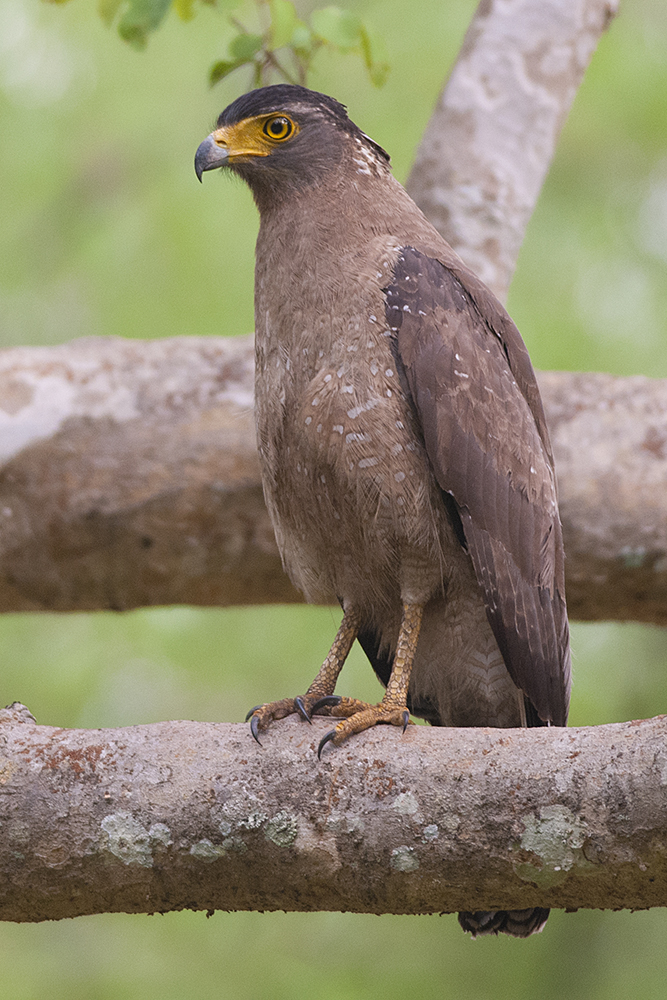
Madagascar Serpent-Eagle
Eutriorchis astur
Order: Accipitriformes / Family: Accipitridae

Wikimedia Commons
About the Madagascar Serpent-Eagle
The Madagascar Serpent-Eagle (Eutriorchis astur) stands out as a unique member of the Accipitridae family, found exclusively in the eastern rainforests of Madagascar. This bird of prey exhibits a powerful presence with its broad wings and short tail, adaptations that enable it to maneuver skillfully through densely wooded environments. Typically, this raptor inhabits lowland and mid-elevation rainforests, areas rich in biodiversity that support its specialized diet and nesting habits. The Madagascar Serpent-Eagle plays a crucial ecological role as both predator and indicator species, its presence reflecting the health of its forest habitat. Historically elusive, the Madagascar Serpent-Eagle was once thought to be extinct until its rediscovery in the late 20th century. This discovery underscored the importance of preserving Madagascar's unique ecosystems. As a predator, it helps regulate populations of snakes and small mammals, maintaining a balanced ecosystem. The bird's distribution is largely confined to regions such as the Masoala Peninsula and the eastern slopes of the island's mountainous spine, where it remains a rare sight. Conservationists have emphasized the significance of its habitat, as Madagascar's forests face threats from deforestation and human encroachment. The eagle's ecology is closely tied to the island's seasonal patterns. During the wet season, increased prey availability supports its breeding activities, while in the dry season, it relies on its keen hunting skills to find food. The Madagascar Serpent-Eagle's presence in these forests is a testament to the island's rich natural heritage and the critical need for targeted conservation efforts to ensure its survival.
The Madagascar Serpent-Eagle belongs to the family Accipitridae, within the order Accipitriformes. These birds typically live 10-15 years in the wild, with a maximum recorded of 20 years..
How to Identify a Madagascar Serpent-Eagle
Adult Madagascar Serpent-Eagles are medium-sized raptors with broad wings and a notably short tail, features that aid their agility in forested environments. Their plumage is predominantly dark brown with faint barring on the underparts, providing excellent camouflage against the forest backdrop. In contrast, the juveniles possess lighter plumage with more pronounced streaking, a feature that fades as they mature. Males and females are similar in appearance, though females tend to be slightly larger, a common trait among birds of prey. When perched, the Madagascar Serpent-Eagle exhibits a distinctive upright posture, often seen scanning the forest floor for potential prey. In flight, it presents a broad-winged silhouette with slow, deliberate wingbeats, a flight style characteristic of many forest-dwelling raptors. This silhouette can help differentiate it from other sympatric raptors such as the Madagascar Buzzard, which has narrower wings and a longer tail. The Madagascar Serpent-Eagle is rarely confused with other species due to its unique combination of size, plumage, and behavior, making it a distinct presence in Madagascar's forests.
Having trouble telling birds apart? Upload a photo to our bird identification tool for an instant species match.
Madagascar Serpent-Eagle Habitat and Range
Preferred Habitat
The Madagascar Serpent-Eagle is strictly a denizen of Madagascar's dense, humid rainforests, predominantly found in the eastern part of the island. It prefers primary lowland and mid-elevation forests, which offer a rich tapestry of biodiversity and ample prey. These habitats range from sea level up to about 1,500 meters in elevation. The bird shows a marked preference for undisturbed forest areas, avoiding heavily logged or secondary growth areas where its prey may be less abundant. Seasonal habitat shifts are minimal, as the Madagascar Serpent-Eagle is a resident species, although it may move locally within its range to follow prey abundance. The bird is absent from urban areas, indicating its reliance on pristine forest environments for survival.
Geographic Range
The Madagascar Serpent-Eagle's range is restricted to Madagascar, with its primary strongholds in the eastern rainforests. This includes the Masoala Peninsula, the largest protected rainforest area in Madagascar, and other protected regions such as the Zahamena and Marojejy National Parks. Within these areas, the bird's population density is low, and sightings are infrequent, making it a prized find for birdwatchers and researchers alike. The eagle does not undertake long-distance migrations but may exhibit altitudinal movements in response to prey availability. Its limited range and habitat preferences underscore the importance of conserving Madagascar's remaining forest tracts. While the bird's range is not extensive, the areas it inhabits are critical conservation priorities due to their unique biodiversity and the pressures they face from deforestation and habitat fragmentation.
Want to know which birds visit your area? Browse our backyard birds by location guides for region-specific species lists.
What Does the Madagascar Serpent-Eagle Eat?
The Madagascar Serpent-Eagle primarily preys on reptiles, with a particular fondness for snakes, which it captures using its strong talons and acute vision. Its diet also includes small mammals such as rodents and lemurs, and occasionally, birds and large insects. The availability of these prey items varies seasonally, influencing the eagle's foraging behavior. During the wet season, when prey is more abundant, the eagle can be more selective in its diet, while in the dry season, it may expand its prey range to include less preferable items. The bird employs a sit-and-wait hunting strategy, often perching quietly on a branch until it spots potential prey. Its keen eyesight allows it to detect movement on the forest floor from a distance, enabling it to swoop down with precision. The Madagascar Serpent-Eagle's role as a predator helps control prey populations, contributing to the ecological balance within its habitat.
Madagascar Serpent-Eagle Behavior and Social Structure
The Madagascar Serpent-Eagle exhibits solitary behavior, often seen alone or in pairs rather than in groups. It is a territorial species, with pairs maintaining and defending territories against intruders. Courtship displays include aerial acrobatics and mutual calling, strengthening pair bonds and signaling territory ownership. These displays often occur during the breeding season in the wet months, aligning with prey abundance. The eagle is primarily diurnal, with peak activity during the early morning and late afternoon, times when its prey is most active. When threatened, the Madagascar Serpent-Eagle may respond with alarm calls or evasive flight, utilizing its agility to navigate through dense foliage. Despite its solitary nature, the species' discreet presence in the forest contributes to the soundscape with its occasional calls, adding to the rich tapestry of the rainforest's auditory environment.
Madagascar Serpent-Eagle Nesting and Reproduction
The nesting behavior of the Madagascar Serpent-Eagle is characterized by its preference for high, secluded locations within dense forests. It builds its nest in the fork of a large tree, using sticks and foliage to create a sturdy platform. The typical clutch size consists of a single egg, which both parents incubate for about 35 to 40 days. The fledging period extends over several months, during which time the chick remains dependent on its parents for food and protection. Both male and female eagles participate in feeding the chick, showcasing a cooperative breeding strategy. The species is known to produce only one brood per year, a reflection of its energy-intensive breeding cycle and the need for significant parental investment to ensure offspring survival. The rarity of the Madagascar Serpent-Eagle's nesting sites highlights the importance of conserving large, mature trees in its forest habitat.
Madagascar Serpent-Eagle Sounds and Vocalizations
The Madagascar Serpent-Eagle's vocalizations include a series of clear, sharp whistles, often delivered in a sequence. These calls serve various functions, from territorial displays to communication between mates. The primary song consists of a repetitive 'keey-keey' sound, with each note lasting about a second and delivered at intervals. Alarm calls are more abrupt and harsh, used when the bird perceives threats. Unlike songbirds, the Madagascar Serpent-Eagle does not engage in a dawn chorus, but its calls can be heard intermittently throughout the day, particularly during the breeding season.
Interesting Facts About the Madagascar Serpent-Eagle
- 1The Madagascar Serpent-Eagle was rediscovered in 1993 after being presumed extinct for nearly 50 years.
- 2This raptor's short tail and broad wings make it exceptionally agile in dense forests, a rare trait among eagles.
- 3Despite its name, the Madagascar Serpent-Eagle also preys on lemurs and other small mammals, showcasing its dietary adaptability.
- 4The eagle's distinctive call resembles the sound of a whistle, a unique trait among Madagascar's raptors.
- 5The Madagascar Serpent-Eagle is one of the least studied eagles in the world, with much of its behavior still shrouded in mystery.
- 6This bird plays an important role in controlling snake populations, thus maintaining ecological balance in its habitat.
- 7The eagle's rediscovery highlighted Madagascar as a hotspot for biodiversity and a priority for global conservation efforts.
Madagascar Serpent-Eagle Conservation Status
The Madagascar Serpent-Eagle is currently listed as Endangered on the IUCN Red List, with a declining population trend. The primary threats to its survival include habitat loss due to deforestation, logging, and agricultural expansion. Conservation efforts focus on preserving its rainforest habitat through the establishment of protected areas and sustainable land-use practices. Historical records indicate that the population has decreased significantly over the past few decades, largely due to habitat degradation. Initiatives by local and international conservation organizations aim to reverse this trend by promoting reforestation, community engagement, and research on the species' ecology and behavior.
Other Accipitridae Species


Birds Similar to the Madagascar Serpent-Eagle
These species are often confused with the Madagascar Serpent-Eagle due to similar appearance or overlapping range.