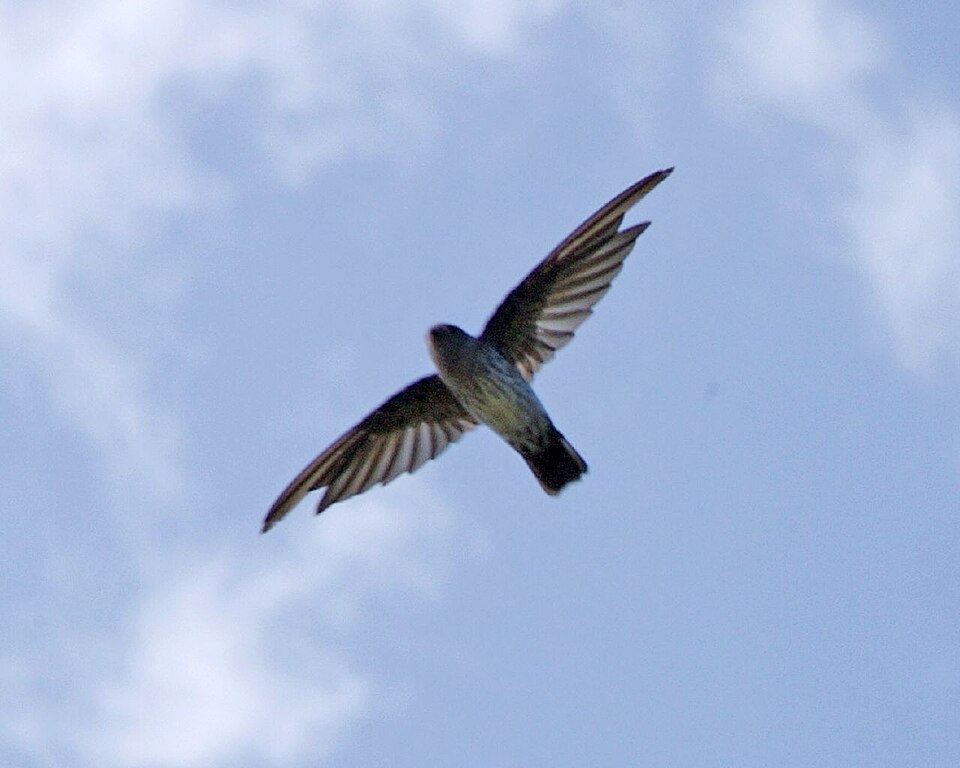
Mariana Swiftlet
Aerodramus bartschi
Order: Apodiformes / Family: Apodidae

Wikimedia Commons
About the Mariana Swiftlet
The Mariana Swiftlet, scientifically known as Aerodramus bartschi, is a fascinating species endemic to the Northern Mariana Islands and Guam in the Pacific Ocean. This small swift, part of the Apodidae family, thrives in the lush, tropical environments of these islands, where it plays a significant role in the local ecosystem by controlling insect populations. The swiftlet is particularly important in maintaining the ecological balance and contributes to the biodiversity of its island habitats. As an insectivore, it helps regulate the numbers of flying insects, which can be agricultural pests, thereby supporting the local agriculture indirectly. The Mariana Swiftlet is notable for its use of echolocation, a trait it shares with only a few bird species worldwide. This ability allows it to navigate and hunt within the dark confines of the limestone caves it often inhabits. These caves provide roosting and nesting sites that are essential for the species' survival. The swiftlet's reliance on such specific habitats makes it vulnerable to environmental changes, highlighting the importance of conservation efforts in these areas. Seasonal behaviors of the Mariana Swiftlet are relatively consistent, as it does not migrate but remains within its limited range throughout the year. This sedentary lifestyle means that its survival is closely tied to the health of its immediate environment. The swiftlet's presence is a key indicator of the overall health of the island's ecosystems, making it an important species for ecological monitoring and conservation initiatives.
The Mariana Swiftlet belongs to the family Apodidae, within the order Apodiformes. These birds typically live approximately 7-10 years in the wild..
How to Identify a Mariana Swiftlet
The Mariana Swiftlet is a small bird, measuring around 11-12 cm in length, with a wingspan of approximately 27 cm. It displays a sleek, streamlined body adapted for fast and agile flight. The plumage of the Mariana Swiftlet appears predominantly dark gray, with lighter underparts that sometimes show a slight gloss in good lighting. This coloration helps it blend into the cave environments where it roosts. Adults and juveniles look similar, making it difficult to distinguish between age classes in the field. Male and female Mariana Swiftlets show little to no sexual dimorphism, which means physical differences between sexes are minimal or non-existent. This can pose a challenge for researchers studying their behavior and breeding patterns. In flight, the swiftlet's silhouette is characterized by its narrow, pointed wings and a slightly forked tail, which aid in its maneuverability as it adeptly catches insects mid-air. Unlike many other birds, the swiftlet does not perch frequently due to its foot structure, which is adapted more for clinging than perching. It rarely lands on open branches, preferring the walls and ceilings of its cave habitats.
Having trouble telling birds apart? Upload a photo to our bird identification tool for an instant species match.
Mariana Swiftlet Habitat and Range
Preferred Habitat
Mariana Swiftlets are primarily found in limestone caves, which offer protection and ideal conditions for nesting. These caves are located in tropical forest regions of the Northern Mariana Islands and Guam. The swiftlet prefers elevations below 600 meters, where the climate is warm and humid, supporting abundant insect life. While primarily a cave dweller, it forages over a variety of landscapes, including forests, coastal areas, and sometimes near human settlements. There is no significant seasonal habitat shift for the Mariana Swiftlet, as it remains within its cave systems and surrounding areas year-round. The swiftlet's ability to thrive in various environments is crucial for its survival, though habitat destruction poses a significant threat. Urban presence is limited, as the bird tends to avoid densely populated areas, but it can sometimes be seen near villages where it finds insects drawn to artificial lights.
Geographic Range
The range of the Mariana Swiftlet is restricted to the Mariana Islands in the western Pacific Ocean, specifically the islands of Guam, Saipan, Tinian, and Rota. Unlike many other swift species, the Mariana Swiftlet does not engage in long-distance migrations, instead maintaining a year-round presence within this limited geographic area. Its sedentary nature means that it is highly dependent on the local environmental conditions, making habitat protection vital for its survival. Population density is highest in areas where limestone caves are abundant, providing the necessary roosting and nesting sites. The swiftlet's range has historically been limited to these islands, and there are no known migration corridors leading to other regions. The species' small range and specific habitat requirements make it vulnerable to environmental changes and human activities, particularly on islands like Guam, where military and development activities are significant.
Want to know which birds visit your area? Browse our backyard birds by location guides for region-specific species lists.
What Does the Mariana Swiftlet Eat?
The Mariana Swiftlet primarily feeds on flying insects, which it catches in flight using its agile aerial maneuvers. Its diet consists of a variety of small insects, including beetles, flies, ants, and moths. The swiftlet's diet may vary seasonally depending on the availability of prey, but it remains exclusively insectivorous throughout the year. Foraging usually occurs during daylight hours, although it may also feed at dusk and dawn when insect activity is high. The swiftlet employs a technique known as aerial hawking, which involves capturing insects in mid-air with its wide, gaping mouth. Prey size generally ranges from small to medium-sized insects, allowing the swiftlet to exploit a broad spectrum of the available insect population. This foraging strategy not only supports the bird's nutritional needs but also helps control insect populations in its habitat.
Mariana Swiftlet Behavior and Social Structure
Mariana Swiftlets exhibit a strong social structure, often seen in small to medium-sized flocks, especially during foraging. These groups enhance their foraging efficiency and provide some protection against predators. The swiftlet's territorial behavior is most pronounced around nesting sites, where pairs may defend their chosen cave areas from intruders. Courtship displays are subtle, with aerial chases and synchronized flights possibly playing a role in pair bonding. Flocking patterns are loose, with birds maintaining individual distances while flying in the same general area. This behavior aids in minimizing collisions and maximizing foraging success. The swiftlet's response to predators includes swift evasive flight, utilizing its agility to avoid capture. Daily activity patterns revolve around daylight hours, with peaks in activity during the early morning and late afternoon when insects are most abundant.
Mariana Swiftlet Nesting and Reproduction
The Mariana Swiftlet nests predominantly in the dark, humid interiors of limestone caves, where it constructs its nest out of plant fibers and its own saliva. The cup-shaped nests are securely attached to cave walls, often in colonies where multiple pairs nest in proximity. A typical clutch consists of a single white egg, which the parents incubate for about 24-28 days. Both parents share incubation duties and continue to care for the chick after hatching. The fledging period lasts approximately five to six weeks, during which the chick develops the necessary flight feathers and muscles. Parental roles are shared, with both male and female participating actively in feeding and protecting the young. The swiftlet may produce two broods per year in favorable conditions, contributing to the stability of its population despite its limited range.
Mariana Swiftlet Sounds and Vocalizations
The Mariana Swiftlet's primary vocalizations include a series of soft, twittering calls used for communication within flocks and during courtship. Echolocation clicks, which are unique among birds, are produced to navigate in complete darkness. These clicks are audible to humans and resemble faint, repetitive tapping sounds. The swiftlet's calls do not form a dawn chorus, but are used consistently throughout the day. Alarm calls are sharper and more urgent, intended to alert other swiftlets of potential threats. Compared to more melodious songbirds, the swiftlet's vocalizations are functional and utilitarian, focused on communication and navigation rather than musicality.
Interesting Facts About the Mariana Swiftlet
- 1The Mariana Swiftlet uses echolocation, a rare ability among birds, to navigate and hunt in complete darkness within caves.
- 2Despite being a small bird, the Mariana Swiftlet can cover large areas in search of insects, often traveling several kilometers from its roost.
- 3The swiftlet's saliva not only helps create its nest but also hardens to form a secure attachment to cave walls, even in humid conditions.
- 4Nest construction in Mariana Swiftlets involves intricate weaving of plant fibers and saliva, showcasing their remarkable engineering skills.
- 5The Mariana Swiftlet is one of the few bird species that can produce audible echolocation clicks, a trait shared with some bat species.
- 6Swiftlets in the Apodidae family are known for their incredibly strong flight muscles, enabling extended flight periods without rest.
- 7The Mariana Swiftlet's presence in caves is an important ecological indicator, reflecting the health and stability of these unique habitats.
Mariana Swiftlet Conservation Status
The IUCN lists the Mariana Swiftlet as Near Threatened, with population trends showing a decline due to habitat destruction and human disturbance. Primary threats include habitat loss from development, military activities, and invasive species like the brown tree snake, which preys on eggs and chicks. Conservation efforts focus on habitat protection, predator control, and environmental education to raise awareness of the swiftlet's ecological importance. In recent years, conservationists have made strides in habitat restoration, though ongoing efforts are essential to stabilize and increase swiftlet populations. Historical population changes reflect the impact of habitat degradation, emphasizing the need for continuous monitoring and adaptive management strategies.
Other Apodidae Species


Birds Similar to the Mariana Swiftlet
These species are often confused with the Mariana Swiftlet due to similar appearance or overlapping range.