Marsh Antwren
Formicivora paludicola
Order: Passeriformes / Family: Thamnophilidae
Wikimedia Commons
About the Marsh Antwren
The Marsh Antwren, scientifically known as Formicivora paludicola, is a small passerine bird endemic to the marshy regions of southeastern Brazil. It belongs to the family Thamnophilidae, which is well-regarded for its diverse array of antwrens and antbirds. This bird is critically endangered, with its population facing severe threats from habitat loss and environmental degradation. The species primarily inhabits the marshes of the São Paulo state, particularly around the floodplains of the Paraná River. The Marsh Antwren plays a crucial ecological role in its habitat, primarily feeding on insects and helping control the population of these small creatures.
The significance of the Marsh Antwren extends beyond its ecological niche. Being endemic to a relatively small geographic area, it serves as an indicator species for the health of its marshy ecosystem. Conservationists monitor its population trends to assess the impact of environmental changes in these wetlands. The presence of the Marsh Antwren also contributes to the biodiversity of the region, supporting ecosystems that host a variety of life forms.
During the breeding season, the Marsh Antwren exhibits unique behaviors that are crucial for its survival. It becomes more territorial, often seen defending its nesting area against intruders. The bird's breeding season typically occurs during the wet months, when the abundance of insects provides a rich food supply. Outside of the breeding season, the Marsh Antwren may show some variation in its range, though it largely remains within marshland environments.
The Marsh Antwren's ecological role as an insectivore helps maintain the balance within its habitat. By consuming various insects, it plays a part in controlling pest populations that could otherwise grow unmanageable. This function underscores the bird's importance not only from a biodiversity standpoint but also in practical ecological terms. Efforts to preserve the Marsh Antwren's habitat are critical, both for the continued survival of the species and the stability of the ecosystems it supports.
The Marsh Antwren belongs to the family Thamnophilidae, within the order Passeriformes. These birds typically live average 4 years, with a maximum recorded of 6 years..
How to Identify a Marsh Antwren
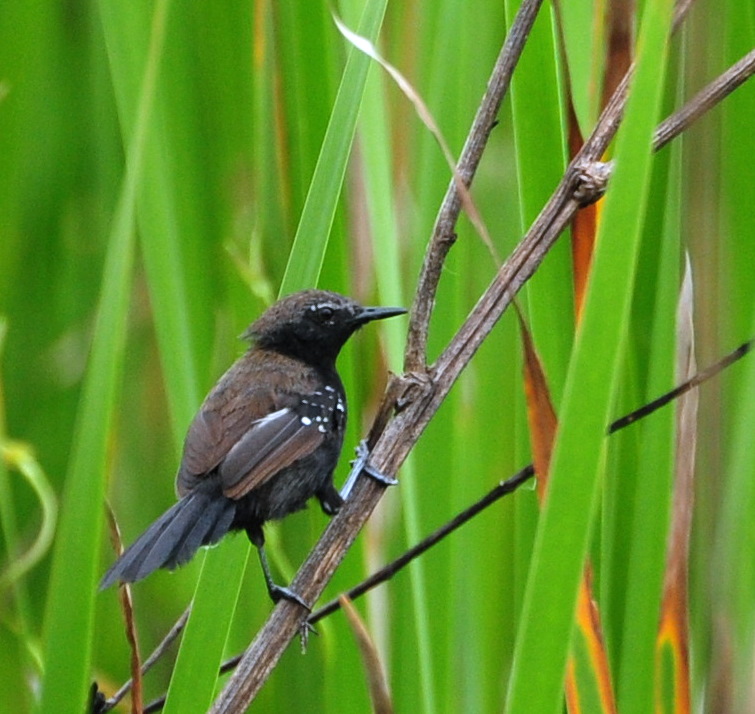
The Marsh Antwren is easily identifiable by its striking black-and-white coloration. Males typically display a more pronounced contrast between the jet-black upper parts and the white underparts. The wings and tail also show distinctive white markings that can help in identification from a distance. Females, while similar, often have slightly duller plumage, with more brownish tones mixed into the black areas, particularly on the wings and back.
Juveniles of the species may present more subdued and mottled plumage, lacking the stark contrast seen in adults. This can sometimes lead to confusion with other similar species in the Thamnophilidae family, although the Marsh Antwren's unique habitat preferences often help in distinguishing it from others.
In flight, the Marsh Antwren exhibits a quick and direct flight pattern, with rapid wing beats that can make it challenging to follow. When perching, this bird often maintains an upright posture, which is typical of many antbird species, allowing it to remain vigilant for both prey and potential threats.
Having trouble telling birds apart? Upload a photo to our bird identification tool for an instant species match.
Marsh Antwren Habitat and Range
Preferred Habitat
The Marsh Antwren is strictly associated with wetland habitats, particularly favoring marshes and flooded plains. These environments provide the dense vegetation and abundant insect life crucial for their survival. The bird is most commonly found in the São Paulo state of Brazil, within a narrow elevation range that supports its specific habitat needs.
Seasonal changes can affect the extent of its habitat, particularly during the wet season when flooding expands its available range. However, the Marsh Antwren does not typically venture into urban or heavily altered landscapes, preferring areas that retain natural marsh characteristics.
The presence of the Marsh Antwren in these marshes is vital for the health of the ecosystem. By inhabiting such specialized habitats, it helps to maintain the ecological balance. Conservation of these wetlands is essential not only for the Marsh Antwren but also for the myriad of other species that rely on these habitats.
Geographic Range
The Marsh Antwren is endemic to Brazil, with its range primarily restricted to the marshy regions of southeastern Brazil. It is most commonly found in the state of São Paulo, particularly around the floodplains of the Paraná River. This narrow geographic range makes it particularly vulnerable to environmental changes and habitat loss.
The species does not undergo long-distance migrations, although it may exhibit some local movements in response to seasonal flooding and changes in habitat conditions. During the breeding season, its range contracts slightly as it becomes more territorial, focusing on areas with optimal nesting conditions.
Population densities of the Marsh Antwren are highest in well-preserved marsh regions with dense vegetation. These hotspots are crucial for maintaining viable populations, especially given the bird's limited distribution. Conservation efforts are focused on protecting these key areas to ensure the long-term survival of the species.
Want to know which birds visit your area? Browse our backyard birds by location guides for region-specific species lists.
What Does the Marsh Antwren Eat?
The Marsh Antwren's diet primarily consists of insects and other small invertebrates. This bird is a skilled forager, typically hunting within the dense vegetation of its marshy habitat. Its diet includes a variety of insects, such as ants, beetles, and caterpillars, along with spiders and other arthropods.
Seasonal changes can influence its diet, with a greater abundance of certain prey types during the wet season when insect populations peak. The bird employs a methodical foraging technique, often seen flitting between reeds and grasses as it searches for food.
The Marsh Antwren's foraging is predominantly diurnal, with bursts of activity in the early morning and late afternoon when insect activity is highest. Its small size allows it to access tight spaces within the dense vegetation, giving it a competitive advantage in its niche.
Marsh Antwren Behavior and Social Structure
The Marsh Antwren exhibits a range of behaviors that reflect its adaptation to a marshy environment. It is generally solitary or found in pairs, especially during the breeding season when territorial behavior becomes pronounced. Males may engage in displays and vocalizations to establish and defend territory boundaries.
Courtship displays are subtle but involve vocal communication and mutual preening between mates. Once paired, Marsh Antwrens exhibit strong pair bonds, often seen foraging together and coordinating in nest building and chick rearing.
In response to predators, the Marsh Antwren relies on its cryptic plumage and dense habitat for concealment. It is not known for forming large flocks, although loose associations with other marsh-dwelling bird species can occur outside the breeding season. Its daily activity pattern is crepuscular, with increased activity during the cooler parts of the day.
Marsh Antwren Nesting and Reproduction
The nesting habits of the Marsh Antwren involve constructing a cup-shaped nest, typically placed low within dense marsh vegetation. The choice of location is crucial, as the nest must be concealed from predators and protected from flooding.
A typical clutch consists of two to three eggs, which are incubated by both parents. The incubation period lasts about two weeks, with both male and female taking turns to keep the eggs warm and protected.
After hatching, the chicks remain in the nest for approximately 10-14 days before fledging. During this time, both parents are actively involved in feeding and caring for the young. The Marsh Antwren usually raises one brood per year, although a second brood might be attempted if conditions are favorable.
Marsh Antwren Sounds and Vocalizations
The primary song of the Marsh Antwren is a series of sharp, staccato notes delivered in rapid succession. This song can be described as having a rhythmic, mechanical quality, often used by males to establish territory and attract mates.
In addition to its song, the Marsh Antwren produces a variety of call notes, including a distinctive 'chip' sound that serves as an alarm call. These vocalizations are vital for communication between mates and signaling danger.
During the dawn chorus, the Marsh Antwren's song becomes more frequent and prolonged. Its vocalizations play a key role in maintaining its presence within the dense vegetation of its habitat.
Interesting Facts About the Marsh Antwren
- 1The Marsh Antwren was only described as a new species in 2004, highlighting the ongoing discoveries in ornithology.
- 2Despite its small size, the Marsh Antwren's vocalizations are surprisingly loud and can carry across its marsh habitat.
- 3The Marsh Antwren's habitat preference for dense marshes makes it challenging to observe in the wild.
- 4This species' restricted range has made it a focus for conservationists aiming to preserve Brazil's unique biodiversity.
- 5The Marsh Antwren's plumage provides excellent camouflage, blending seamlessly with the shadows and reeds of its environment.
- 6Studies have shown that the Marsh Antwren is highly sensitive to changes in water levels, which can impact its nesting success.
- 7The Marsh Antwren's insectivorous diet helps control pest populations in its native marshland habitats.
Marsh Antwren Conservation Status
The Marsh Antwren is currently listed as critically endangered on the IUCN Red List. Its population is declining due to ongoing habitat loss and degradation in its limited range. The primary threats include agricultural expansion, pollution, and the drainage of wetlands for development. Conservation efforts are focused on protecting and restoring marsh habitats in southeastern Brazil. Establishing protected areas and enforcing regulations to limit habitat destruction are critical steps in preserving this species. Historically, the population of the Marsh Antwren was larger and more widespread, but significant habitat alteration over the past few decades has led to its current precarious status.