
Masked Water-Tyrant
Fluvicola nengeta
Order: Passeriformes / Family: Tyrannidae
Wikimedia Commons
About the Masked Water-Tyrant
The Masked Water-Tyrant (Fluvicola nengeta) is a visually striking member of the Tyrannidae family, known for its contrasting black and white plumage. This species inhabits a variety of wetland environments across South America, including marshes, swamps, and riverbanks. It thrives in regions such as Brazil, Bolivia, Paraguay, and northern Argentina, where water is abundant, providing ample foraging opportunities. The Masked Water-Tyrant plays a significant ecological role as an insectivore, helping control insect populations in its habitat. This bird is often observed flitting near water bodies, its black mask and wing markings distinguishing it from other local species. The Masked Water-Tyrant's preference for open wetlands and aquatic environments highlights its adaptability to different wetland types, from dense marshes to more sparse riverbanks. Its presence in these ecosystems underscores its role as both a predator and prey, maintaining ecological balance. During the breeding season, typically aligned with the rainy months from September to February, the Masked Water-Tyrant becomes more territorial. It is known to aggressively defend its chosen nesting areas, ensuring the success of its offspring. Outside the breeding period, this bird may exhibit more social behavior, often seen in pairs or small flocks. Its adaptability to various wetland conditions underscores its resilience in the face of environmental changes, making it a common sight in suitable habitats across its range.
The Masked Water-Tyrant belongs to the family Tyrannidae, within the order Passeriformes. These birds typically live average 4 years with a maximum recorded of 6 years..
How to Identify a Masked Water-Tyrant
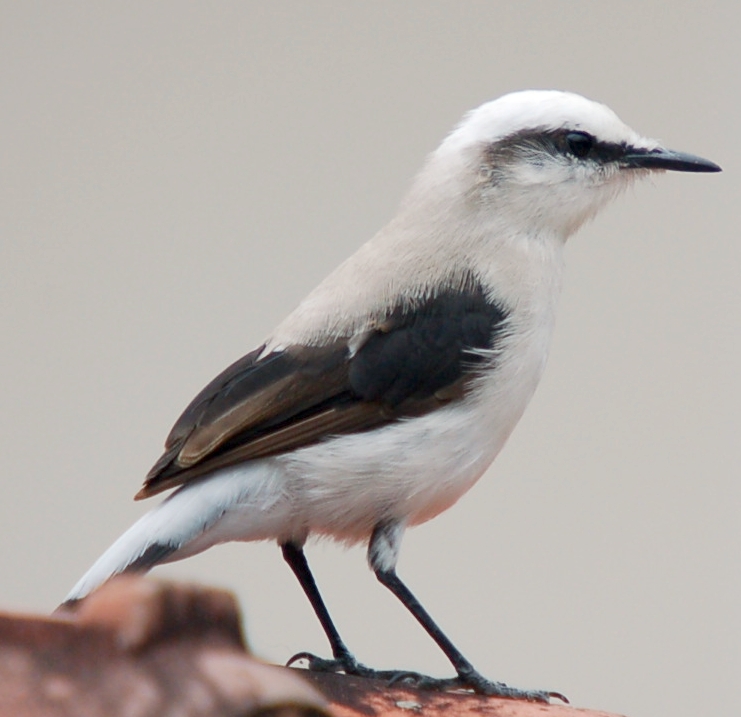
Adult Masked Water-Tyrants are unmistakable with their clean white bodies contrasted by a black mask that stretches across their eyes and dark wings. The black tail feathers also stand out against their predominantly white plumage. Juveniles are similar in appearance but may exhibit a slightly duller coloration, lacking the crispness of the adults' plumage. Both males and females share similar plumage, making sex differentiation difficult in the field. However, observing pair behavior during the breeding season can provide clues, as males often take a more active role in territorial displays. In flight, the Masked Water-Tyrant displays a shallow, fluttering wingbeat, which complements its erratic, low-flying pattern close to the water's surface. When perched, it exhibits a characteristic upright posture and often flicks its tail, a behavior that aids in identification. Confusion with similar species can arise, but the Masked Water-Tyrant's distinctive facial mask and contrasting plumage provide reliable field marks. In comparison to other water-tyrants or small wetland birds, its bold coloration and behavior make it relatively easy to identify.
Having trouble telling birds apart? Upload a photo to our bird identification tool for an instant species match.
Masked Water-Tyrant Habitat and Range
Preferred Habitat
The Masked Water-Tyrant is predominantly found in wetland habitats, including marshes, swamps, riverbanks, and lagoons. It prefers areas with open water and sparse vegetation, which offer both foraging opportunities and visibility against predators. This bird thrives at elevations from sea level up to 1,500 meters, adapting well to both lowland and slightly elevated wetland regions. Although primarily associated with rural and natural wetland environments, the Masked Water-Tyrant can occasionally be seen in urban areas where suitable habitats, such as city parks with water features, exist. Seasonal habitat shifts may occur in response to water levels and availability of food, with the bird moving towards more abundant and reliable water sources during dry periods. Despite its adaptability, the Masked Water-Tyrant remains closely tied to aquatic environments, relying heavily on these habitats for breeding and feeding.
Geographic Range
The Masked Water-Tyrant's range extends across much of South America, with core populations established in Brazil, Bolivia, Paraguay, and northern Argentina. In Brazil, it is particularly widespread in the Pantanal and Amazon basins, where extensive wetland systems provide ideal environments. It also inhabits parts of the Cerrado and Atlantic Forest biomes, especially where open water bodies occur. The species does not typically migrate, remaining in its breeding territories year-round. However, local movements may occur in response to seasonal changes in water availability, with individuals dispersing over short distances to find optimal conditions. Population density is highest in regions with extensive wetland habitats, where food resources are plentiful and nesting sites are available. While not considered migratory, the Masked Water-Tyrant's presence across a broad geographic range underscores its adaptability to various South American wetland ecosystems.
Want to know which birds visit your area? Browse our backyard birds by location guides for region-specific species lists.
What Does the Masked Water-Tyrant Eat?
The Masked Water-Tyrant primarily feeds on insects, serving as an important controller of local insect populations in wetland areas. Its diet includes a variety of aquatic and terrestrial insects, such as beetles, flies, and grasshoppers, which it captures through agile aerial sallies and ground foraging. During the wet season, as insect abundance increases, the bird's diet may expand to include spiders and small aquatic invertebrates. The Masked Water-Tyrant employs a sit-and-wait foraging strategy, often perching on low vegetation or rocks near water, scanning for prey before launching short, swift flights to capture it. By maintaining a diverse diet, it adapts to seasonal changes in insect availability, ensuring a reliable food source throughout the year. Its role as an insectivore highlights its ecological importance in maintaining the balance of wetland ecosystems.
Masked Water-Tyrant Behavior and Social Structure
The Masked Water-Tyrant exhibits a variety of interesting behaviors that reflect its adaptation to wetland environments. It is primarily solitary or found in pairs, with pronounced territoriality during the breeding season. Males prominently defend their territories through displays and vocalizations, ensuring access to optimal nesting sites. Courtship involves aerial displays and vocal duets, where pairs engage in synchronized flights and calls. Outside the breeding season, the Masked Water-Tyrant may form loose associations with other individuals, especially in areas where food is abundant. It displays a characteristic tail-flicking behavior, often observed while foraging or perched. This behavior may serve as a communication signal or aid in balance. The bird's response to predators involves loud alarm calls and erratic flight patterns, designed to confuse and deter threats. Its daily activity pattern revolves around peak foraging times in the early morning and late afternoon, with periods of rest and preening during the hotter midday hours.
Masked Water-Tyrant Nesting and Reproduction
The Masked Water-Tyrant constructs open cup nests, often positioned in shrubs or low trees near water. Nest materials include grass, twigs, and roots, woven together to form a secure structure. The location is typically chosen for its proximity to water, providing both a food source and protection from terrestrial predators. Clutch size ranges from two to three eggs, with both parents sharing incubation duties over a period of about 14 days. After hatching, the chicks remain in the nest for approximately two weeks before fledging. Parental roles are well-defined; both males and females participate in feeding and protecting the young. The species may produce two broods per year, depending on environmental conditions and food availability. The breeding season aligns with wetter months, ensuring that water and food resources are abundant during the critical stages of chick development.
Masked Water-Tyrant Sounds and Vocalizations
The Masked Water-Tyrant's vocalizations consist of a series of high-pitched, rapid notes, often described as a repetitive 'ti-ti-ti' sequence. These calls serve multiple purposes: establishing territory, attracting mates, and communicating with partners. The bird's song is not as melodious as some songbirds but is distinctive for its rhythmic and persistent quality. Alarm calls are sharper and more urgent, employed when predators are detected. During the dawn chorus, the Masked Water-Tyrant participates actively, its calls blending into the vibrant soundscape of wetland habitats. The vocalizations, while not complex, play a crucial role in the bird's social interactions and territorial behavior.
Interesting Facts About the Masked Water-Tyrant
- 1The Masked Water-Tyrant's striking black mask is a distinctive feature, providing effective camouflage against predators when viewed from above.
- 2This bird's Latin name, Fluvicola nengeta, reflects its affinity for water, with 'Fluvicola' meaning 'dweller by the river'.
- 3Despite its name, the Masked Water-Tyrant is more closely related to flycatchers than to true tyrants.
- 4The Masked Water-Tyrant can often be seen performing a unique 'pumping' motion with its tail, a behavior thought to aid in balance.
- 5This species exhibits a strong preference for open wetland areas, rarely venturing far from water sources.
- 6The Masked Water-Tyrant's presence year-round provides valuable insect control in its native wetland habitats.
- 7Unlike many other members of the Tyrannidae family, the Masked Water-Tyrant has adapted well to human-altered landscapes.
Masked Water-Tyrant Conservation Status
The Masked Water-Tyrant is classified as Least Concern by the IUCN, with populations considered stable across its range. Despite this status, ongoing threats such as habitat destruction due to agriculture, urban development, and pollution of wetlands could impact local populations. Conservation efforts focus on habitat preservation and restoration, ensuring the maintenance of wetland ecosystems that support this species and others. Historical population trends suggest resilience, with the bird adapting to changes in habitat availability. However, continued monitoring is essential to detect any shifts in population dynamics and address potential threats.
Other Tyrannidae Species


Birds Similar to the Masked Water-Tyrant
These species are often confused with the Masked Water-Tyrant due to similar appearance or overlapping range.
