
Montezuma Quail
Cyrtonyx montezumae
Order: Galliformes / Family: Odontophoridae

Wikimedia Commons
About the Montezuma Quail
The Montezuma Quail, or Cyrtonyx montezumae, is a striking bird found primarily in the oak-pine woodlands and grasslands of the southwestern United States and northern Mexico. This ground-dwelling species is renowned for its elaborate plumage, which blends seamlessly into its surroundings, providing excellent camouflage against predators. Despite its striking appearance, the Montezuma Quail remains elusive, often retreating into dense cover when disturbed.
This species plays a crucial role in the ecosystem, contributing to seed dispersal and maintaining the balance within its habitat. The Montezuma Quail's presence in regions such as the Chihuahuan Desert, Arizona's Chiricahua Mountains, and the Sierra Madre Occidental in Mexico highlights its adaptability to varied environments. The bird prefers areas with a mix of grass and shrub cover, where it can forage and nest safely.
Seasonally, Montezuma Quail exhibit distinct behaviors. During the breeding season, which typically occurs from May to August, males engage in elaborate courtship displays to attract mates. In colder months, these birds often form small coveys, or groups, to conserve heat and increase vigilance against predators. This seasonal aggregation also facilitates foraging efficiency, as the quail can cover larger areas collectively, maximizing their chances of locating food resources.
Ecologically, the Montezuma Quail's diet consists mainly of seeds, bulbs, and insects, making it an integral part of the food web. By consuming and subsequently dispersing plant seeds, the quail aids in the regeneration and spread of native flora. Its role as both prey and predator ensures its contribution to the dynamic balance of its habitat, supporting biodiversity and ecosystem health.
The Montezuma Quail belongs to the family Odontophoridae, within the order Galliformes. These birds typically live average lifespan is 2-3 years with a maximum recorded of around 5 years..
How to Identify a Montezuma Quail
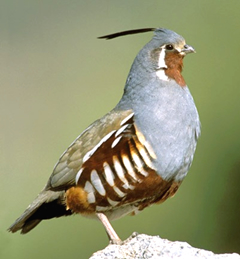
Identifying the Montezuma Quail requires attention to its distinctive features. Adult males boast a striking face pattern with bold black-and-white stripes, contrasting sharply with their mottled gray and brown bodies. A closer look reveals a reddish-brown belly with white spots, adding to their ornate appearance. Females, while similar in size, exhibit more subdued plumage, favoring a mottled brown coloration that offers superb camouflage.
Juveniles resemble females but with less defined markings, which gradually become more pronounced as they mature. The Montezuma Quail's compact body, short tail, and rounded wings distinguish it from other quail species. In flight, it presents a rapid, low-flying silhouette, often seen only briefly as it flushes from cover.
Although its cryptic plumage can lead to confusion with other ground-dwelling birds, such as the Northern Bobwhite, the Montezuma Quail's unique face pattern and smaller size help distinguish it. Observers should note its preference for remaining hidden in dense vegetation, typically remaining motionless when approached, which can make detection challenging.
Having trouble telling birds apart? Upload a photo to our bird identification tool for an instant species match.
Montezuma Quail Habitat and Range
Preferred Habitat
Montezuma Quail inhabit a diverse range of habitats, primarily within oak-pine woodlands and open grasslands interspersed with shrubs. These birds favor elevations ranging from 1,200 to 3,000 meters, where they find ample cover and food resources. Notable regions include the Chihuahuan Desert, Arizona's Sky Islands, and the Sierra Madre Occidental in Mexico.
Seasonally, Montezuma Quail may shift habitats slightly, moving to areas with denser vegetation in winter to shelter from harsh weather and predators. Unlike some quail species, they rarely occur in urban environments, instead preferring remote, undisturbed areas where human presence is minimal.
The quail's reliance on specific vegetation types for foraging and nesting highlights the importance of habitat conservation. Protecting these areas ensures the continued survival of the species, as well as the myriad other organisms that share their ecosystem.
Geographic Range
The Montezuma Quail's range extends across the southwestern United States into northern and central Mexico. In the U.S., their presence is most notable in southern Arizona, New Mexico, and the Trans-Pecos region of Texas. These areas provide the necessary elevation and vegetation types the species requires.
In Mexico, the quail occupies regions such as the Sierra Madre Occidental and the highlands of central Mexico, where suitable habitats are abundant. This distribution suggests a preference for temperate climates and specific plant communities, which offer both food and shelter.
Though the species is considered non-migratory, some local movements occur in response to seasonal changes in food availability and weather conditions. Population densities can vary, with higher concentrations found in areas where habitat quality and food resources are optimal.
Want to know which birds visit your area? Browse our backyard birds by location guides for region-specific species lists.
What Does the Montezuma Quail Eat?
Montezuma Quail exhibit a diverse diet, primarily composed of seeds, bulbs, and insects. These elements form the bulk of their nutritional intake, with seeds from grasses and forbs being particularly important. The bird's foraging behavior involves scratching at the ground to uncover hidden food sources, a technique that reveals its preference for areas with loose soil.
Seasonal variations influence their diet, with insects becoming more prominent during summer months when they are more abundant. This shift provides essential protein for breeding and raising young. The quail's diet also includes small quantities of berries and other plant material, adding variety to their nutritional profile.
Montezuma Quail typically forage in the early morning and late afternoon, avoiding the midday heat. This schedule not only maximizes foraging efficiency but also reduces exposure to predators. By understanding these dietary habits, conservationists can better manage habitats to support healthy quail populations.
Montezuma Quail Behavior and Social Structure
Montezuma Quail exhibit fascinating social behavior, particularly during the breeding season. Males engage in elaborate displays to attract females, including bowing, fanning their tails, and calling. These rituals are crucial for pair formation and subsequent breeding success.
Outside of breeding season, Montezuma Quail form small groups known as coveys, often consisting of family units. This social structure provides safety in numbers, enhancing vigilance against predators and improving foraging efficiency. These birds exhibit strong site fidelity, often returning to the same areas annually for breeding and foraging.
When threatened, Montezuma Quail rely on their cryptic plumage to remain hidden. They often freeze in place to avoid detection or flush suddenly with rapid, low flight if closely approached. Daily activities primarily occur during cooler parts of the day, aligning with their foraging schedule and minimizing exposure to extreme temperatures.
Montezuma Quail Nesting and Reproduction
Montezuma Quail construct simple nests on the ground, typically in dense grass or under shrubs. The nest consists of a shallow depression lined with grass and leaves, providing camouflage and insulation for the eggs. These birds prefer nesting sites that offer concealment from predators and protection from environmental factors.
A typical clutch consists of 6 to 12 eggs, which the female incubates for about 24 days. During this period, the male remains nearby, often assisting in guarding the nest and foraging for food. Once hatched, chicks are precocial, leaving the nest within hours and foraging independently under parental guidance.
The fledging period lasts approximately two weeks, during which time the young develop the skills necessary for survival. Montezuma Quail typically raise one brood per year, though favorable conditions may occasionally allow for two. The extended parental care ensures high survival rates among offspring, maintaining population stability.
Montezuma Quail Sounds and Vocalizations
The Montezuma Quail's vocalizations include a distinctive primary call used by males during the breeding season. This call, a series of soft, whistled notes, serves to attract females and establish territory. The rhythm is slow and melodic, making it easily recognizable to those familiar with the species.
In addition to the primary call, Montezuma Quail produce various clucking sounds used for communication within coveys. These calls help maintain group cohesion and coordinate movements while foraging or avoiding predators. Alarm calls, sharp and urgent, signal danger and prompt immediate concealment or flight.
Unlike some bird species, the Montezuma Quail's vocal repertoire is relatively limited, reflecting its secretive nature. These sounds, though subtle, play an essential role in the bird's social structure and survival.
Interesting Facts About the Montezuma Quail
- 1The Montezuma Quail can remain motionless for extended periods, relying on its camouflaged plumage to avoid detection by predators.
- 2Males participate in a unique courtship display involving a series of bows and calls to attract females during the breeding season.
- 3Despite its striking appearance, the Montezuma Quail is rarely seen due to its preference for dense cover and elusive nature.
- 4The species is one of the smallest quails native to North America, with adults measuring just 22-25 cm in length.
- 5Montezuma Quail exhibit strong site fidelity, often returning to the same breeding and foraging areas year after year.
- 6Their diet shifts seasonally, with insects becoming a crucial protein source during the summer breeding months.
- 7Montezuma Quail are non-migratory, maintaining permanent territories within their preferred habitats across their range.
Montezuma Quail Conservation Status
The Montezuma Quail is currently listed as Least Concern by the IUCN, though its population trends vary by region. In some areas, habitat loss due to agriculture and urbanization poses significant threats. Overgrazing by livestock can also degrade the quality of their habitats, reducing food availability and cover. Conservation efforts focus on habitat preservation and restoration, particularly in key regions such as Arizona and New Mexico. Programs aimed at sustainable land use practices help mitigate the impacts of human activities, ensuring that Montezuma Quail habitats remain viable. Historically, the species has experienced fluctuations in population size, largely influenced by environmental conditions. Continued monitoring and adaptive management strategies are essential to maintaining stable populations and preventing future declines.
Other Odontophoridae Species


Birds Similar to the Montezuma Quail
These species are often confused with the Montezuma Quail due to similar appearance or overlapping range.
